Solutions Architect's Handbook: Kick-start your career as a solutions architect by learning architecture design principles and strategies, 2nd Edition
Saurabh Shrivastava,Neelanjali Srivastav
2022
View book
Book guide and evaluation
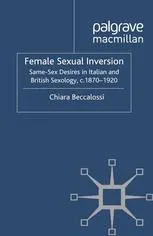
Chiara Beccalossi (auth.)
0 reviews
Published
pages
views
Welcome to the introduction of the book Female Sexual Inversion: Same-Sex Desires in Italian and British Sexology, c. 1870–1920. This groundbreaking work delves deep into the historical and sociocultural conceptualization of same-sex desires among women, providing a nuanced exp
Before you read
Welcome to the introduction of the book Female Sexual Inversion: Same-Sex Desires in Italian and British Sexology, c. 1870–1920. This groundbreaking work delves deep into the historical and sociocultural conceptualization of same-sex desires among women, providing a nuanced exploration of the birth and evolution of female sexual inversion within scientific discourse. In this text, author Chiara Beccalossi critically examines the roles played by Italian and British sexology in shaping public and medical perceptions of female sexuality from the late 19th century to the early 20th century. It is an essential resource for scholars interested in gender studies, sexuality, and medical history.
Female Sexual Inversion: Same-Sex Desires in Italian and British Sexology, c. 1870–1920 investigates how sexologists in Italy and Britain conceptualized female homosexuality during a pivotal period in history. The book highlights the intersections between science, medicine, gender norms, and societal attitudes toward same-sex attraction. Beccalossi critically addresses the role of sexologists, such as Richard von Krafft-Ebing and Havelock Ellis, in advancing theories on sexual inversion—a term used at the time to describe individuals whose sexual preferences diverged from societal norms.
Drawing upon detailed analysis of medical texts, case studies, and contemporary societal norms, the book explores how the phenomenon of female sexual inversion was pathologized and regarded as a degenerative or abnormal condition. It situates these perspectives within larger cultural contexts, emphasizing the influence of Victorian moralities and Catholic conservatism.
The book further examines how these evolving concepts influenced public perceptions of female homosexuality and contributed to stigmatization. Ultimately, it reveals a complex tapestry illustrating both an effort to understand same-sex desires and an attempt to control and categorize human sexuality through medical authority.
"Sexology in the late nineteenth century was as much a science of control as it was a science of discovery."
"Female sexual inversion was not merely a medical condition; it was a window through which societal anxieties regarding gender and morality could be observed."
"The striking divergence between Italian and British sexological texts highlights the power of cultural context in shaping scientific understanding."
Female Sexual Inversion: Same-Sex Desires in Italian and British Sexology, c. 1870–1920 is a vital contribution to the field of gender and sexuality studies. By dissecting the medical and social frameworks that shaped perceptions of same-sex desire, this book provides readers with an essential lens for understanding how historical attitudes inform present-day biases and societal dynamics.
The book's focus on both Italian and British sexological traditions offers a cross-cultural perspective that is often missing in historical analyses of sexuality. This comparative approach not only enriches the discourse but also challenges us to recognize the ways in which history and culture shape scientific inquiry.
Furthermore, Beccalossi's rigorous examination of sexology’s history invites reflection on the contemporary trajectory of LGBTQ+ rights. It reminds us of the impact of scientific and medical narratives on public attitudes and individual lives.
In an era where discussions of gender identity and sexual orientation grow increasingly urgent, this book serves as a timely reminder of the importance of historical knowledge and critical analysis in shaping future discourses.
Your question is answered in the context of this title and author. Each answer uses 2 points.
0 reviews, 4.5 average out of 5
Sign in to publish a review.
Ask a focused question and learn from the community.
Related references that continue this learning path.
Saurabh Shrivastava,Neelanjali Srivastav

Saurabh Shrivastava,Neelanjali Srivastav