
Book guide and evaluation
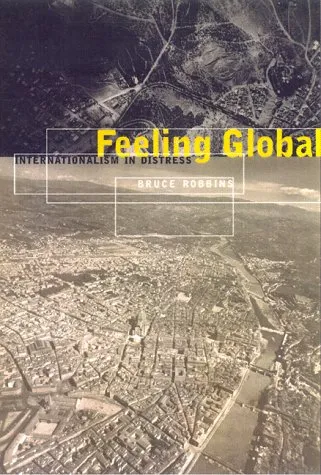
Feeling Global: Internationalism in Distress (Cultural Front)
Bruce Robbins
English
Beginner
Politics
4.9 / 5
0 reviews
1999
Published
233
pages
441
views
Introduction to Feeling Global: Internationalism in Distress (Cultural Front) In a rapidly globalizing world, the concept of internationalism has never been more urgent yet precarious. Feeling Global: Internationalism in Distress, authored by Bruce Robbins, explores the tensio
Before you read
What will you get from this book?
Introduction to Feeling Global: Internationalism in Distress (Cultural Front)
In a rapidly globalizing world, the concept of internationalism has never been more urgent yet precarious. Feeling Global: Internationalism in Distress, authored by Bruce Robbins, explores the tensions, challenges, and contradictions surrounding the idea of global citizenship and solidarity in a time of cultural and political transformation. This book invites readers to reflect deeply on the meaning of belonging, community, and shared responsibility beyond national borders, providing both a critique and a passionate defense of internationalism.
Written with clarity and depth, the book addresses key debates in global theory, postcolonialism, and cultural studies. Robbins positions internationalism not as an outdated or naive ideal but as an evolving and contested reality that demands critical engagement. In doing so, he skillfully intertwines personal reflection, historical analysis, and theoretical inquiry to craft a narrative that is both thought-provoking and grounded in contemporary life.
Detailed Summary of the Book
At its heart, Feeling Global: Internationalism in Distress grapples with the concept of internationalism in an era marked by globalization, neoliberal economics, and political fragmentation. Robbins begins by tracing the historical roots of internationalism, providing context and background for its rise as a moral and cultural ideal. He reflects on the ways internationalism has been embraced and, conversely, critiqued as either a form of solidarity or a tool of imperial dominance.
One of the book’s central themes is the ambivalence surrounding globalization. While globalization connects nations and fosters interdependence, it also exacerbates inequalities, both between and within nations. Robbins examines these contradictions and asks whether internationalism can be reconciled with the troubling realities of global inequality, exploitation, and environmental degradation.
He delves into specific case studies, cultural artifacts, and theoretical frameworks to illustrate how internationalism is represented and contested in literature, film, and politics. Through this analysis, Robbins challenges readers to confront their own assumptions about privilege, cosmopolitanism, and the role of cultural production in fostering a global consciousness. Ultimately, Robbins argues that acknowledging the imperfections and struggles of internationalism is a necessary step in preserving its emancipatory potential.
Key Takeaways
- Internationalism remains a vital, though deeply contested, concept in the modern world.
- Globalization is both an opportunity for solidarity and a source of inequality; both aspects must be critically examined.
- Cultural production, such as literature and film, plays a significant role in shaping global awareness and encouraging cross-cultural empathy.
- Acknowledging the flaws and tensions within internationalism allows for a more honest and sustainable reimagining of global solidarity.
- Personal and collective responsibility are central to a meaningful practice of internationalism in the 21st century.
Famous Quotes from the Book
"Internationalism must be more than an aspiration; it must become a problematic, a question that we continuously struggle to articulate, defend, and reimagine."
"The promise of globalization lies not in its efficiency, but in its capacity to make us feel responsible to one another across the vast inequalities it has created."
"To feel global is a paradoxical act—one that requires both proximity and distance, both intimacy and alienation."
Why This Book Matters
Feeling Global: Internationalism in Distress is an essential read for anyone invested in understanding the complexities of the modern world. Robbins’ insights into the tensions and possibilities of internationalism offer a much-needed perspective on how we relate to one another in an increasingly interconnected yet divided world.
This book matters because it challenges readers to think beyond their national or cultural boundaries and to engage with the deeply ethical questions of global belonging. Robbins does not shy away from critique, but his commitment to the ideals of internationalism is unwavering. For students and scholars of cultural studies, postcolonial theory, and global politics, this book provides both a roadmap and a call to action for imagining a better, more inclusive world.
Ask this book
Your question is answered in the context of this title and author. Each answer uses 2 points.
Sign in to ask the book assistant.
Reader reviews
0 reviews, 4.9 average out of 5
No reviews yet
If you have read this book, help the next reader with your experience.
Write a review
Sign in to publish a review.
Reader questions and answers
Ask a focused question and learn from the community.
Sign in to ask or answer a question.
No questions yet
Be the first to ask a clear, useful question.
What to read next
Related references that continue this learning path.