Hands-On Deep Learning with R: A practical guide to designing, building, and improving neural network models using R
Michael Pawlus,Rodger Devine
2020
View book
Book guide and evaluation
Frederic Ros,Rabia Riad
0 reviews
Published
pages
views
Introduction to "Feature and Dimensionality Reduction for Clustering with Deep Learning (Unsupervised and Semi-Supervised Learning)" Understanding high-dimensional data has always been a cornerstone of machine learning and artificial intelligence. With the proliferation
Before you read
Understanding high-dimensional data has always been a cornerstone of machine learning and artificial intelligence. With the proliferation of big data, the challenges of analyzing, organizing, and extracting insights from this data have grown exponentially. This book, "Feature and Dimensionality Reduction for Clustering with Deep Learning (Unsupervised and Semi-Supervised Learning)", serves as a comprehensive guide to tackling these challenges by leveraging the transformative power of modern deep learning techniques for unsupervised and semi-supervised learning.
In this book, we embark on a journey to uncover some of the most advanced concepts in deep learning applied to clustering and dimensionality reduction. By breaking down complex theories into digestible sections and implementing real-world examples, we demonstrate how algorithms merge with practical applications. It is tailored to meet the needs of both beginners entering the field and seasoned professionals looking to broaden their understanding of dimensionality reduction techniques in the age of deep learning. From foundational principles to cutting-edge research, this book sets the stage for readers to master clustering in high-dimensional feature spaces.
The fusion of theory, mathematics, and implementation makes this book a one-stop resource for anyone aspiring to unlock the real value hidden in high-dimensional data using unsupervised approaches.
"Feature and Dimensionality Reduction for Clustering with Deep Learning" is divided into meticulously curated sections, each addressing a key aspect of unsupervised and semi-supervised learning.
The book begins by introducing readers to the foundational concepts of clustering and dimensionality reduction. This includes a review of basic techniques like Principal Component Analysis (PCA), t-SNE, and UMAP, and how they fit into the broader landscape of machine learning.
From there, the readers are introduced to the nuances of deep learning-based dimensionality reduction techniques. Autoencoders, variational autoencoders (VAEs), and contrastive learning approaches are thoroughly explained along with their architecture and application scenarios. A step-by-step guide shows how these models learn to represent high-dimensional data in low-dimensional manifolds effectively.
Subsequently, the focus shifts to clustering methodologies augmented with deep learning. Techniques such as Deep Embedded Clustering (DEC), Deep Clustering via Mutual Information (InfoGAN), and graph-based clustering methods are discussed in great depth. The book highlights their strengths, limitations, and applicability in various domains.
In the final chapters, attention is given to semi-supervised learning approaches where limited labeled data combined with unlabeled data enhances clustering performance. This section emphasizes the potential of representation learning and generative models in bridging the gap between supervised and unsupervised paradigms.
Each theoretical discussion is complemented with Python code snippets, practical tips, and case studies that show the readers how to apply these techniques to solve real-world problems in domains like bioinformatics, natural language processing, and computer vision.
"Dimensionality reduction is not just about reducing data—it is about amplifying understanding."
"In the age of unstructured data, clustering and representation learning serve as the compass to navigate the chaotic seas of information."
"By blending deep learning with traditional concepts, we bring the best of both worlds to address the challenges of unsupervised learning."
In a world that generates an overwhelming amount of data every second, learning to make sense of this data without labels is an invaluable skill. This book equips its readers with the ability to harness unsupervised and semi-supervised learning methods to derive meaningful insights, especially in fields where labeled data is scarce.
What makes this book unique is its focus on blending fundamental principles with state-of-the-art advancements in deep learning. It bridges the gap between academic research and practical implementation, preparing readers to both understand and deploy advanced solutions in their work. Whether it’s for researchers in search of robust clustering methods, data scientists tackling real-world problems, or even students exploring the frontiers of machine learning, this book is an essential resource.
Ultimately, this book matters because it provides the tools and knowledge to transform data into meaningful clusters and compressed features, driving innovation, discovery, and progress across disciplines.
Your question is answered in the context of this title and author. Each answer uses 2 points.
0 reviews, 4.5 average out of 5
Sign in to publish a review.
Ask a focused question and learn from the community.
Related references that continue this learning path.
Michael Pawlus,Rodger Devine
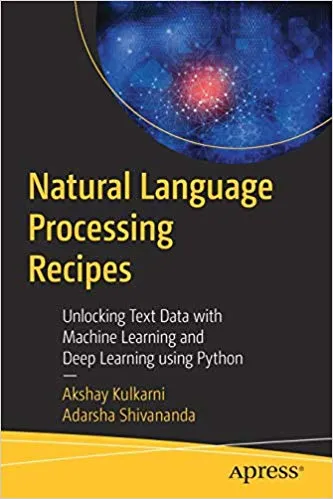
Akshay Kulkarni,Adarsha Shivananda