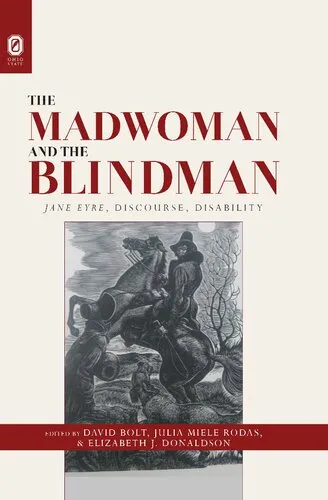
The madwoman and the blindman : Jane Eyre, discourse, disability
Julia Miele Rodas;David Bolt;Elizabeth J. Donaldson
2012
View book
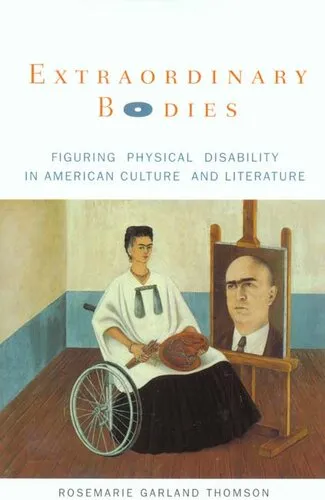
Book guide and evaluation
Rosemarie Garland Thomson
0 reviews
Published
pages
views
Welcome to the introduction of "Extraordinary Bodies: Figuring Physical Disability in American Culture and Literature," a profound exploration by Rosemarie Garland Thomson that delves into the nuanced portrayal and perception of physical disability in American society and l
Before you read
Welcome to the introduction of "Extraordinary Bodies: Figuring Physical Disability in American Culture and Literature," a profound exploration by Rosemarie Garland Thomson that delves into the nuanced portrayal and perception of physical disability in American society and literary tradition. This seminal work challenges conventional narratives and prompts a rethinking of cultural assumptions surrounding the disabled body.
Rosemarie Garland Thomson's "Extraordinary Bodies" takes readers on an insightful journey through the historical and cultural contexts that have shaped the representation of physical disabilities in American literature and culture. Thomson argues that disability, like race, gender, and sexuality, is a social construct that has been deeply influenced by sociocultural standards and narratives. Her analysis dives deep into how literature and cultural texts have historically depicted physical disabilities, often reinforcing stereotypes or marginalizing disabled individuals.
Through a meticulous analysis of American literature ranging from classic to contemporary works, Thomson illustrates how disabled bodies are often cast as symbolic elements within narratives. She explores the implications of such representations and argues for a redefinition of the disabled identity, advocating for a more inclusive and equitable societal framework.
Thomson’s work spans a variety of genres and media, including literature, film, and the visual arts. She offers critical readings of works by authors such as Nathaniel Hawthorne and Toni Morrison, showcasing how disability is often entwined with themes of otherness and deviance. By deconstructing these portrayals, Thomson invites readers to recognize the complexities of disabled identities and the potential for inclusive representation.
“The process of making disability—or any marker of identity—extraordinary can illuminate how cultural systems operate to normalize certain bodies and stigmatize others.”
“Disability becomes an overarching thematics that which structures narrative forms, shapes characters’ identities, and frames social and cultural expressions.”
"Extraordinary Bodies" is a cornerstone in disability studies and critical theory, offering a pioneering perspective on how physical disabilities have been portrayed and understood within American culture. Its importance lies in challenging established assumptions and urging for paradigms that honor diversity and authenticity. This book matters because it contributes to a broader, ongoing conversation about inclusivity and equity in representation.
By re-evaluating the disabled identity and its cultural significance, Thomson's work inspires scholars, students, and general readers to reconsider their own perceptions and the societal structures that underpin them. Her book is an essential resource for those seeking to understand the intersections of identity and the power of narratives in shaping social realities.
Your question is answered in the context of this title and author. Each answer uses 2 points.
0 reviews, 4.5 average out of 5
Sign in to publish a review.
Ask a focused question and learn from the community.
Related references that continue this learning path.
Julia Miele Rodas;David Bolt;Elizabeth J. Donaldson