Book guide and evaluation
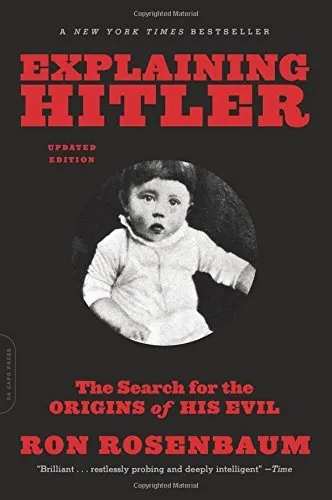
Explaining Hitler: The Search for the Origins of His Evil
Ron Rosenbaum
English
Intermediate
novel
4.0 / 5
0 reviews
2014
Published
521
pages
717
views
Welcome to a comprehensive introduction to "Explaining Hitler: The Search for the Origins of His Evil," a profound exploration into one of history's most enigmatic figures. This book, penned by Ron Rosenbaum, delves deeply into the contentious debates and multifaceted theorie
Before you read
What will you get from this book?
Welcome to a comprehensive introduction to "Explaining Hitler: The Search for the Origins of His Evil," a profound exploration into one of history's most enigmatic figures. This book, penned by Ron Rosenbaum, delves deeply into the contentious debates and multifaceted theories surrounding Adolf Hitler's rise to power and the malevolent impact he had on the world. Through meticulous research and engaging narratives, Rosenbaum scrutinizes the question that has perplexed historians and scholars for decades: What made Hitler evil?
Detailed Summary of the Book
The book embarks on a journalistic journey, where Rosenbaum engages with prominent historians, psychoanalysts, philosophers, and biographers, each offering unique perspectives on Hitler's psyche and motivations. Rather than arriving at a singular explanation, the book navigates through various theories, each adding layers of complexity to the understanding of Hitler's evil.
Rosenbaum investigates different hypotheses, from the influence of Hitler's upbringing and personal traumas to the socio-political context of early 20th-century Germany. He explores the psychological theories set forth by experts like Dr. Gustav M. Gilbert and Dr. Walter C. Langer, who delved into Hitler's pathological narcissism and psychopathy. In parallel, the book examines cultural and historical explanations, such as the impact of World War I and the Treaty of Versailles, which allegedly fueled Hitler's nationalistic fervor.
What makes "Explaining Hitler" particularly compelling is its refusal to simplify or definitively categorize Hitler. Rosenbaum presents a mosaic of interpretations, showing how diverse scholarly views can illuminate different facets of Hitler's character. By painting a nuanced portrait, the book encourages readers to contemplate the broader implications of attributing evil to such figures.
Key Takeaways
- The book fosters an understanding that there is no singular reason for Hitler's evil, but rather a confluence of factors and influences.
- It emphasizes the importance of examining historical figures through multiple lenses, including psychological, cultural, and political perspectives.
- Readers gain insight into the complexities surrounding the discourse on morality and evil in the context of historical analysis.
- Rosenbaum challenges readers to grapple with the ethical ramifications of how we explain and interpret evil.
Famous Quotes from the Book
"The quest to understand the origins of Hitler's evil leads us into the darkest corners of the human psyche and the staggering depths of historical complexity."
"In seeking to explain Hitler, we are tasked not just with recounting history, but with pondering the nature of evil itself."
Why This Book Matters
Rosenbaum's "Explaining Hitler" is crucial reading for anyone interested in World War II history, psychology, or moral philosophy. Beyond recounting the atrocities committed under Hitler's regime, the book serves as an exploration into the nature of evil—one that compels us to reflect on the conditions and choices that allow such malevolence to flourish.
The book's value lies in its refusal to provide easy answers. Instead, it invites readers to engage with a broad spectrum of interpretations and to appreciate the inherent complexity in explaining historical figures of extreme notoriety. "Explaining Hitler" matters not only as a historical inquiry but also as a moral investigation into human nature and the perennial presence of evil in our world.
Ask this book
Your question is answered in the context of this title and author. Each answer uses 2 points.
Sign in to ask the book assistant.
Reader reviews
0 reviews, 4.0 average out of 5
No reviews yet
If you have read this book, help the next reader with your experience.
Write a review
Sign in to publish a review.
Reader questions and answers
Ask a focused question and learn from the community.
Sign in to ask or answer a question.
No questions yet
Be the first to ask a clear, useful question.
What to read next
Related references that continue this learning path.