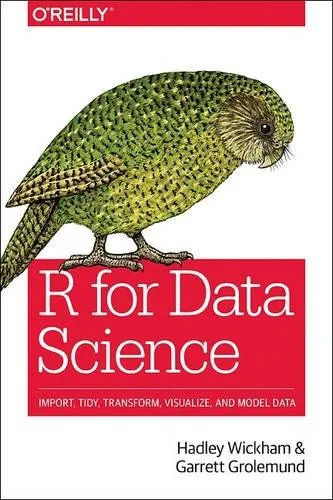
R for Data Science: Import, Tidy, Transform, Visualize, and Model Data
Hadley Wickham,Garrett Grolemund
2017
View book

Book guide and evaluation
Tin-Chih Toly Chen
0 reviews
Published
pages
views
Introduction to "Explainable Artificial Intelligence (XAI) in Manufacturing: Methodology, Tools, and Applications" Artificial Intelligence (AI) has become a transformative force across industries, with its impact on manufacturing being particularly significant. However, as
Before you read
Artificial Intelligence (AI) has become a transformative force across industries, with its impact on manufacturing being particularly significant. However, as the adoption of AI grows, so does the complexity and opacity of its decision-making processes, leaving manufacturers and engineers questioning the rationale behind the AI's outcomes. This lack of transparency can lead to distrust in AI systems, hampering their full integration in mission-critical applications. My book, "Explainable Artificial Intelligence (XAI) in Manufacturing: Methodology, Tools, and Applications," addresses this crucial gap by offering a comprehensive guide to understanding, implementing, and leveraging XAI specifically tailored for the manufacturing sector.
Broken down into structured and actionable chapters, this book prides itself on presenting a systematic approach to Explainable Artificial Intelligence (XAI) in manufacturing. The journey begins with a concise overview of traditional AI techniques and the inherent "black box" problems they present. From here, the text delves into the methodologies needed to make AI explainable, exploring frameworks such as Local Interpretable Model-agnostic Explanations (LIME), Shapley Additive Explanations (SHAP), and attention mechanisms, among others.
The second part of the book focuses on practical tools and applications of XAI. I provide insights into software platforms, model-agnostic approaches, and industry-relevant use cases that show how XAI aids in process optimization, predictive maintenance, and quality control. Furthermore, the book emphasizes the role of interpretability in enhancing safety, compliance with industry regulations, and decision-making across manufacturing domains.
The final section envisions a future where XAI becomes an integral part of Industry 4.0. Through real-world scenarios and challenges, readers are guided on how to harness the full potential of AI while maintaining stakeholder trust, transparency, and accountability.
"Explainable Artificial Intelligence is not just about interpreting algorithms; it is about building trust between humans and machines in an era governed by data-driven decisions."
"For manufacturers, the journey to Industry 4.0 is incomplete without ensuring the interpretability and transparency of the AI systems driving operational excellence."
"The balance between performance and explainability in AI isn't a compromise—it's an obligation for sustainable, ethical, and transformative AI usage."
The relevance of this book cannot be overstated in today's manufacturing landscape. As businesses increasingly incorporate AI-driven solutions, ensuring that these systems provide interpretable and transparent outputs is crucial for their effective adoption. Manufacturers require trust in their AI systems to justify investments, adhere to regulatory standards, and safeguard ethical practices. This book addresses these concerns head-on, equipping professionals, researchers, and policymakers with the tools necessary to decode AI's decision-making processes.
Moreover, this book bridges the gap between theoretical concepts and practical applications. As industries strive towards achieving Industry 4.0, this text serves as a roadmap for implementing AI responsibly and effectively. Whether you're an engineer, project manager, or academic, "Explainable Artificial Intelligence (XAI) in Manufacturing" empowers you with the knowledge and confidence needed to navigate the complexities of AI systems.
Through its structured methodology and hands-on case studies, it transforms the intimidating notion of explainable AI into actionable insights capable of redefining manufacturing strategies. Trust, transparency, and innovation form the foundation of this book, ensuring its significance for years to come.
Your question is answered in the context of this title and author. Each answer uses 2 points.
0 reviews, 4.0 average out of 5
Sign in to publish a review.
Ask a focused question and learn from the community.
Related references that continue this learning path.
Hadley Wickham,Garrett Grolemund