
Deep Natural Language Processing and Ai Applications for Industry 5.0 (Advances in Computational Intelligence and Robotics)
Poonam Tanwar (editor),Arti Saxena (editor),C. Priya (editor)
2021
View book
Book guide and evaluation
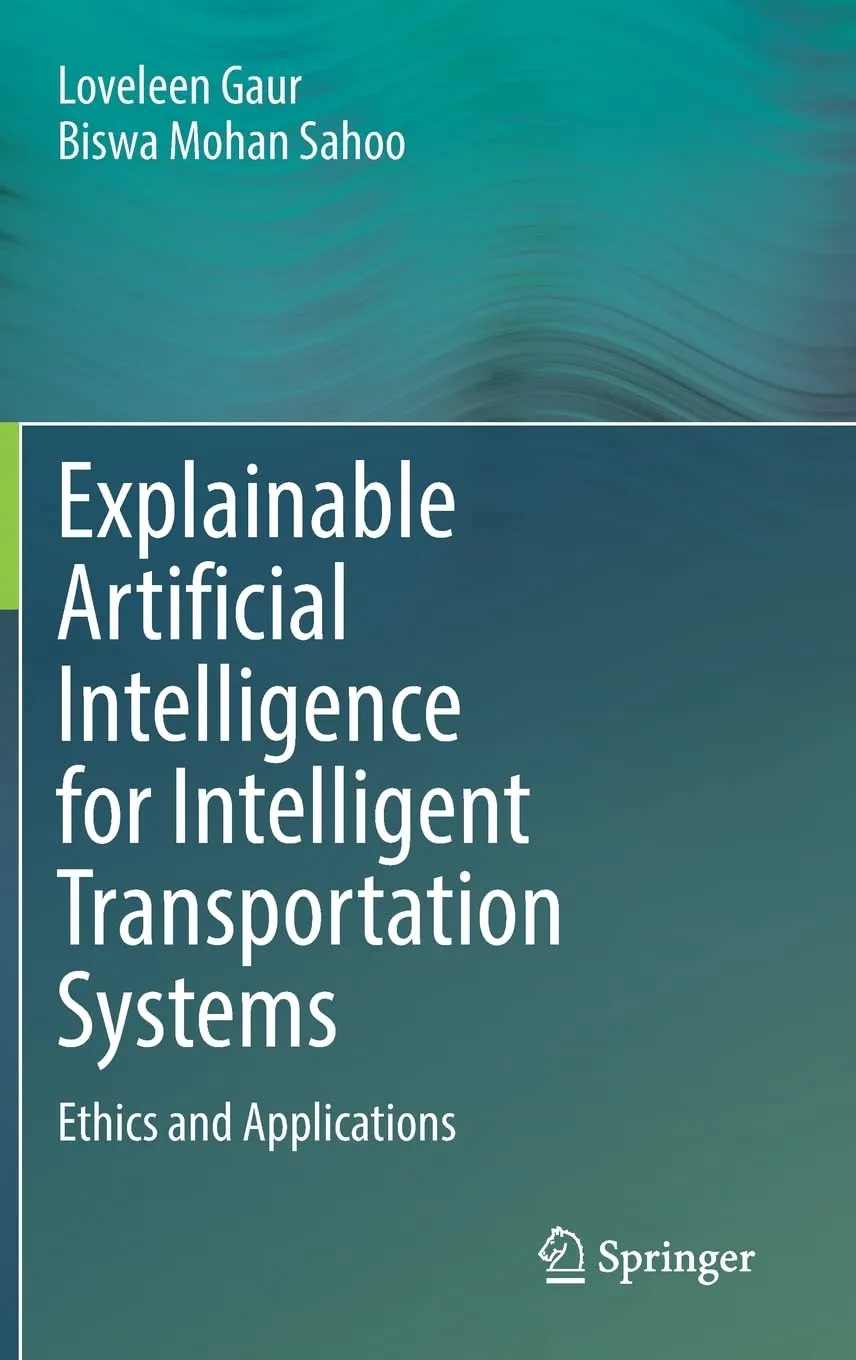
Loveleen Gaur,Biswa Mohan Sahoo
0 reviews
Published
pages
views
Introduction to the Book The rapid development of Artificial Intelligence (AI) has opened unparalleled opportunities for modern industries, and transportation is no exception. However, as we integrate AI into transportation systems, ensuring these technologies remain trans
Before you read
The rapid development of Artificial Intelligence (AI) has opened unparalleled opportunities for modern industries, and transportation is no exception. However, as we integrate AI into transportation systems, ensuring these technologies remain transparent, understandable, and ethically sound is critical. The book "Explainable Artificial Intelligence for Intelligent Transportation Systems: Ethics and Applications" is an in-depth exploration of how Explainable Artificial Intelligence (XAI) is transforming transportation, while addressing the ethical implications and practical uses of these systems. Co-authored by Loveleen Gaur and Biswa Mohan Sahoo, this book is a definitive resource for readers eager to explore the intersection of AI, transportation systems, and social responsibility.
Aimed at building trust and promoting accountability within AI-driven innovations, the book delves into how XAI principles ensure transparency, mitigate risks, and enhance decision-making frameworks in intelligent transportation systems. Whether you're a researcher, policymaker, technologist, or ethical enthusiast, the insights offered in this work serve as a valuable guide to understanding the importance and application of XAI in this crucial field.
The book opens with a foundational introduction to Explainable Artificial Intelligence, establishing its core concepts and principles. It examines how traditional AI often operates as a "black box," making decisions that are difficult to interpret. By contrast, XAI focuses on creating models that are not only high-performing but also interpretable and transparent—an essential feature for transportation systems where human lives and safety are at stake.
Moving forward, the book explores various Intelligent Transportation Systems (ITS), such as autonomous vehicles, traffic management, and predictive maintenance. It discusses how XAI methodologies contribute to each of these domains by enabling explainability in AI-driven decisions. For instance, why did an autonomous vehicle brake suddenly? How did the system predict a potential collision? By answering such questions, XAI enhances trust, accountability, and user confidence.
A significant focus of the book is on ethical considerations. From discussing biases in AI algorithms to ensuring data privacy and informed consent, the authors highlight the critical ethical dilemmas that must be addressed when integrating AI into transportation. Real-world case studies and examples further illustrate these challenges while providing actionable solutions.
The concluding sections present advanced applications of XAI in ITS, emphasizing its role in regulatory frameworks, social integration, and urban planning for smart cities. By bridging theoretical knowledge and practical use cases, the book offers a road map for developing transparent, ethical, and efficient transportation infrastructures powered by AI.
"Trust isn’t an afterthought in AI—it's a fundamental necessity. To ensure trust in AI-driven transportation, we must prioritize explainability from ideation to implementation."
"Only by making AI systems interpretable and accessible can we forge ethical practices that align with human values and societal needs."
In an era dominated by rapid technological advancements, the role of Explainable AI in creating trustworthy, ethical, and sustainable solutions cannot be understated. This book addresses a critical gap in the literature by focusing specifically on XAI’s role in Intelligent Transportation Systems. Unlike other works that discuss AI in generic terms, this book provides a tailored focus on transportation—a sector intrinsically tied to public safety, economic growth, and global sustainability.
Moreover, by integrating philosophical and practical discussions on ethics, it prompts stakeholders to think beyond technical performance and prioritize human-centric design. This is particularly significant for policymakers and urban planners who are shaping the future of transportation infrastructures. By highlighting the "how" and "why" of implementing XAI, the book pushes the boundaries of technology while ensuring an inclusive and ethical evolution.
Your question is answered in the context of this title and author. Each answer uses 2 points.
0 reviews, 4.0 average out of 5
Sign in to publish a review.
Ask a focused question and learn from the community.
Related references that continue this learning path.
Poonam Tanwar (editor),Arti Saxena (editor),C. Priya (editor)

Hadley Wickham,Garrett Grolemund