
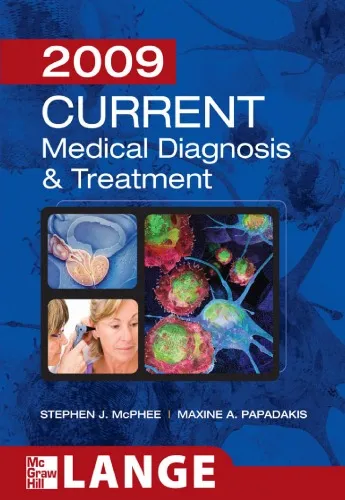
Current Medical Diagnosis and Treatment 2009, 48th Edition (Current Medical Diagnosis and Treatment)
Stephen J. McPhee,Maxine A. Papadakis

Book guide and evaluation
European Association of Urology
0 reviews
Published
pages
views
European Association of Urology Guidelines 2021 Urological best practices, evidence-based clinical recommendations European Association of Urology Guidelines 2021 offers authoritative, evidence-based direction for modern urological practice. Analytical Summary The
Before you read
The European Association of Urology Guidelines 2021 stand as a definitive resource for healthcare professionals, researchers, and academics in the field of urology. Developed through an exhaustive process of reviewing, analyzing, and synthesizing the latest scientific evidence, these guidelines aim to inform clinical practice with clarity, precision, and relevance.
This edition integrates peer-reviewed evidence with the collective expertise of leading urologists across Europe and beyond. Designed to cover a wide spectrum of urological conditions — from benign prostatic hyperplasia to complex oncological cases — it provides meticulously structured chapters grounded in rigorous methodology. Each section is the result of collaborative consensus and transparent evaluation of data.
The 2021 guidelines illustrate not just procedural recommendations but the rationale behind them, enabling physicians and medical students to adopt a deeper understanding of key interventions. Information is presented in a structured, accessible manner without sacrificing scientific integrity, making it adaptable for both everyday clinical decisions and academic discourse.
Readers of the European Association of Urology Guidelines 2021 will gain insights that shape the current and future practice of urology. This edition underscores evidence-based medicine as the cornerstone for patient care and highlights advances that redefine treatment modalities.
Key updates cover the latest diagnostic algorithms, minimally invasive surgical techniques, and refined pathways for managing chronic and acute urological diseases. Equally significant is the emphasis on patient-centric approaches, ensuring that ethical considerations and quality-of-life outcomes are integrated into treatment planning.
Innovations in technology — including imaging, genetic testing, and robotic surgery — are addressed to reflect the evolving toolbox available to modern urologists. Accessibility of these updates makes the guidelines a living reference point for clinical excellence.
"Guidelines should empower clinicians to blend scientific evidence with the art of compassionate care." Unknown
"The urologist’s responsibility is not only to treat but to anticipate and prevent." Unknown
"Evidence transforms practice, but shared values sustain it." Unknown
Within the rapidly advancing landscape of urology, the European Association of Urology Guidelines 2021 serve as a critical anchor for consistent, safe, and effective patient care.
This work consolidates the dispersed wealth of urological research into a coherent framework, enabling clinicians to make informed decisions across diverse clinical scenarios. Secondary keywords such as “urological best practices” and “evidence-based clinical recommendations” are central to the Guidelines' mission.
Information unavailable regarding specific awards or recognitions for this edition due to a lack of reliable public sources; however, the credibility of the Guidelines is affirmed through their widespread adoption and rigorous authorship process.
In an era when medical misinformation can proliferate rapidly, such authoritative and peer-reviewed recommendations are essential in safeguarding the integrity of healthcare delivery.
The European Association of Urology Guidelines 2021 are more than a manual; they are a living testament to the union of science, clinical wisdom, and ethical responsibility.
By bridging the gap between cutting-edge research and bedside application, these guidelines empower urologists, trainees, and researchers to build a future-oriented standard of care. Their detailed recommendations and balanced perspective stimulate dialogue within the medical community, ensuring that the art and science of urology continue to evolve harmoniously.
As you engage with this edition, consider sharing its insights with colleagues, discussing its implications within professional networks, and applying its evidence-based strategies in your own clinical setting. The next step is yours — read, share, and contribute to the ongoing refinement of urological practice.
Your question is answered in the context of this title and author. Each answer uses 2 points.
0 reviews, 4.8 average out of 5
Sign in to publish a review.
Ask a focused question and learn from the community.
Related references that continue this learning path.
Stephen J. McPhee,Maxine A. Papadakis
Bradley John S Nelson John D

John D. Nelson,John S. Bradley,David W. Kimberlin,Elizabeth Barnett,J. Howard Smart,Jason Sauberan,Joseph B. Cantey,Paul E. Palumbo,William J. Steinbach

John S. Bradley,John D. Nelson,Elizabeth D. Barnett,Joseph B. Cantey,David W. Kimberlin,Paul E. Palumbo,Jason Sauberan,William J. Steinbach