Book guide and evaluation
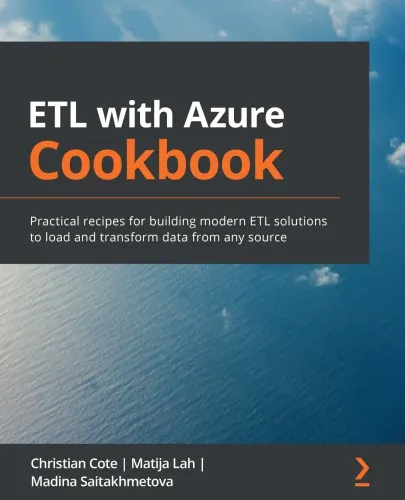
ETL with Azure Cookbook: Practical recipes for building modern ETL solutions to load and transform data from any source
Christian Cote, Matija Lah, Madina Saitakhmetova
English
Unordered
Data Analytics
4.6 / 5
0 reviews
2020
Published
446
pages
435
views
ETL with Azure Cookbook: Practical recipes for building modern ETL solutions to load and transform data from any source Azure Data Factory, cloud-based ETL solutions Discover ETL with Azure Cookbook: Practical recipes for building modern ETL solutions to load and transf
Before you read
What will you get from this book?
Analytical Summary
The ETL with Azure Cookbook: Practical recipes for building modern ETL solutions to load and transform data from any source serves as an authoritative guide for professionals seeking to master the art and science of Extract, Transform, Load processes in the Microsoft Azure ecosystem. Written by Christian Cote, Matija Lah, and Madina Saitakhmetova, this work combines technical depth with practical applicability.
This cookbook is organized into well-structured recipes, each designed to address real-world challenges in data integration, transformation, and orchestration in the cloud. The authors leverage their industry and consulting experience to cover Azure Data Factory, Azure Synapse Analytics, and allied Azure services, offering readers actionable solutions to common pain points, from ingesting diverse datasets to implementing advanced analytical workflows.
Unsurprisingly, the emphasis on "building modern ETL solutions" underscores the importance of scalability, automation, and adaptability. Each recipe is framed in a way that readers can adapt quickly to their own use cases, whether handling batch or streaming data, integrating on-premises sources, or managing complex transformations across multiple environments.
Information such as publication year is unavailable due to no reliable public source specifying an exact date. Regardless, the strategies documented remain highly relevant to today’s data engineering domain, especially for enterprises committed to cloud migration or hybrid architectures.
Key Takeaways
Readers will finish this book equipped with a toolkit of Azure-centric ETL recipes, enabling robust data integration pipelines that streamline workflows and enhance data quality.
One of the standout features is the authors’ balanced approach between theory and practice, ensuring readers not only learn the "how" but also the "why" behind each proposed method.
Secondary themes such as Azure Data Factory and cloud-based ETL solutions are woven throughout to cement foundational skills while expanding understanding of enterprise data ecosystems.
Readers gain insights into security, governance, and optimization for Azure-based ETL architectures, making this resource invaluable for both experienced engineers and dedicated learners.
Memorable Quotes
“A well-structured ETL pipeline turns raw data into actionable business intelligence.”Unknown
“Azure’s ecosystem empowers engineers to build solutions that are both scalable and secure.”Unknown
“Modern ETL is as much about orchestration and governance as it is about transformations.”Unknown
Why This Book Matters
In today’s data-driven world, organizations rely heavily on clean, timely, and well-integrated data to power analytics and decision-making. The ETL with Azure Cookbook distills this requirement into executable recipes tailored for Azure’s suite of services.
The authors' collective expertise ensures that modern ETL challenges—such as integrating multi-format data, complying with data governance regulations, and scaling for global accessibility—are addressed with clarity and precision.
By repeatedly revisiting themes of automation and performance optimization, this guide sets the standard for implementing ETL solutions that truly serve business needs while respecting architectural best practices.
Inspiring Conclusion
The ETL with Azure Cookbook: Practical recipes for building modern ETL solutions to load and transform data from any source is more than a manual—it is a springboard for professionals, academics, and motivated learners to elevate their data engineering craft.
As you explore its pages, you are invited to adapt each recipe, experiment with Azure's powerful toolset, and contribute to the evolving practice of cloud-based ETL solutions. Whether you read it cover-to-cover or reference it project-by-project, the insights within will remain relevant for years to come.
Take the next step—read, share, and discuss your applications of its guidance. In doing so, you will not only deepen your mastery but also help advance the collective capability of the data engineering community.
Ask this book
Your question is answered in the context of this title and author. Each answer uses 2 points.
Sign in to ask the book assistant.
Reader reviews
0 reviews, 4.6 average out of 5
No reviews yet
If you have read this book, help the next reader with your experience.
Write a review
Sign in to publish a review.
Reader questions and answers
Ask a focused question and learn from the community.
Sign in to ask or answer a question.
No questions yet
Be the first to ask a clear, useful question.
What to read next
Related references that continue this learning path.
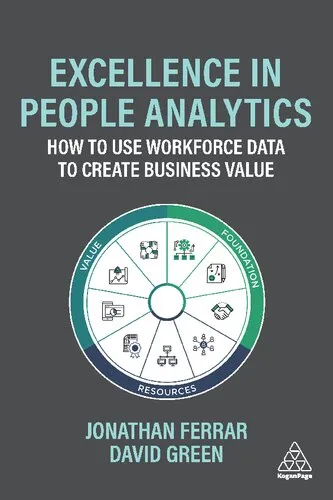
Excellence in People Analytics: How to use workforce data to create business value
Jonathan FerrarandDavid Green
2021
View book