

Gray's anatomy for students
Drake, Richard Lee;Gray, Henry;Mitchell, Adam W. M.;Vogl, Wayne
2015
View book
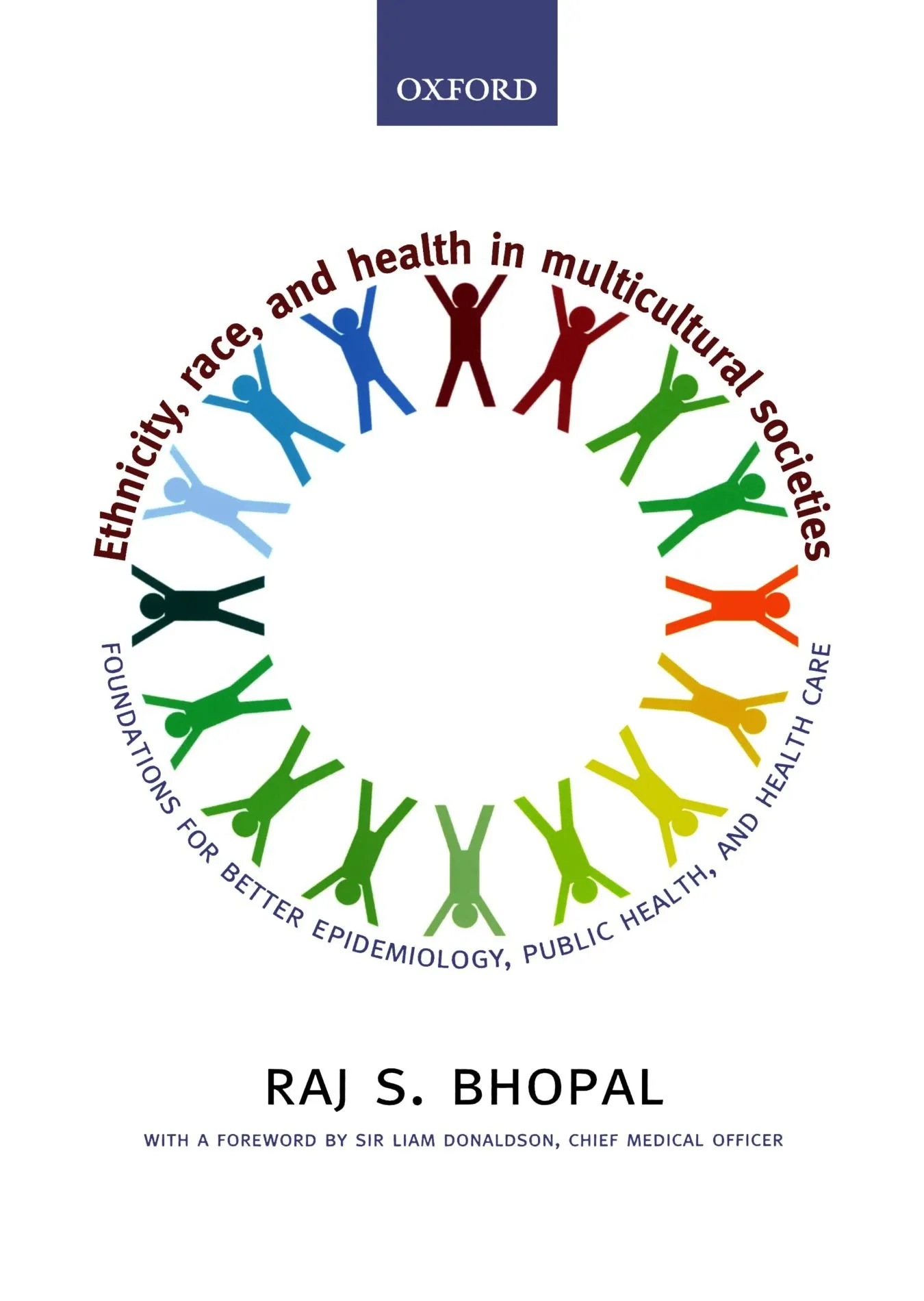
Book guide and evaluation
Raj S. Bhopal
0 reviews
Published
pages
views
Introduction to 'Ethnicity, Race, and Health in Multicultural Societies' "Ethnicity, Race, and Health in Multicultural Societies: Foundations for Better Epidemiology, Public Health, and Health Care" serves as an essential resource for understanding and addressing the compl
Before you read
"Ethnicity, Race, and Health in Multicultural Societies: Foundations for Better Epidemiology, Public Health, and Health Care" serves as an essential resource for understanding and addressing the complexities of health disparities in diverse and multicultural societies. Written by Raj S. Bhopal, this book provides a comprehensive exploration of the intersection between race, ethnicity, and health. Through meticulous research and a framework built on solid epidemiological foundations, it equips health professionals, researchers, and policymakers with the tools needed to enhance health care and public health outcomes in an increasingly globalized world.
The book begins by defining and critically examining the concepts of ethnicity and race, offering a framework for their use in public health and health care. It delves into the historical, sociological, and epidemiological dimensions of race and ethnicity, providing clarity on these often-misunderstood terms. These foundational concepts set the stage for addressing health inequalities and the ways society defines and manages them.
In subsequent chapters, the book examines how race and ethnicity influence health at both the individual and population levels. It explores the impacts of social determinants, genetic predispositions, cultural practices, and historical inequities, offering a holistic perspective. The analysis is further enriched by discussions on racism and its pervasive effects on the allocation of resources, health services, and epidemiological research.
The book highlights practical examples from various countries and regions. It provides case studies that underline best practices, successful public health interventions, and the challenges of combating health disparities. The practical strategies in the book are invaluable for shaping policy and improving health systems in multicultural societies.
Finally, the author offers a forward-looking vision, emphasizing the need for inclusive approaches in public health policy, the adaptation of epidemiological methods to diverse populations, and the importance of education and training in race, ethnicity, and health. By the end, readers are left with actionable knowledge, a deeper awareness of health disparities, and a guide to creating equitable health care environments.
"The concepts of race and ethnicity are not just biological or sociological constructs — they are lenses through which we view and organize the world."
"Health inequalities are a mirror of social inequalities, and to address them is not only a medical challenge but a moral imperative."
"Cultural competence in health care is more than a skill; it is an ethos of respect, empathy, and inclusion."
In an era of globalization and increasing cultural diversity, health inequities continue to persist across the globe. This book provides a roadmap for addressing these disparities, urging health professionals to embrace culturally competent approaches to care and research. By bridging the gap between epidemiology and social science, it empowers readers to understand the root causes of health inequalities and create effective solutions.
The book's focus on practical strategies is particularly relevant for policymakers, practitioners, and academics in fields such as medicine, public health, and social sciences. It encourages a critical examination of existing systems and policies, pushing for reform that centers on equity and fairness. By addressing one of the most pressing challenges in public health, this book serves as both a wake-up call and a guide to action.
Whether you are a student, a seasoned professional, or simply someone with an interest in health and society, this book provides the tools to better understand the complexities of race, ethnicity, and health. It challenges readers to rethink traditional paradigms and fosters a commitment to creating a world where health care and public health are inclusive, equitable, and accessible to all.
Your question is answered in the context of this title and author. Each answer uses 2 points.
0 reviews, 4.5 average out of 5
Sign in to publish a review.
Ask a focused question and learn from the community.
Related references that continue this learning path.
Drake, Richard Lee;Gray, Henry;Mitchell, Adam W. M.;Vogl, Wayne


Betty J. Ackley;Gail B. Ladwig;Mary Beth Flynn Makic

Barbara Montgomery Dossey,Lynn Keegan,Cathie E. Guzzetta