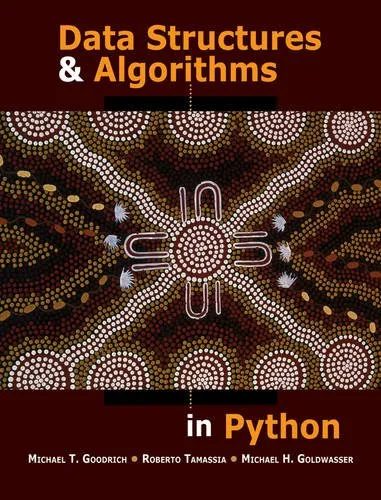
Data Structures and Algorithms in Python
Michael T. Goodrich,Roberto Tamassia,Michael H. Goldwasser
2013
View book
Book guide and evaluation
Mr David Hillyard,Mr Craig Sargent,Mr Andrew Fenn (editor)
0 reviews
Published
pages
views
Introduction to "Essential Algorithms for A Level Computer Science" Welcome to Essential Algorithms for A Level Computer Science, a comprehensive guide designed to equip students, educators, and computing enthusiasts with the fundamental principles required to excel in algorit
Before you read
Welcome to Essential Algorithms for A Level Computer Science, a comprehensive guide designed to equip students, educators, and computing enthusiasts with the fundamental principles required to excel in algorithmic thinking and problem-solving. Crafted by a team of experienced educators and technologists, this book serves as both a learning companion and a reference point for anyone pursuing computer science at an advanced level.
Algorithms are the lifeblood of computer science. They dictate how problems are solved, how software is built, and how data is processed. This book takes readers on a structured journey, offering clear explanations of complex concepts, hands-on coding exercises, and practical examples that align with A-Level Computer Science curriculum requirements. Whether you're preparing for exams, working on a project, or simply looking to deepen your understanding, this book has the tools you need.
What this book offers is a roadmap to mastering algorithms step by step.
The book begins by introducing foundational algorithmic concepts, such as computational thinking, problem decomposition, and abstraction. It progresses through a well-structured sequence of core topics, including sorting and searching algorithms, graph traversal methods, recursion, and efficiency analysis with Big-O notation. Advanced concepts such as dynamic programming and greedy algorithms are also presented with clarity and accompanying examples.
Each chapter provides algorithmic explanations in plain English, ensuring accessibility for all learners. To support theoretical understanding, the book also integrates pseudocode, flowcharts, and Python implementations, catering to students with diverse learning preferences. Interactive exercises and examples are strategically placed to reinforce key concepts and help build problem-solving confidence.
The result is not just a guide to acing exams, but a toolkit to develop lifelong algorithmic skills relevant in academia and industry alike.
By the end of this book, you will not only possess the knowledge required to tackle A-Level Computer Science assessments but also be better prepared for the challenges of computational problem-solving in real-world applications.
"At its core, an algorithm is a recipe—a finite series of instructions designed to solve a specific problem efficiently."
"Writing effective algorithms isn't about knowing all the answers; it's about knowing how to ask the right questions."
"The efficiency of an algorithm is not measured by how fast it runs on your computer, but by how it scales as input size grows."
In an increasingly technology-driven world, the importance of mastering algorithms cannot be overstated.
This book bridges the gap between theory and application, enabling students to not only pass their A-Level Computer Science exams with confidence but also develop the critical thinking skills essential for software development, data science, artificial intelligence, and beyond. Unlike many traditional textbooks, Essential Algorithms for A Level Computer Science combines clarity with engagement. Its step-by-step structure, real-world examples, and interactive exercises ensure that the reader stays connected and interested throughout.
Additionally, the book aligns closely with the latest specifications of A-Level Computer Science, ensuring relevance to current syllabi while fostering wider understanding that extends beyond classroom walls.
This is not just a book for students; it is a guide for lifelong learners and aspiring problem solvers in the fascinating field of computer science.
Your question is answered in the context of this title and author. Each answer uses 2 points.
0 reviews, 4.5 average out of 5
Sign in to publish a review.
Ask a focused question and learn from the community.
Related references that continue this learning path.
Michael T. Goodrich,Roberto Tamassia,Michael H. Goldwasser
Kent Lee,Steve Hubbard
Narasimha Karumanchi