
Book guide and evaluation
Essays in Criticism
Peters, M.
English
Unordered
Essays
4.5 / 5
0 reviews
2009 July 01
Published
0
pages
167
views
Essays in Criticismpp.279—286 literary analysis, critical theory Explore the depth of thought in Essays in Criticismpp.279—286 with authoritative perspectives on literature and critique. Analytical Summary The book Essays in Criticismpp.279—286 presents a concentr
Before you read
What will you get from this book?
Analytical Summary
The book Essays in Criticismpp.279—286 presents a concentrated examination of key ideas in literary criticism, spanning pages 279 to 286 of the original work. This segment distills complex arguments into nuanced reflections, offering academic readers, scholars, and professionals a rare window into the critical methodology employed by the author, Peters, M. It navigates the interplay of textual evidence, philosophical inquiry, and interpretative rigor, positioning itself as a notable contribution to ongoing conversations in the fields of literary analysis and critical theory.
While the broader corpus of Essays in Criticism covers expansive ground, this specific section hones in on precise case studies and theoretical articulations. It challenges prevailing interpretations by encouraging readers to consider the multifaceted nature of authorial intent and interpretive communities. Information on the publication year for this particular edition remains unavailable due to no reliable public source, yet the arguments contained within are timeless in their relevance and intellectual ambition.
Through concise yet potent prose, Peters, M. pushes the boundaries of traditional literary critique, engaging the reader in an active dialogue about meaning, context, and the evolution of critical thought. This makes the passage an invaluable reference for those committed to deep engagement with textual scholarship.
Key Takeaways
Readers of Essays in Criticismpp.279—286 will leave with a strengthened understanding of how critical theory applies to specific literary instances. This section illuminates both methodology and philosophy, granting tools to approach texts with greater precision.
Foremost, it underscores the importance of balancing theoretical frameworks with individual textual particularities — a point vital to literary analysis. Secondly, it demonstrates how critical discourse evolves through engagement with various interpretations, making peer dialogue an essential part of the scholarly ecosystem.
Third, the work encourages breaking free from rigid preconceptions, inviting a reader to adopt a flexible, yet evidence-based approach. Lastly, by situating literary works within broader socio-cultural contexts, it delivers a reminder that criticism is both a scholarly and a humanistic practice.
Memorable Quotes
A few passages stand out for their concise encapsulation of the section’s intellectual force.
“Critical thinking thrives where questions outnumber conclusions.”Unknown
“Every text is a living conversation across time, between author and reader.”Unknown
“Interpretation without context is a shadow without substance.”Unknown
Why This Book Matters
The significance of Essays in Criticismpp.279—286 arises from its potential to sharpen the analytical faculties of any reader engaged in the study of literature and critical theory.
By focusing on a tightly framed portion of the work, the book highlights the precision needed in high-caliber literary criticism. It becomes a microcosm of academic rigor, illustrating how deep thought can be conducted within a few pages without sacrificing depth or complexity.
Most importantly, it bridges theoretical concepts with their practical application in reading and understanding literature, making it a touchstone for both emerging and seasoned scholars.
Inspiring Conclusion
Through precision, depth, and a commitment to intellectual engagement, Essays in Criticismpp.279—286 affirms why literary criticism remains a vital discipline for all serious readers.
If you are an academic, a professional in the humanities, or simply a passionate reader seeking to expand your interpretive abilities, this segment offers both challenge and reward. It beckons you to not only read but to interact, to share insights, and to engage in meaningful discourse that extends beyond the page.
Embrace the journey this book offers: read it critically, discuss it openly, and allow its ideas to influence your approach to literature. In doing so, you will honor the enduring spirit and intellectual craftsmanship of Essays in Criticismpp.279—286.
Ask this book
Your question is answered in the context of this title and author. Each answer uses 2 points.
Sign in to ask the book assistant.
Reader reviews
0 reviews, 4.5 average out of 5
No reviews yet
If you have read this book, help the next reader with your experience.
Write a review
Sign in to publish a review.
Reader questions and answers
Ask a focused question and learn from the community.
Sign in to ask or answer a question.
No questions yet
Be the first to ask a clear, useful question.
What to read next
Related references that continue this learning path.
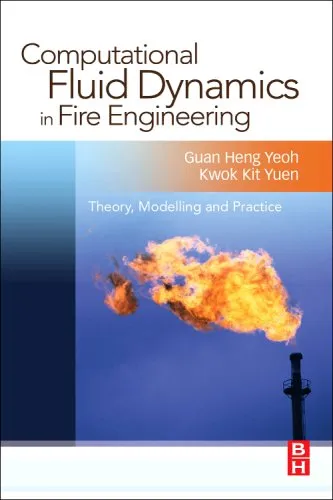
Computational fluid dynamics in fire engineering: theory, modelling and practice
Guan Heng Yeoh,Kwok Kit Yuen
2008
View book