

Oooooh . . . Say it Again: Mastering the Fine Art of Verbal Seduction and Aural Sex
Alan Roger Currie
2011
View book
Book guide and evaluation
Eric Berne,Eckhart Tolle,Anthony De Mello,Lester Levenson
0 reviews
Published
pages
views
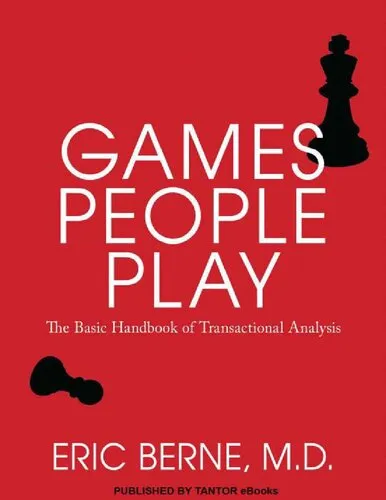
Introduction to "Games People Play: The Psychology of Human Relationships" "Games People Play," written by Eric Berne, is a groundbreaking exploration of human behavior and interpersonal dynamics. First published in 1964, this seminal work introduces the concept of
Before you read
"Games People Play," written by Eric Berne, is a groundbreaking exploration of human behavior and interpersonal dynamics. First published in 1964, this seminal work introduces the concept of transactional analysis—a psychological method that examines social interactions or "transactions" to understand human needs, behaviors, and communication patterns. Berne transforms the intricate and often elusive nature of relationships into a comprehensible structure, presenting it in the form of games, each with unique rules, benefits, and implications. This book demystifies the subconscious strategies individuals employ in social exchanges and sheds light on how relationships evolve—or fail to flourish—based on these hidden dynamics.
With brilliant insight, clarity, and a touch of humor, "Games People Play" continues to resonate with readers worldwide. By identifying recurring patterns and unconscious motivators behind human actions, Berne's work helps us develop deeper self-awareness and build better connections with others. Its relevance transcends decades, as the concepts of transactional analysis remain foundational in the fields of psychology, counseling, and interpersonal development. This book is not only a guide to understanding others but also a mirror for introspection and self-improvement.
At its core, "Games People Play" introduces and elaborates on the concept of games in human relationships. These are not the sort of games we think of in leisure or play, but psychological games—repetitive and predictable interactions that people engage in subconsciously to fulfill hidden motives or avoid intimacy and authenticity.
Berne begins by explaining the framework of transactional analysis, which categorizes communication into three ego states: Parent, Adult, and Child. These states represent the distinct mental and emotional frameworks driving interactions, often shaped by past experiences. Berne then delves into the structure and function of "games," which are specific patterns of interaction characterized by ulterior motives and concealed agendas.
Throughout the book, Berne categorizes common games, such as "Why Don't You – Yes But," "If It Weren't for You," and "See What You Made Me Do." Each game serves a psychological function, often reinforcing the players’ emotional needs or avoiding issues of intimacy and responsibility. By mapping these strategies, Berne helps readers identify why they and others act in certain ways and how to break free from unproductive cycles.
The book concludes with ways to transcend these games. Berne emphasizes the importance of honest and authentic communication, encouraging individuals to embrace healthier transactional interactions and thus, build more enriching and genuine relationships in their lives.
Eric Berne's writing is rich with thought-provoking insights and quotes. Here are some notable ones that encapsulate the essence of the book:
"Games People Play" is more than just a psychology book; it is a profound examination of what it means to be human. In a world rife with misunderstandings and fragmented connections, Berne's insights offer a roadmap for enhancing our relationships and deepening our interactions with the people around us. By teaching us to recognize the often subconscious games that dominate our exchanges, this book provides the tools necessary for fostering healthier, more authentic connections.
The relevance of this book reaches several domains, including individual self-improvement, counseling, education, workplace dynamics, and even parenting. It equips readers with the language and frameworks to understand complex interactions and, more importantly, to change them. Berne's concepts have influenced not only psychology but also literature, leadership development, and popular culture.
For anyone seeking to break free from destructive patterns, deepen their personal relationships, or simply understand why humans behave as they do, "Games People Play" is a must-read. Its timeless wisdom continues to transform the way we approach communication, relationships, and personal growth.
Your question is answered in the context of this title and author. Each answer uses 2 points.
0 reviews, 4.5 average out of 5
Sign in to publish a review.
Ask a focused question and learn from the community.
Related references that continue this learning path.
Alan Roger Currie
Michael P Nichols