
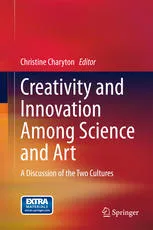
Creativity and Innovation Among Science and Art: A Discussion of the Two Cultures
Christine Charyton (eds.)
2015
View book

Book guide and evaluation
Werner Callebaut (auth.),Mauricio Suárez,Mauro Dorato,Miklós Rédei (eds.)
0 reviews
Published
pages
views
Introduction to 'EPSA Philosophical Issues in the Sciences: Launch of the European Philosophy of Science Association' Welcome to an in-depth exploration of 'EPSA Philosophical Issues in the Sciences: Launch of the European Philosophy of Science Association', a remarkable
Before you read
Welcome to an in-depth exploration of 'EPSA Philosophical Issues in the Sciences: Launch of the European Philosophy of Science Association', a remarkable compilation edited by Mauricio Suárez, Mauro Dorato, and Miklós Rédei. This groundbreaking book marks the pivotal launch of the European Philosophy of Science Association (EPSA), an organization dedicated to fostering collaboration and dialogue among philosophers of science across Europe and beyond. In this book, you'll find a rich, diverse collection of essays that examine philosophical questions at the intersection of science, epistemology, and metaphysics.
The volume is a celebration of the intellectual depth and breadth of the philosophy of science as a discipline. It addresses pressing concerns in the scientific community, ranging from the interpretation of scientific theories to foundational questions about scientific realism, causation, probability, and the nature of laws. The book provides not only a state-of-the-art overview but also advances novel arguments and perspectives. This makes it indispensable reading for anyone passionate about the philosophy of science or the intricate philosophical challenges posed by scientific inquiry.
The essays featured in this volume are categorized into thematic sections, touching upon some of the most debated areas in the philosophy of science. Among the topics discussed are the epistemology of scientific models, the nature of explanation, and the role of idealization in scientific practice. The collection provides in-depth examinations of metaphysical issues, such as the nature of causality and the interpretation of quantum mechanics, offering both historical insights and innovative philosophical arguments.
The book also addresses practical concerns, such as ethics in scientific research and the sociological underpinnings of scientific knowledge. The contributors include leading philosophers of science, whose varied perspectives ensure a pluralistic and dynamic treatment of the subject matter. As such, the volume contributes to both theoretical advances and real-world applications, showcasing the relevance of philosophy to contemporary science.
Whether you are a philosopher, scientist, or anyone interested in understanding how philosophical perspectives shape and are shaped by scientific discovery, this book provides a comprehensive toolkit to navigate these complex intersections.
"Science does not advance in a vacuum; it is philosophy that provides the scaffolding upon which scientific theories stand."
"The scientific enterprise is as much about uncovering what we cannot know as it is about solidifying what we do."
"To interpret a model is to navigate the delicate balance between abstraction and reality, between idealization and application."
The philosophy of science is a uniquely interdisciplinary field that bridges the gap between abstract metaphysical quandaries and practical scientific challenges. This book captures that dynamic interplay, offering rigorous and thought-provoking perspectives that contribute meaningfully to both domains. By laying out the intellectual foundation of the EPSA, the book sets the stage for years of fruitful debate and collaboration among philosophers and scientists alike.
In a time of rapid scientific advancements and complex ethical dilemmas, the importance of philosophical reflection cannot be overstated. This book matters because it equips readers with the tools to critically engage with the assumptions, methodologies, and implications of modern science. Moreover, it serves as a testament to the thriving community of philosophers in Europe and their impactful contributions to global academic discourse.
Whether you approach this book as an academic, a practitioner, or an intellectually curious reader, its insights will reshape the way you think about science and its philosophical underpinnings.
Your question is answered in the context of this title and author. Each answer uses 2 points.
0 reviews, 4.0 average out of 5
Sign in to publish a review.
Ask a focused question and learn from the community.
Related references that continue this learning path.
Christine Charyton (eds.)

Daniel Andler (auth.),Mauricio Suárez,Mauro Dorato,Miklós Rédei (eds.)