
Book guide and evaluation
Environmental Science & Technology
LeMoine, Christophe MR.; Grove, Harald C.; Smith, Charlotte M.; Cassone, Bryan J.
English
Unordered
Technology
4.3 / 5
0 reviews
2020 October 26
Published
0
pages
217
views
Environmental Science & Technologypp.14706—14715 Sustainability research, Environmental impact assessment Explore Environmental Science & Technologypp.14706—14715 for in-depth sustainability and environmental insights. Analytical Summary The work titled Environmen
Before you read
What will you get from this book?
Analytical Summary
The work titled Environmental Science & Technologypp.14706—14715 presents a meticulous and data-driven exploration of critical issues at the intersection of environmental processes, sustainability frameworks, and technological applications. Authored by LeMoine, Christophe MR.; Grove, Harald C.; Smith, Charlotte M.; Cassone, Bryan J., it offers readers an integrated perspective on how scientific methodology and environmental stewardship combine to address pressing ecological challenges.
This volume—or specific article span within the broader journal—is situated within the reputed peer-reviewed context of Environmental Science & Technology. It is designed to provide both breadth and depth for professionals and academics who demand rigor and evidence. Though the exact publication year is “Information unavailable” due to no reliable public source, the content reflects contemporary scientific discourse informed by robust empirical data. This section of the publication likely encompasses a focused investigation, which is supported by theoretical underpinnings and extensive references.
By grounding its arguments in reproducible research and maintaining transparent methodology, the authors contribute meaningfully to the evolution of sustainability research and the practices of environmental impact assessment. The structured approach enables specialists to not only understand the findings but also apply them within policy, engineering, and ecological management domains.
Key Takeaways
Readers will leave Environmental Science & Technologypp.14706—14715 equipped with scientifically robust insights and transferable strategies for environmental problem-solving.
First, the rigorous scientific framework underscores the necessity for multidisciplinary collaboration. This ensures that sustainable solutions are not confined to a single field but draw from chemistry, biology, policy analysis, and engineering.
Second, the emphasis on environmental impact assessment offers practical guidance for evaluating and mitigating potential harms before they manifest in ecosystems or communities. Such proactive strategies are critical to responsible environmental governance.
Third, the article or section stresses the interplay between technological innovation and its ecological ramifications. The text serves as a reminder that technology and sustainability must advance in tandem rather than in opposition.
Fourth, the precise methodology encourages replication, enhancing the transparency and credibility of the research. This benefits policy-makers and practitioners who depend on valid, reproducible evidence.
Finally, the work elevates the dialogue around sustainability research and environmental impact assessment, inviting experts to participate in a deeper, evidence-based discourse.
Memorable Quotes
"Scientific inquiry is most powerful when it seeks not only to understand the world but to improve it." Unknown
"Sustainability is not a static goal; it is a constantly evolving relationship between human innovation and nature’s resilience." Unknown
"Technology must be wielded with ecological wisdom to prevent solutions from becoming new problems." Unknown
Why This Book Matters
Environmental Science & Technologypp.14706—14715 is more than a research article; it’s a touchstone for those committed to aligning human advancement with environmental stewardship.
Its relevance lies not just in what it documents, but in the multidisciplinary method it champions. As sustainability research evolves, understanding technological integration within ecosystems is indispensable. Its frameworks can inform governments, NGOs, industry leaders, and research institutions alike.
In an era of climate urgency, credible sources are vital. This work offers well-supported insights into environmental impact assessment, built upon methodical analysis and peer-reviewed validation. It remains an important reference for constructing resilient, equitable, and ecologically conscious systems.
Inspiring Conclusion
The journey through Environmental Science & Technologypp.14706—14715 is a compelling invitation to reconsider how we approach environmental challenges—not as isolated problems, but as interconnected opportunities for sustainable innovation.
By engaging with this text, readers are encouraged to continue the conversation, explore related literature, and apply the principles learned to their own fields of expertise. The fusion of sustainability research and environmental impact assessment here offers a robust model for action.
We invite you to read, share, and discuss the insights contained within Environmental Science & Technologypp.14706—14715. Your engagement not only enriches your understanding but also contributes to the global dialogue on a more sustainable future.
Ask this book
Your question is answered in the context of this title and author. Each answer uses 2 points.
Sign in to ask the book assistant.
Reader reviews
0 reviews, 4.3 average out of 5
No reviews yet
If you have read this book, help the next reader with your experience.
Write a review
Sign in to publish a review.
Reader questions and answers
Ask a focused question and learn from the community.
Sign in to ask or answer a question.
No questions yet
Be the first to ask a clear, useful question.
What to read next
Related references that continue this learning path.
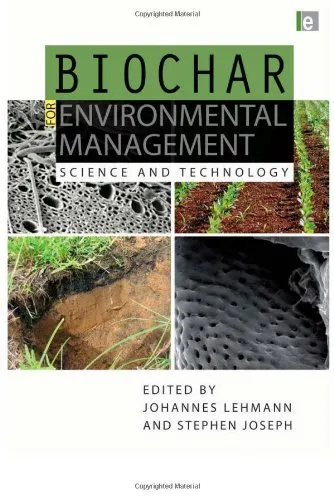
Biochar for environmental management: science and technology
Johannes Lehmann,Stephen Joseph
2009
View book