

Book guide and evaluation
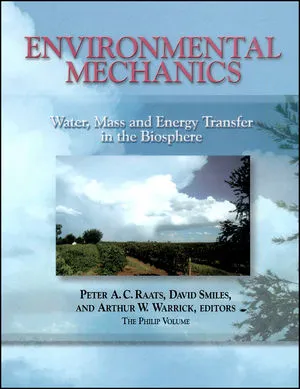
Environmental Mechanics: Water, Mass and Energy Transfer in the Biosphere: The Philip Volume
Peter A. C. Raats,David Smiles,Arthur W. Warrick (Editors)
English
Beginner
Physics
4.0 / 5
0 reviews
2002
Published
340
pages
158
views
Introduction to "Environmental Mechanics: Water, Mass and Energy Transfer in the Biosphere: The Philip Volume" Edited by Peter A. C. Raats, David Smiles, and Arthur W. Warrick, this seminal volume pays homage to the groundbreaking work of J. R. Philip, encapsulating de
Before you read
What will you get from this book?
Introduction to "Environmental Mechanics: Water, Mass and Energy Transfer in the Biosphere: The Philip Volume"
Edited by Peter A. C. Raats, David Smiles, and Arthur W. Warrick, this seminal volume pays homage to the groundbreaking work of J. R. Philip, encapsulating decades of scientific inquiry into the intricacies of water, mass, and energy transfer within the biosphere. "Environmental Mechanics: Water, Mass and Energy Transfer in the Biosphere: The Philip Volume" serves as a bridge between theoretical underpinnings and practical applications in environmental and biospheric physics. This book synthesizes fundamental principles, advanced research findings, and modern methodologies, providing a holistic understanding of crucial processes that dictate ecosystem dynamics and environmental sustainability.
Detailed Summary of the Book
The book begins by unpacking the foundational theories of environmental mechanics, with a strong focus on water transport, gas exchange, energy dynamics, and soil-plant-atmosphere interactions. The text is meticulously structured to provide insights into the movement of water and solutes through various media like soil and plant tissues, and their subsequent transfer to and exchange with the atmosphere.
As a tribute to J. R. Philip, the book integrates his influential contributions into the broader context of environmental science. Divided into thematic sections, the volume delves into topics such as infiltration theory, saturated and unsaturated flow in the soil, evaporation processes, soil-plant hydraulics, and thermodynamic principles governing ecological processes.
A unique feature of this volume is its interdisciplinary approach, drawing from physics, hydrology, soil science, and meteorology. Through a combination of analytical models, case studies, and experimental results, the book explores how mass and energy transfer impact larger biospheric and environmental systems, such as global climate regulation, agricultural productivity, and water resource management.
Key Takeaways
- A robust theoretical framework for understanding water dynamics in soil-plant-atmosphere systems.
- Comprehensive exploration of J. R. Philip's pioneering contributions to soil physics and environmental mechanics.
- An interdisciplinary perspective that integrates principles of physics, hydrology, and biology into biospheric modeling.
- Better understanding of hydrological phenomena such as infiltration, capillary flow, evaporation, and condensation.
- Applications of theory to pressing global challenges, including sustainable agriculture, climate change, and water scarcity.
Famous Quotes from the Book
"The soil is not a lifeless medium; it is the balance point where water, air, and solid material interact to sustain plant life and, by extension, all life on Earth."
"Understanding the biosphere requires an unfailing commitment to the laws of physics, for within them lies the elegance of nature’s mechanisms."
Why This Book Matters
In a world increasingly threatened by climate change, resource depletion, and environmental degradation, this book's insights hold critical relevance. It offers a fundamental understanding of the processes that govern the Earth's biosphere. By elucidating the mechanisms of water and energy transfer, it provides the scientific and practical knowledge required to manage natural resources more effectively and sustainably.
Furthermore, scholars, researchers, and professionals continue to rely on this comprehensive volume as both a reference and guide in their quest to unravel environmental complexities. It not only builds on the legacy of one of the field’s greatest minds, J. R. Philip, but also paves the way for future explorations in environmental mechanics.
For students, academics, and practitioners in environmental science, engineering, and related disciplines, this book offers not just theories but actionable insights. Its integration of fundamental science with real-world challenges makes it a cornerstone text in the pursuit of environmental sustainability and scientific excellence.
Ask this book
Your question is answered in the context of this title and author. Each answer uses 2 points.
Sign in to ask the book assistant.
Reader reviews
0 reviews, 4.0 average out of 5
No reviews yet
If you have read this book, help the next reader with your experience.
Write a review
Sign in to publish a review.
Reader questions and answers
Ask a focused question and learn from the community.
Sign in to ask or answer a question.
No questions yet
Be the first to ask a clear, useful question.
What to read next
Related references that continue this learning path.



Modern Computer Vision with PyTorch: A Practical Roadmap From Deep Learning Fundamentals to Advanced Applications and Generative AI, 2nd Edition
V Kishore Ayyadevara,Yeshwanth Reddy
2023
View book