Book guide and evaluation
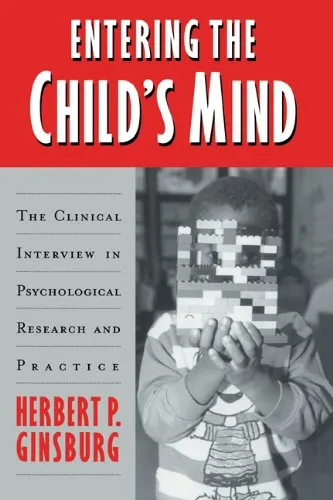
Entering the Child's Mind: The Clinical Interview In Psychological Research and Practice
Herbert P. Ginsburg
English
Unordered
Psychiatry & Psychology
4.5 / 5
0 reviews
1997
Published
293
pages
228
views
Introduction to "Entering the Child's Mind: The Clinical Interview In Psychological Research and Practice" "Entering the Child's Mind" by Herbert P. Ginsburg is a profound exploration of one of the most vital tools for understanding children—the clinical interview. This bo
Before you read
What will you get from this book?
Introduction to "Entering the Child's Mind: The Clinical Interview In Psychological Research and Practice"
"Entering the Child's Mind" by Herbert P. Ginsburg is a profound exploration of one of the most vital tools for understanding children—the clinical interview. This book provides an insightful guide to researchers, psychologists, educators, and anyone interested in unlocking the mysteries of how a child thinks, learns, and perceives the world. Grounded in decades of research and practice, it introduces the clinical interview as a bridge connecting the adult observer to the intricate workings of a child's mind. This book is not merely about technique but about the philosophy and sensitivity required to undertake such interviews effectively.
Detailed Summary of the Book
"Entering the Child’s Mind" elucidates the art and science of the clinical interview—a qualitative method that has been instrumental in psychological research and educational practice. Ginsburg delves into the origins and theoretical foundations of clinical interviewing, referencing key figures such as Jean Piaget, who pioneered its use for understanding cognitive development. The book emphasizes the varied contexts in which clinical interviews can be applied, including research, teaching, and therapeutic practice.
Through meticulous discussions, Ginsburg guides readers in conducting interviews that reveal the child’s thought processes by asking deliberate yet flexible questions. Using illustrative examples and transcripts of real interviews, he demonstrates how researchers can navigate the complexities of interacting with children, keeping their curiosity alive while allowing space for authentic expressions of thought. The book also highlights common challenges faced during an interview, such as interpreting nonverbal cues and avoiding biases, and offers practical strategies to overcome them.
Ultimately, Ginsburg emphasizes the importance of understanding the child’s perspective, fostering empathy and trust during interviews to gain rich insights that are often concealed in traditional quantitative methods. The book's blend of theory, practice, and real-world examples makes it highly accessible and applicable to professionals working with children.
Key Takeaways
- A comprehensive guide to conducting effective clinical interviews with children.
- Emphasis on understanding children’s thought processes, perceptions, and reasoning.
- Insights into the theoretical foundations, particularly Piagetian principles, behind clinical interviews.
- Techniques and strategies for avoiding interviewer bias and fostering trust with children.
- Real interview transcripts illustrating practical challenges and strategies for resolution.
- Applications of clinical interviews in various fields, such as developmental psychology, education, and counseling.
Famous Quotes from the Book
"To enter the child’s mind is not only to ask questions but also to listen—keenly and deeply—to what they say and don’t say."
Herbert P. Ginsburg
"Children are natural thinkers; our task is to respectfully uncover their thoughts rather than impose our own."
Herbert P. Ginsburg
"A successful clinical interview is not just about the answers but the partnership between interviewer and child."
Herbert P. Ginsburg
Why This Book Matters
Understanding the minds of children is a cornerstone of fostering their development, nurturing their learning, and addressing their needs. "Entering the Child's Mind" matters because it arms professionals with an essential tool—the clinical interview—through which to grasp the nuanced and often hidden ways children think. In a world increasingly dominated by standardized testing and metrics, this book reminds us of the value of qualitative methods that honor the individuality and complexity of every child.
Ginsburg’s work is especially significant in bridging the gap between theory and practice, offering a resource that is both intellectually robust and practically useful. Whether you're a psychologist, educator, or parent, the book provides a unique and empathetic perspective that encourages you to see the world through the eyes of a child. By teaching us how to listen deeply, ask the right questions, and interpret responses thoughtfully, "Entering the Child's Mind" empowers professionals to contribute meaningfully to the growth and understanding of the children they serve.
Ask this book
Your question is answered in the context of this title and author. Each answer uses 2 points.
Sign in to ask the book assistant.
Reader reviews
0 reviews, 4.5 average out of 5
No reviews yet
If you have read this book, help the next reader with your experience.
Write a review
Sign in to publish a review.
Reader questions and answers
Ask a focused question and learn from the community.
Sign in to ask or answer a question.
No questions yet
Be the first to ask a clear, useful question.
What to read next
Related references that continue this learning path.