
Book guide and evaluation
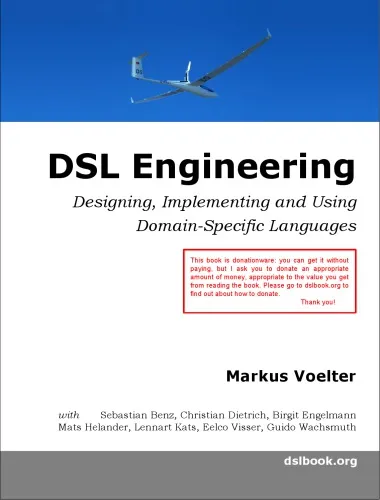
DSL Engineering: Designing, Implementing and Using Domain-Specific Languages
Markus Voelter
English
Beginner
Software Testing
4.3 / 5
0 reviews
2013
Published
560
pages
433
views
(with Sebastian Benz, Christian Dietrich, Birgit Engelmann Mats Helander, Lennart Kats, Eelco Visser, Guido Wachsmuth) [This book is donationware.] Domain-Specific Languages are programming languages that are tailored to a particular application domain. By incorporating knowl
Before you read
What will you get from this book?
(with Sebastian Benz, Christian Dietrich, Birgit Engelmann Mats Helander, Lennart Kats, Eelco Visser, Guido Wachsmuth)
[This book is donationware.]
Domain-Specific Languages are programming languages that are tailored to a particular application domain. By incorporating knowledge about that domain, DSLs can lead to more concise and more analyzable programs, improved code quality, tighter stakeholder integration and faster development speed. This book provides a thorough introduction to DSLs, relying on today’s state-of-the-art language workbenches, lots of examples and years of experience. The book has four parts, each focussing on a different aspect of DSL development.
1. Introduction: This part introduces DSLs in general and discusses their advantages and drawbacks. It defines important terms and concepts and introduces the case studies and tools used in most of the remainder of the book.
2. DSL Design: This part focusses on the design of DSLs – regardless of implementation technologies. It discusses seven design dimensions, explains a number of reusable language paradigms and points out a number of process-related issues.
3. DSL Implementation: This part provides details about the implementation of DSLs, using lots of examples. It uses three state-of-the-art but quite different language workbenches: JetBrains MPS, Eclipse Xtext and TU Delft’s Spoofax
4. DSLs in Software Engineering: This part discusses the use of DSLs for requirements engineering, architecture, implementation and product line engineering, as well as their roles as a developer utility and for implementing business logic.
Ask this book
Your question is answered in the context of this title and author. Each answer uses 2 points.
Sign in to ask the book assistant.
Reader reviews
0 reviews, 4.3 average out of 5
No reviews yet
If you have read this book, help the next reader with your experience.
Write a review
Sign in to publish a review.
Reader questions and answers
Ask a focused question and learn from the community.
Sign in to ask or answer a question.
No questions yet
Be the first to ask a clear, useful question.
What to read next
Related references that continue this learning path.
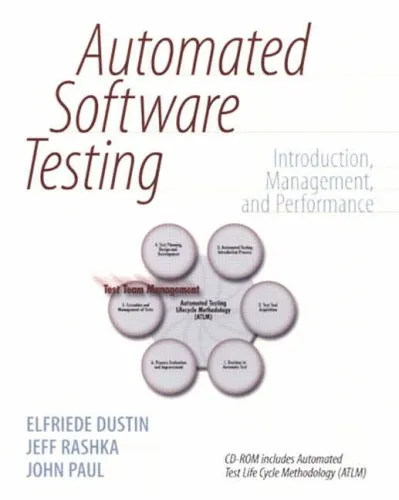
Automated Software Testing: Introduction, Management, and Performance
Elfriede Dustin,Jeff Rashka,John Paul
1999
View book
Model-Driven Software Engineering in Practice: Second Edition
Marco Brambilla,Jordi Cabot,Manuel Wimmer
2017
View book