
Drug Delivery Systems: Advanced Technologies Potentially Applicable in Personalised Treatment
Rongjun Chen (auth.),Jorge Coelho (eds.)
2013
View book
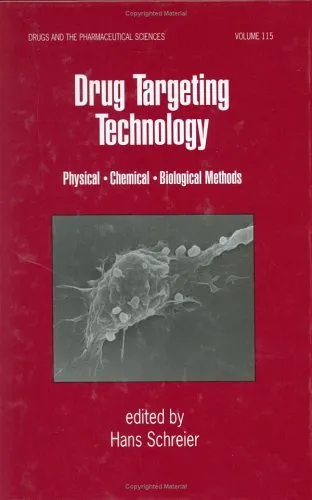
Book guide and evaluation
Hans Schreier
0 reviews
Published
pages
views
Introduction to Drug Targeting Technology Welcome to the world of innovative pharmaceutical sciences! Drug Targeting Technology: Physical, Chemical, and Biological Methods is an advanced and comprehensive exploration of drug delivery systems, targeting mechanisms, and strate
Before you read
Welcome to the world of innovative pharmaceutical sciences! Drug Targeting Technology: Physical, Chemical, and Biological Methods is an advanced and comprehensive exploration of drug delivery systems, targeting mechanisms, and strategies to enhance therapeutic efficacy. Pharmaceutical research has always been geared toward finding better ways to deliver drugs selectively to their intended targets while minimizing side effects. This book serves as a roadmap to achieve such goals by blending fundamental principles with the latest technological advancements.
With the rising prevalence of chronic and complex diseases, the demand for targeted drug delivery has reached a new height. From cancer therapies to neurological disorders, the ability to direct drugs to specific sites within the body has revolutionized modern medicine. This volume is a vital resource for scientists, students, and healthcare professionals alike, offering both theoretical insights and practical applications for overcoming some of the most challenging barriers in drug therapy.
Drug Targeting Technology integrates knowledge from disciplines such as chemistry, pharmacology, biology, and materials science, making it a truly interdisciplinary guide for the pharmaceutical domain. Through meticulously curated content, practical approaches, and real-world case studies, this book provides readers with valuable tools to innovate, engineer precision, and improve clinical outcomes.
This book primarily focuses on three major methodologies used in drug targeting: physical, chemical, and biological methods.
The first section delves into physical methods of drug targeting, including strategies like encapsulation, the use of nanoparticles, and liposomal delivery systems. These approaches capitalize on physical properties to achieve precision, such as size, charge, and bioavailability optimization.
The second section focuses on chemical methods, discussing breakthroughs in molecular conjugation techniques, prodrug designs, and chemical modifications that enhance drug stability and binding efficiency. By leveraging these techniques, targeted delivery achieves significant precision at the molecular and cellular levels.
The final section highlights biological methods. Topics include the application of antibodies, receptor-specific targeting, and advanced biotechnological tools like RNA interference and gene therapy platforms to revolutionize pharmacological approaches.
Each chapter is designed to offer a clear explanation of the scientific rationale behind the method discussed, its practical implications, and its integration into pharmaceutical research. Whether you're a seasoned scientist or a novice student, the structure ensures ease of understanding while providing intellectual depth.
"Successful drug targeting doesn't merely rely on chemistry, biology, or engineering in isolation — it is a collective effort of interdisciplinary innovation."
"Targeted drug delivery is not just a methodology; it is a promise of precision, reduced side effects, and better patient outcomes."
The significance of this book lies in its ability to bridge the gap between theory and practice in the field of drug targeting.
As the healthcare industry continues to push the boundaries of innovation, this book serves as a critical resource for professionals who aim to develop and deliver next-generation therapies. The text emphasizes not only the scientific principles behind drug targeting but also underscores the importance of finding patient-centric solutions for real-world problems. Every method, case study, and theoretical model presented in the book is geared toward enhancing the overall efficacy and safety of targeted treatments.
Moreover, this book matters because it caters to a diverse audience. Researchers will find it to be a treasure trove of ideas to inspire new projects, practitioners will gain practical insights into implementation, and students will uncover the foundational knowledge required to build successful careers in pharmaceutical sciences. It ultimately fosters a deeper understanding of how drug targeting impacts healthcare and drives the evolution of precision medicine.
Your question is answered in the context of this title and author. Each answer uses 2 points.
0 reviews, 4.0 average out of 5
Sign in to publish a review.
Ask a focused question and learn from the community.
Related references that continue this learning path.
Rongjun Chen (auth.),Jorge Coelho (eds.)
Clive G. Wilson (auth.),Juergen Siepmann,Ronald A. Siegel,Michael J. Rathbone (eds.)
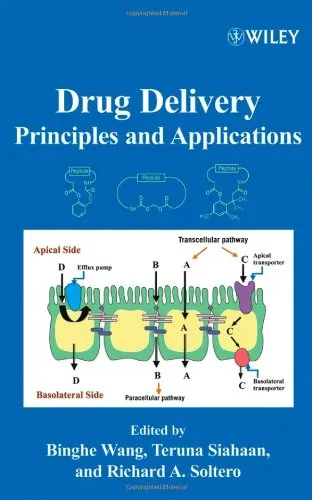
Binghe Wang,Teruna J. Siahaan,Richard A. Soltero
