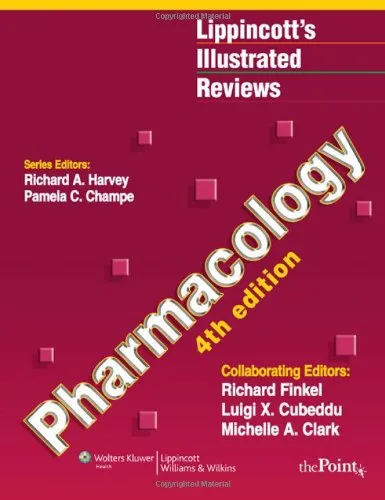
Pharmacology, 4th Edition (Lippincott’s Illustrated Reviews)
Richard A. Harvey,Pamela C. Champe
2008
View book
Book guide and evaluation
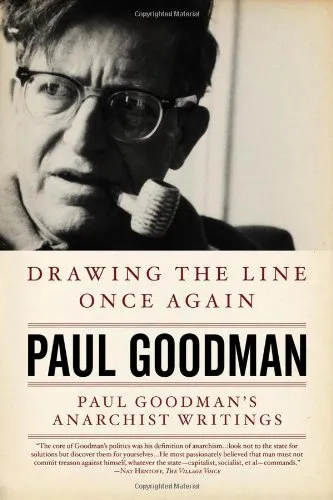
Paul Goodman
0 reviews
Published
pages
views
Introduction to 'Drawing the Line Once Again: Paul Goodman's Anarchist Writings' Discover the radical thought of Paul Goodman, a visionary who dared to imagine a society grounded in anarchism and community self-reliance. 'Drawing the Line Once Again: Paul Goodman's Anarc
Before you read
Discover the radical thought of Paul Goodman, a visionary who dared to imagine a society grounded in anarchism and community self-reliance. 'Drawing the Line Once Again: Paul Goodman's Anarchist Writings' compiles some of his most thought-provoking works that explore the intersection of personal freedom, social responsibility, and collective innovation. This collection is essential reading for anyone seeking to understand anarchist theory and practice, as well as those interested in the broader landscape of alternative political and social thought.
Paul Goodman, a celebrated critic and social thinker of the 20th century, had a profound influence on the anarchist movement. In 'Drawing the Line Once Again,' readers encounter Goodman's incisive essays that delve into a spectrum of issues, from education and urban planning to technology and ecology. This book underscores his commitment to a decentralized society where individuals are empowered to participate directly in decision-making processes. Goodman argues for a radical rethinking of societal norms, advocating for smaller communities that foster creativity, mutual aid, and self-sufficiency.
The collection presents a comprehensive overview of Goodman's ideas, illustrating his vision of anarchism not as chaos, but as an organized refusal of oppressive structures. Through his writings, Goodman critiques capitalism and central authority while offering constructive alternatives that emphasize personal agency and communal bonds. By doing so, he provides a roadmap for creating societies that prioritize human connectivity and environmental sustainability.
"Anarchism, in its simplest form, is the effort to think clearly about human social organization and its place within the biological context of the planet."
"The goal must be a society where personal freedom and social responsibility are in balance, and where every individual is a vital participant in a larger human community."
In an era where conversations about sustainability, individuality, and democracy are more critical than ever, Paul Goodman's writings offer valuable insights. His critique of bureaucratic and capitalist structures resonates with contemporary movements advocating for systemic change and social justice. This book not only provides historical context to these issues but also inspires new generations to engage in critical thinking and activism.
By revisiting Goodman's anarchist writings, readers gain an understanding of how grassroots movements and local initiatives have the potential to forge paths toward more equitable societies. His work challenges us to envision and actively participate in creating communities that reflect the values of cooperation, liberty, and environmental stewardship. This makes 'Drawing the Line Once Again' an indispensable resource for scholars, activists, and anyone interested in the power of anarchist thought to transform societies.
Your question is answered in the context of this title and author. Each answer uses 2 points.
0 reviews, 4.5 average out of 5
Sign in to publish a review.
Ask a focused question and learn from the community.
Related references that continue this learning path.
Richard A. Harvey,Pamela C. Champe
Richard A. Harvey,Michelle A. Clark,Richard Finkel,Jose A. Rey,Karen Whalen
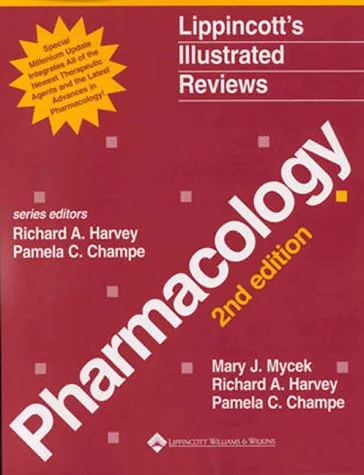
Mary J. Mycek,Richard A. Harvey PhD,Pamela C. Champe