

Statistics: The Art and Science of Learning from Data
Alan Agresti,Christine Franklin
2012
View book
Book guide and evaluation
Sarah Pink
0 reviews
Published
pages
views
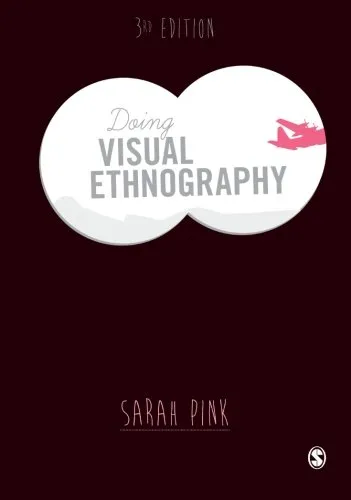
Introduction to 'Doing Visual Ethnography' Written by Sarah Pink, 'Doing Visual Ethnography' is a comprehensive and pioneering guide on integrating visual methods into the discipline of ethnography. First published in 2001, the book has established itself as a seminal reso
Before you read
Written by Sarah Pink, 'Doing Visual Ethnography' is a comprehensive and pioneering guide on integrating visual methods into the discipline of ethnography. First published in 2001, the book has established itself as a seminal resource for researchers, practitioners, and academics who wish to explore the potential of visual media in the study of human culture, practices, and lived experiences. Through its detailed theoretical insights and practical applications, the book bridges the gap between visual anthropology and ethnographic research, making it a must-read for those seeking to evolve in their research methodologies.
At its core, 'Doing Visual Ethnography' introduces readers to a multidisciplinary approach, combining the art of visual representation with the rigor of ethnographic research. The book focuses on how visual methods, including photography, video, and multimedia, can complement conventional ethnographic tools like field notes and interviews. Using case studies, it highlights the ethical considerations, cultural sensitivities, and interpretative frameworks necessary for integrating visuals into qualitative research.
The book unfolds by grounding visual ethnography in theoretical debates, showing its historical evolution and interdisciplinary ties to visual culture studies, anthropology, and sociology. It progresses to offer practical tips for conducting research, such as how to use cameras effectively in the field, analyze images, and co-create visual artifacts with participants. In addition, it encourages reflexivity, urging researchers to critically assess their positionality and the power dynamics embedded in capturing and interpreting visuals.
The main argument posited by Sarah Pink is that the visual is not merely supplemental but central to comprehending human behavior and meaning-making. By doing so, she equips readers to not only observe but also creatively engage with visual phenomena, providing new dimensions to ethnographic knowledge production.
"Visual images are not neutral artifacts. They are inevitably embedded within cultural frameworks of interpretation."
"The process of creating a visual ethnography is as much an exploration of the ethnographer's perspective and positionality as it is of the research participants' lives."
"Using visual methods is not necessarily about perfect pictures, but about creating opportunities for new kinds of knowledge-production."
In a world increasingly shaped by visual communication, 'Doing Visual Ethnography' is more relevant than ever. The book pushes researchers to tap into the potential of images and videos in capturing the essence of complex human behaviors and social dynamics. It also recognizes that the "visual turn" in social sciences calls for methodological advancements and reflexivity.
Importantly, this book advocates for ethical research practices in a way that is highly applicable to disciplines ranging from anthropology to marketing studies. By offering a nuanced take on the marriage of visuals with ethnographic theory, it has carved a niche in the ethnographic canon while remaining accessible to students and seasoned researchers alike. It reminds us that visuals not only reflect but actively construct meaning, making them indispensable tools in the ethnographer’s toolkit.
Your question is answered in the context of this title and author. Each answer uses 2 points.
0 reviews, 4.5 average out of 5
Sign in to publish a review.
Ask a focused question and learn from the community.
Related references that continue this learning path.
Alan Agresti,Christine Franklin


Philip J. Davis,Reuben Hersh,Elena Anne Marchisotto (auth.)