
![Cover of Engineering a Compiler, Second Edition [2nd Ed] (Instructor's Edu Resource 1 of 2, Solution Manual) (Solutions)](https://s3.refhub.ir/images/thumb/Engineering_a_Compiler__Second_Edition__2nd_E_2258.webp)
Engineering a Compiler, Second Edition [2nd Ed] (Instructor's Edu Resource 1 of 2, Solution Manual) (Solutions)
Keith D. Cooper,Linda Torczon
2011
View book
Book guide and evaluation
Luke Alphey
0 reviews
Published
pages
views
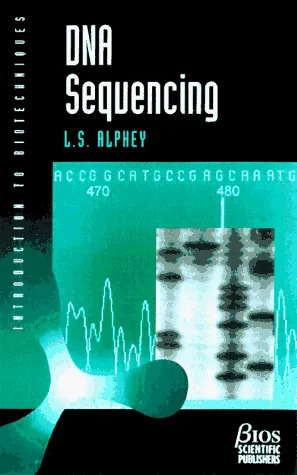
Introduction to DNA Sequencing: From Experimental Methods to Bioinformatics "DNA Sequencing: From Experimental Methods to Bioinformatics" explores the fascinating world of DNA sequencing, unraveling its complexities by combining cutting-edge experimental methods with the power
Before you read
"DNA Sequencing: From Experimental Methods to Bioinformatics" explores the fascinating world of DNA sequencing, unraveling its complexities by combining cutting-edge experimental methods with the power of computational analysis. Guided by this book, readers learn to understand the ever-growing influence of sequencing technologies in modern biology, medicine, and beyond.
This book provides a comprehensive yet accessible introduction to the field of DNA sequencing, bridging the experimental and computational aspects. It begins with foundational principles, explaining the chemical and biophysical behaviors of DNA that allow for sequencing. Experimental techniques, from Sanger sequencing to cutting-edge next-generation sequencing (NGS) technologies, are described in detail. Each chapter provides insights into tools, workflows, and innovations that have revolutionized the speed, accuracy, and applications of sequencing technologies.
Moving seamlessly from the laboratory to cyberspace, the book introduces readers to essential bioinformatics tools and algorithms. Discover how raw sequencing results are processed, analyzed, and interpreted to uncover meaningful biological insights. Topics such as genome annotation, variant detection, and phylogenetic analysis are explained in a distinctly practical manner, integrating theoretical concepts with their real-world importance.
With a clear focus on connecting experimental methods to computational tools, this book represents the perfect intersection of biotechnology and data science. By navigating through these well-organized and detailed chapters, readers will understand not only "how" sequencing works but also "why" it has become an invaluable tool in modern science. Whether for students, researchers, or professionals, this is a must-read resource for staying informed about the rapidly advancing field of DNA sequencing.
This book equips readers with the tools to not only grasp the theoretical framework of DNA sequencing but also use it in solving practical biological and biomedical challenges.
"Every nucleotide sequence we decipher brings us closer to answering the questions that humanity has sought for generations."
"Sequencing technology has turned the unknown into the knowable, enabling us to map genomes, understand genetic variation, and uncover evolutionary histories."
"Bioinformatics is not merely a complementary tool to sequencing but rather the bridge between raw data and life-changing discovery."
These quotes highlight the depth of the book’s insights and how DNA sequencing is a transformative technology that reshapes our understanding of biology.
"DNA Sequencing: From Experimental Methods to Bioinformatics" is not just a book about technicalities; it is a roadmap for understanding the profound impact that sequencing has on science and society. By blending experimental methods with bioinformatics strategies, the book addresses key challenges and solutions in biology today, including genome sequencing for personalized medicine, understanding genetic diseases, improving agricultural products, and mapping biodiversity.
The importance of this book lies in its ability to cater to readers of various backgrounds. Whether you're a researcher navigating the complexities of high-throughput sequencing or a student laying the foundation for future research, this book provides clear, practical guidance for anyone vested in the field of genomics. Furthermore, as sequencing technology continues to advance rapidly, this book serves as a reliable resource to stay updated on the latest methodologies, workflows, and applications.
By the end of this book, readers will not only appreciate the complexity of DNA sequencing processes but also the simplicity and elegance of the principles that drive groundbreaking discoveries. It emphasizes the unending potential of sequencing to answer vital questions about life on Earth and beyond, standing as an essential companion for anyone exploring the current and next frontiers of science.
Your question is answered in the context of this title and author. Each answer uses 2 points.
0 reviews, 4.0 average out of 5
Sign in to publish a review.
Ask a focused question and learn from the community.
Related references that continue this learning path.
Keith D. Cooper,Linda Torczon
Robert Nisbet,John Elder IV,Gary Miner
Y.N. Srikant,Priti Shankar