Book guide and evaluation
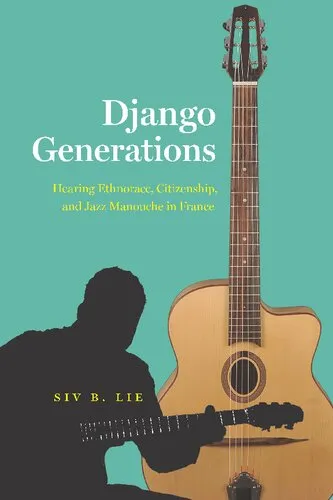
Django Generations: Hearing Ethnorace, Citizenship, and Jazz Manouche in France
Siv B. Lie
English
Intermediate
Historical
4.4 / 5
0 reviews
2021
Published
275
pages
348
views
Django Generations shows how relationships between racial identities, jazz, and national belonging become entangled in France. Jazz manouche—a genre known best for its energetic, guitar-centric swing tunes—is among France’s most celebrated musical practices of the twentieth an
Before you read
What will you get from this book?
Django Generations shows how relationships between racial identities, jazz, and national belonging become entangled in France.
Jazz manouche—a genre known best for its energetic, guitar-centric swing tunes—is among France’s most celebrated musical practices of the twentieth and twenty-first centuries. It centers on the recorded work of famed guitarist Django Reinhardt and is named for the ethnoracial subgroup of Romanies (also known, often pejoratively, as “Gypsies”) to which Reinhardt belonged. French Manouches are publicly lauded as bearers of this jazz tradition, and many take pleasure and pride in the practice while at the same time facing pervasive discrimination. Jazz manouche uncovers a contradiction at the heart of France’s assimilationist republican ideals: the music is portrayed as quintessentially French even as Manouches themselves endure treatment as racial others.
In this book, Siv B. Lie explores how this music is used to construct divergent ethnoracial and national identities in a context where discussions of race are otherwise censured. Weaving together ethnographic and historical analysis, Lie shows that jazz manouche becomes a source of profound ambivalence as it generates ethnoracial difference and socioeconomic exclusion. As the first full-length ethnographic study of French jazz to be published in English, this book enriches anthropological, ethnomusicological, and historical scholarship on global jazz, race and ethnicity, and citizenship while showing how music can be an important but insufficient tool in struggles for racial and economic justice.
Ask this book
Your question is answered in the context of this title and author. Each answer uses 2 points.
Sign in to ask the book assistant.
Reader reviews
0 reviews, 4.4 average out of 5
No reviews yet
If you have read this book, help the next reader with your experience.
Write a review
Sign in to publish a review.
Reader questions and answers
Ask a focused question and learn from the community.
Sign in to ask or answer a question.
No questions yet
Be the first to ask a clear, useful question.
What to read next
Related references that continue this learning path.