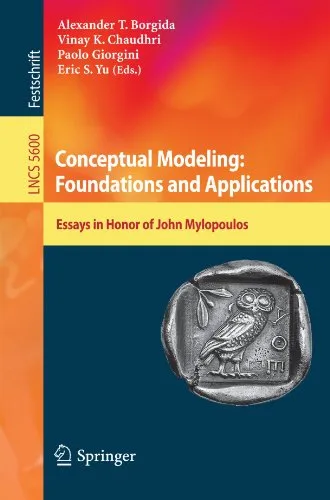
Conceptual Modeling: Foundations and Applications: Essays in Honor of John Mylopoulos
Michael L. Brodie (auth.),Alexander T. Borgida,Vinay K. Chaudhri,Paolo Giorgini,Eric S. Yu (eds.)
2009
View book
Book guide and evaluation
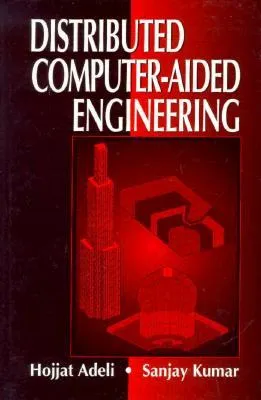
Adeli, Hojjat;Kumar, Sanjay
0 reviews
Published
pages
views
Welcome to an in-depth exploration of 'Distributed Computer-Aided Engineering: For Analysis, Design, and Visualization.' This book offers a comprehensive guide to the profound impact distributed computing has on computer-aided engineering (CAE), highlighting its applications, b
Before you read
Welcome to an in-depth exploration of 'Distributed Computer-Aided Engineering: For Analysis, Design, and Visualization.' This book offers a comprehensive guide to the profound impact distributed computing has on computer-aided engineering (CAE), highlighting its applications, benefits, and challenges. Below, we delve into a detailed summary, key takeaways, memorable quotes, and discuss why this book holds significant value in today's technology-driven world.
In 'Distributed Computer-Aided Engineering: For Analysis, Design, and Visualization,' authors 'Adeli, Hojjat' and 'Kumar, Sanjay' bridge the gap between computing and engineering design. The book meticulously covers the deployment of distributed computing resources to enhance the capabilities of traditional CAE systems, which are critical for the efficient design, analysis, and simulation of engineering components and systems.
This text explores the evolution of CAE, emphasizing the shift from conventional, monolithic systems to distributed frameworks that leverage a network of computers to perform complex calculations and simulations. The authors delve deep into various distributed CAE methodologies, offering a robust framework for understanding how to implement distributed systems in engineering applications.
The book systematically discusses the architecture and design of distributed CAE solutions, tools, and techniques. It also provides case studies to demonstrate successful implementations in real-world scenarios, showcasing the practical benefits of applying distributed computing strategies in engineering tasks. Furthermore, the authors address challenges such as synchronization, data distribution, and system integration.
“The future of engineering design is distributed, collaborative, and increasingly dependent on robust computational environments.”
“In a world where complexity is ever-increasing, distributed CAE offers a path forward by allowing multiple nodes to work harmoniously towards a singular engineering goal.”
This book is essential for engineering professionals, researchers, and students looking to embrace the future of design and analysis. As industries increasingly adopt digital twins and smart manufacturing principles, the ability to understand and implement distributed CAE becomes crucial. This book provides that foundational knowledge, equipping readers with the skills necessary to navigate and excel in a rapidly evolving technological landscape.
Moreover, it fosters a deeper comprehension of how distributed systems can facilitate innovation in engineering, enabling the design of more sophisticated and effective products. By demystifying complex concepts and providing actionable insights, 'Distributed Computer-Aided Engineering: For Analysis, Design, and Visualization' positions itself as a valuable resource for those seeking to enhance their engineering expertise.
Your question is answered in the context of this title and author. Each answer uses 2 points.
0 reviews, 4.9 average out of 5
Sign in to publish a review.
Ask a focused question and learn from the community.
Related references that continue this learning path.
Michael L. Brodie (auth.),Alexander T. Borgida,Vinay K. Chaudhri,Paolo Giorgini,Eric S. Yu (eds.)