

Information Architecture: For the Web and Beyond
Louis Rosenfeld,Peter Morville,Jorge Arango
2015
View book
Book guide and evaluation
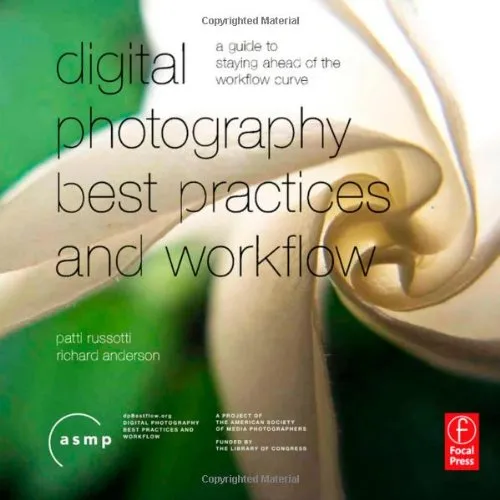
Patricia Russotti,Richard Anderson
0 reviews
Published
pages
views
Introduction to "Digital Photography Best Practices and Workflow Handbook: A Guide to Staying Ahead of the Workflow Curve" Photography in today’s digital age has advanced beyond simply capturing a powerful image; it’s about managing a comprehensive workflow from start to fin
Before you read
Photography in today’s digital age has advanced beyond simply capturing a powerful image; it’s about managing a comprehensive workflow from start to finish. "Digital Photography Best Practices and Workflow Handbook: A Guide to Staying Ahead of the Workflow Curve" serves as an essential guide for photographers—professionals and enthusiasts alike—seeking to streamline their processes, adhere to best practices, and stay ahead in an ever-evolving industry. This book equips the reader with cutting-edge strategies to balance creativity with efficiency while ensuring quality execution in every project.
Photography workflows are no longer limited to developing film or merely pressing the shutter button in a studio. These workflows encompass an interconnected cycle: from pre-production planning to data management, editing, archiving, and final delivery. This book anticipates the needs and challenges of photographers and provides practical and actionable advice to tackle them. Core topics include organizing digital assets, metadata implementation, maintaining data integrity, optimizing software and hardware tools, and ultimately creating a seamless workflow tailored to every unique project.
Written by experienced professionals Patricia Russotti and Richard Anderson, the handbook begins by outlining the foundations of digital photography workflow. It dives deep into technical aspects, such as file formats, proper metadata tagging, and leveraging color management for consistent results. Readers are introduced to techniques and methodologies that ensure sustainable practices—not just for today, but for years to come.
The book also addresses photographers working across different domain niches, from solo projects to large-scale commercial shoots. By thoroughly covering the entire photographic lifecycle, the content empowers readers to minimize errors, improve productivity, and deliver better results with confidence.
"In photography, it isn’t just the image that tells the story—it’s the care, thought, and process behind its creation that makes it truly timeless."
"A good workflow doesn’t simply happen by accident; it’s a carefully structured series of actions that transform creative vision into enduring art."
The photography industry is fast-paced and constantly evolving. Technology and expectations from clients leave no room for inefficiency in workflows or quality compromises. This book matters because it provides an essential bridge between the artistic and technical facets of photography. It empowers photographers to take control of their processes, improving not just speed but the overall quality and impact of their work.
Moreover, "Digital Photography Best Practices and Workflow Handbook" is grounded in real-world experiences, ensuring that every piece of advice is tailored to practical application. Whether you’re a professional looking to refine your craft or an enthusiast eager to explore best practices, this book serves as the definitive resource for excelling in a digital ecosystem. By addressing the nuances of digital photography with precision and care, it equips you to future-proof your artistry, optimize results, and ensure sustainable growth.
Your question is answered in the context of this title and author. Each answer uses 2 points.
0 reviews, 4.0 average out of 5
Sign in to publish a review.
Ask a focused question and learn from the community.
Related references that continue this learning path.
Louis Rosenfeld,Peter Morville,Jorge Arango

Shigeo Shingo,Andrew P. Dillon
Juergen Gulbins,Uwe Steinmueller