

Book guide and evaluation
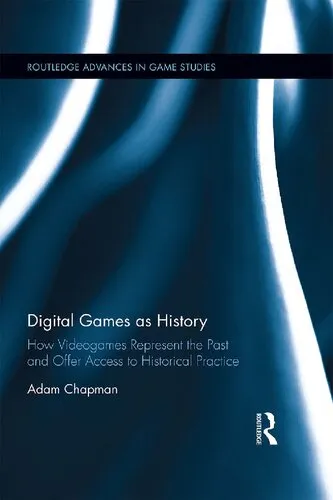
Digital Games As History: How Videogames Represent The Past And Offer Access To Historical Practice
Adam Chapman
English
Beginner
Data Science
4.3 / 5
0 reviews
2016
Published
303
pages
310
views
Introduction to "Digital Games As History: How Videogames Represent The Past And Offer Access To Historical Practice" "Digital Games as History" explores the complex, evolving relationship between digital games and the way they represent, interpret, and engage with history
Before you read
What will you get from this book?
Introduction to "Digital Games As History: How Videogames Represent The Past And Offer Access To Historical Practice"
"Digital Games as History" explores the complex, evolving relationship between digital games and the way they represent, interpret, and engage with history. Authored by Adam Chapman, this book identifies games as a dynamic medium capable of reshaping how we understand and interact with historical knowledge.
This book is not merely an exploration of how history is visualized or dramatized in videogames, but a deeper inquiry into how digital games encourage players to engage with historical processes, narrative structures, and epistemologies. It aims to shed light on how these interactive forms of media are redefining historical practices and inviting audiences to reflect critically on the past.
Detailed Summary
At the heart of "Digital Games as History" is the notion that videogames are unique in how they represent and simulate history. Unlike traditional media such as film or print, digital games are interactive systems that actively involve their audiences in historical interpretation. This book analyzes the distinct affordances of games and their potential to model historical processes and complex systems.
Chapman divides the discussion into key thematic iterations. He first contextualizes how videogames fit into the broader spectrum of understanding history as both an academic discipline and cultural practice. The author makes the case for considering games as a medium with agency, offering alternative ways to think about historical authenticity and accuracy. Moving beyond mere critique of historical inaccuracies in games, the book examines how games engage with historiographical debates in meaningful ways — incorporating player agency, counterfactual perspectives, and systemic simulations.
"Digital Games As History" also focuses on specific examples of games that exemplify these debates, like the Assassin's Creed series or strategy games like Civilization. These games, Chapman argues, do more than deliver passive experiences; they enable players to actively participate in the construction and questioning of historical narratives. The book advocates for a redefinition of historical literacy in the digital age, one that embraces the participatory and interactive nature of gaming as a legitimate form of historical engagement.
Key Takeaways
- Videogames represent and simulate history in ways distinct from traditional forms of media.
- They encourage critical perspectives on history by allowing players to engage with and challenge historical narratives.
- Games can model historical processes, offering insights into historical causation, systems, and counterfactuals.
- Videogames are not just representations of history; they are interactive spaces where historical practice and thought can occur actively.
- The book calls for the inclusion of videogames in historical education and awareness, recognizing their potential as powerful tools for learning and understanding the past.
Famous Quotes from the Book
"By inviting players to inhabit historical perspectives and decisions, games become sites where history is not just consumed, but actively reinterpreted and problematized."
"Videogames offer history not as a fixed narrative, but as a contingent, participatory process — one where players are both audience and actor."
"To dismiss videogames as merely entertainment is to overlook their profound impact on how history may be thought about, debated, and learned in the digital age."
Why This Book Matters
In a digital era dominated by interactive technologies, "Digital Games As History" is a timely and important contribution to both game studies and historical scholarship. The book challenges the traditional boundaries of how history is taught, experienced, and understood, particularly among younger generations who grew up with videogames as a significant cultural phenomenon. It highlights the ways in which videogames make history accessible, interactive, and engaging in unprecedented ways.
As an essential read for historians, educators, and gaming enthusiasts alike, this book opens up new conversations about the role of media in shaping our understanding of the past. It underscores the legitimacy of games as tools for historical inquiry and urges academic institutions to embrace these possibilities in both pedagogy and research.
In doing so, "Digital Games As History" transcends its immediate subject matter to become a manifesto for broader cultural and intellectual conversations — about media, history, and how we create meaning in a rapidly changing digital world.
Ask this book
Your question is answered in the context of this title and author. Each answer uses 2 points.
Sign in to ask the book assistant.
Reader reviews
0 reviews, 4.3 average out of 5
No reviews yet
If you have read this book, help the next reader with your experience.
Write a review
Sign in to publish a review.
Reader questions and answers
Ask a focused question and learn from the community.
Sign in to ask or answer a question.
No questions yet
Be the first to ask a clear, useful question.
What to read next
Related references that continue this learning path.

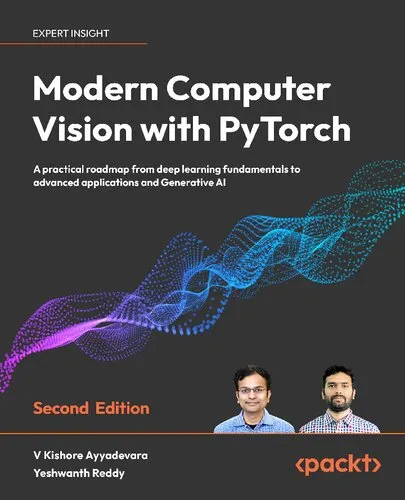
Modern Computer Vision with PyTorch: A Practical Roadmap From Deep Learning Fundamentals to Advanced Applications and Generative AI, 2nd Edition
V Kishore Ayyadevara,Yeshwanth Reddy
2023
View book