
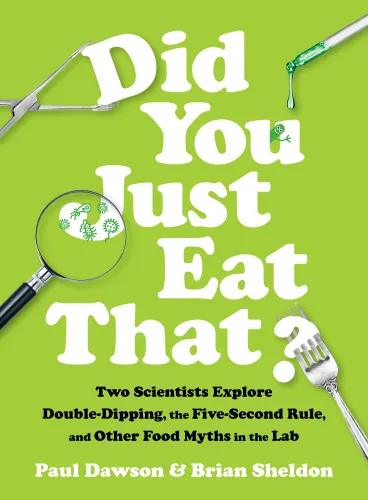
Did you just eat that?: two scientists explore double-dipping, the five-second rule, and other food myths in the lab
Dawson, Paul L.;Sheldon, Brian W
English
Beginner
Physics
4.6 / 5
0 reviews
2019;2018
Published
xi, 288 pages : illustrations (chiefly color) ; 22 cm
pages
211
views
Introduction Welcome to the intriguing world of food science and hygiene with "Did You Just Eat That?". This book dives headfirst into the fascinating intersection of microbiology and human behavior, shedding light on the habits we all share but rarely question. From the infam
Before you read
What will you get from this book?
Introduction
Welcome to the intriguing world of food science and hygiene with "Did You Just Eat That?". This book dives headfirst into the fascinating intersection of microbiology and human behavior, shedding light on the habits we all share but rarely question. From the infamous "five-second rule" to the hygiene implications of double-dipping, this book is an exploration not just of food safety, but of the psychology that makes us act the way we do around food.
The authors, Paul Dawson and Brian Sheldon, both scientific experts in their fields, utilize an engaging, research-backed approach to debunk common myths and explain the risks associated with various food habits. Packed with shocking revelations, humorous anecdotes, and digestible scientific explanations, this book will forever reshape how you think about the seemingly trivial decisions we make about eating, sharing, and storing food. If you've ever asked yourself, "Should I really eat that?", this book is your definitive guide to finding the answer.
Detailed Summary of the Book
At its core, "Did You Just Eat That?" is about demystifying food habits and their implications for our health. The book begins by addressing ubiquitous myths like the "five-second rule," where the authors use scientific experiments to determine whether food dropped on the floor is still safe to eat. Spoiler alert: the results may make you think twice before picking up that stray piece of candy!
The book continues by investigating other common behaviors, such as double-dipping chips in a shared bowl of dip or tasting from the same spoon while cooking. These ordinary habits are paired with detailed lab-based analyses to uncover exactly how many microbes are transferred in the process and whether they pose a genuine threat to health.
Dawson and Sheldon also explore the psychological factors that influence our interactions with food. They delve into why cultural norms allow certain behaviors that might gross out other populations and why some people maintain food habits that defy logic even when presented with scientific evidence. The narrative is clear, relatable, and peppered with humor, keeping even the most data-heavy material accessible to the layperson.
Each chapter acts as a case study where the authors break down food "rules," test their validity, and offer commonsense advice that empowers readers to make hygienic food choices without succumbing to fear.”
Key Takeaways
- The "five-second rule" is largely a myth, as food can become contaminated with bacteria almost instantaneously after falling.
- Double-dipping actually transfers a measurable number of microbes to a shared dish, though the risk of illness can vary based on individual immune systems and environmental factors.
- Proper food handling, like washing hands and disinfecting surfaces, plays a critical role in preventing foodborne illnesses more than any quirky myth ever will.
- Cultural attitudes toward food, hygiene, and sharing significantly influence practices like the acceptability of eating food off the ground or sharing utensils.
- Critical thinking and an evidence-based mindset can enhance your understanding of food hygiene without fostering unnecessary fear.
Famous Quotes from the Book
"The floor isn't as clean as you think it is, and bacteria aren't as slow as you hope they are."
"If you wouldn't lick the rim of a garbage bin, should you really be nibbling on food that just fell on the floor?"
"Foodborne illness isn’t just about where the food has been; it’s about where your hands, utensils, and serving surfaces have been too."
Why This Book Matters
"Did You Just Eat That?" holds immense relevance in today's world, where food safety continues to be a pressing concern. In an age when misinformation spreads rapidly, Dawson and Sheldon provide well-researched clarity. By tackling food myths and offering evidence-based insights, the book ensures its readers are better equipped to make smart choices about what—and how—they eat.
Beyond its hygiene lessons, the book also serves as a reminder of the importance of science-backed behavior changes. It demonstrates how simple but informed habits can dramatically reduce the risk of foodborne illnesses, contributing to overall public health. Furthermore, the authors' compelling narrative makes this a must-read for anyone curious about science, food, or the quirky habits that connect them both.
Ultimately, "Did You Just Eat That?" is more than a guide—it's a conversation starter about health, habits, and the invisible microbial world that surrounds us all.
Ask this book
Your question is answered in the context of this title and author. Each answer uses 2 points.
Sign in to ask the book assistant.
Reader reviews
0 reviews, 4.6 average out of 5
No reviews yet
If you have read this book, help the next reader with your experience.
Write a review
Sign in to publish a review.
Reader questions and answers
Ask a focused question and learn from the community.
Sign in to ask or answer a question.
No questions yet
Be the first to ask a clear, useful question.
What to read next
Related references that continue this learning path.


Modern Computer Vision with PyTorch: A Practical Roadmap From Deep Learning Fundamentals to Advanced Applications and Generative AI, 2nd Edition
V Kishore Ayyadevara,Yeshwanth Reddy
2023
View book