Book guide and evaluation
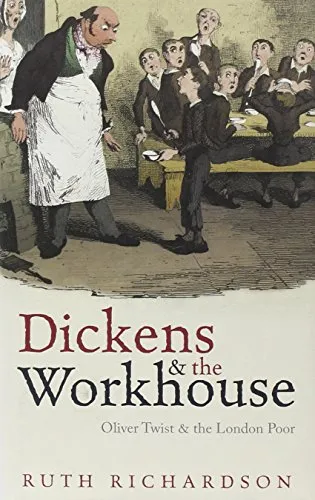
Dickens and the workhouse : Oliver Twist and the London poor
Richardson,Ruth
English
Intermediate
novel
3.7 / 5
0 reviews
2013
Published
391
pages
661
views
Welcome to the world of Charles Dickens with "Dickens and the Workhouse: Oliver Twist and the London Poor." This book by Ruth Richardson provides a captivating exploration of the intersection between one of Dickens's most famous works, Oliver Twist, and the grim reality of the
Before you read
What will you get from this book?
Welcome to the world of Charles Dickens with "Dickens and the Workhouse: Oliver Twist and the London Poor." This book by Ruth Richardson provides a captivating exploration of the intersection between one of Dickens's most famous works, Oliver Twist, and the grim reality of the 19th-century workhouse system in England. In this enriching narrative, the reader is invited to examine the historical context that shaped Dickens's work and the lives of the impoverished Londoners who existed on the fringes of society.
Summary of the Book
In "Dickens and the Workhouse," Richardson takes readers on a journey through the complex landscape of Victorian London, focusing on the infamous workhouse system. She delves into how these institutions were not only settings but also symbols of suffering, despair, and social injustice. This in-depth study bridges historical fact with literary fiction by examining how personal and societal influences shaped Charles Dickens’s writing of "Oliver Twist." Richardson provides a fresh perspective on Dickens’s narrative by analyzing documents, personal letters, and historical records. By unfurling the mysteries surrounding the workhouse that Dickens would have been familiar with on Cleveland Street, Richardson marries biographical detail with scholarly analysis, illustrating how these dark realities informed the texture and depth of Dickens’s social imagination.
Key Takeaways
- Richardson’s research unearths surprising connections between Dickens’s experiences and his written work, particularly in relation to social welfare and reform.
- The book enriches the reader’s understanding of Victorian London’s social structure and the role workhouses played in either imprisoning or providing relief to the poor.
- Through detailed accounts, the book argues that Dickens used his platform to comment on and incite reform of social ills of his time.
- It also highlights Dickens's talent for altering public perception by weaving societal criticism into compelling narratives.
Famous Quotes from the Book
Richardson’s work is peppered with insightful commentary and poignant lines. Here are a few standout quotes:
"Dickens's intimate knowledge of the workhouse system gave him unique insights into its dehumanizing impacts."
"In allying himself with the downtrodden, Dickens wrote not just with his pen, but with his conscience."
Why This Book Matters
The significance of "Dickens and the Workhouse" lies in its ability to enlighten readers about the socio-political activism embedded in Dickens’s literature. Richardson’s scholarly yet accessible prose makes a compelling case for viewing Dickens not only as a literary maestro but also as a social commentator ahead of his time. This book underscores the impact of literature as a powerful tool for social change and enriches our understanding of one of England's most revered writers. It's a must-read for literature enthusiasts, history buffs, and anyone interested in the fight for social justice. Through Richardson’s eyes, readers glimpse the real-world ramifications of Dickens's fictional worlds, understanding that "Oliver Twist" was not just a story, but a reflection of a society in desperate need of reform.
Audio introductions
Persian Summary
Ask this book
Your question is answered in the context of this title and author. Each answer uses 2 points.
Sign in to ask the book assistant.
Reader reviews
0 reviews, 3.7 average out of 5
No reviews yet
If you have read this book, help the next reader with your experience.
Write a review
Sign in to publish a review.
Reader questions and answers
Ask a focused question and learn from the community.
Sign in to ask or answer a question.
No questions yet
Be the first to ask a clear, useful question.
What to read next
Related references that continue this learning path.