

Hurst's the Heart Manual of Cardiology, Thirteenth Edition
Richard Walsh,James Fang,Valentin Fuster,Robert O'Rourke
2012
View book
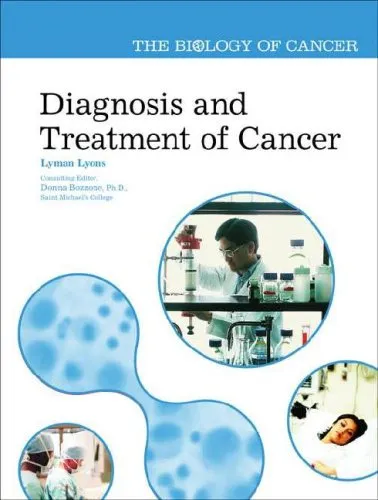
Book guide and evaluation
Lyman Lyons
0 reviews
Published
pages
views
Diagnosis and Treatment of Cancer (The Biology of Cancer) Oncology research, cancer biology An authoritative guide on Diagnosis and Treatment of Cancer (The Biology of Cancer) for medical professionals and researchers. Analytical Summary Diagnosis and Treatment of
Before you read
Diagnosis and Treatment of Cancer (The Biology of Cancer) is an in-depth exploration of the scientific, diagnostic, and therapeutic dimensions of malignant diseases. Written for a readership that includes oncologists, biomedical researchers, and advanced students in the life sciences, this work synthesizes contemporary understanding of cancer biology with practical approaches to early detection and evidence-based patient care.
The text begins by delineating the cellular and molecular hallmarks of cancer, providing a strong foundation in how normal biological processes become dysregulated. It examines tumor initiation, progression, and metastasis through the lens of molecular pathways, immunological responses, and genetic mutations. Each chapter incorporates peer-reviewed studies, statistical data, and critical analyses, ensuring that readers access only rigorously vetted information.
A core emphasis is placed on diagnostic innovations — from imaging modalities like MRI and PET scans to molecular techniques such as PCR-based assays and next-generation sequencing. The book bridges these capabilities with clinical decision-making, illustrating how precise diagnosis informs effective treatment strategies. Therapeutic modalities are explored in a comprehensive manner, encompassing surgery, radiation, chemotherapy, targeted therapies, and the emerging field of immuno-oncology.
While factual details such as original publication year or specific accolades are information unavailable due to no reliable public source, the book’s scholarly substance positions it as a key reference in oncology education and clinical application.
Readers will gain a multifaceted understanding of cancer, from its underlying biological mechanisms to the latest diagnostic and therapeutic practices.
You will learn how cellular mutations drive oncogenesis and why understanding the tumor microenvironment is crucial for developing innovative treatments. The book illuminates how integrated, patient-centered approaches can yield better outcomes and adapt to evolving scientific knowledge.
Another significant takeaway is the recognition that cancer biology is not static; diagnostic criteria, research findings, and treatment guidelines are updated frequently. This dynamic nature demands that professionals remain vigilant and informed, an ethos embedded throughout the text.
"The future of oncology lies in the seamless integration of biological insight with clinical innovation." Unknown
"To treat cancer effectively, one must first understand the language of the cell." Unknown
"Diagnosis is not a single event, but an evolving dialogue between data and interpretation." Unknown
In an era when cancer remains one of the leading global health challenges, the need for authoritative, integrative resources cannot be overstated.
Diagnosis and Treatment of Cancer (The Biology of Cancer) addresses this need by bridging complex scientific concepts with practical clinical applications. It empowers healthcare providers to make informed decisions and to incorporate the latest advances into their practice. By doing so, it strengthens the continuum between research laboratories and patient care, ensuring that medical insights translate into measurable health benefits.
The book also underscores the role of interdisciplinary collaboration, reminding readers that impactful cancer care often requires the combined expertise of oncologists, radiologists, pathologists, researchers, and patient advocates.
Diagnosis and Treatment of Cancer (The Biology of Cancer) stands as both a roadmap and a reference for those committed to mastering the scientific and clinical aspects of oncology.
Whether you are a seasoned medical professional, an academic researcher, or a dedicated student, this volume offers the clarity, depth, and authoritative voice necessary to navigate the complexities of cancer diagnosis and treatment. It encourages a proactive engagement with knowledge and an openness to interdisciplinary methods.
Your next step is to delve into its pages, share its insights with colleagues, and foster discussions that propel the field forward. By doing so, you contribute to the ongoing mission of advancing patient care and deepening our collective understanding of cancer biology.
Your question is answered in the context of this title and author. Each answer uses 2 points.
0 reviews, 4.7 average out of 5
Sign in to publish a review.
Ask a focused question and learn from the community.
Related references that continue this learning path.
Richard Walsh,James Fang,Valentin Fuster,Robert O'Rourke
Lee Goldman, MDandAndrew I. Schafer, MD