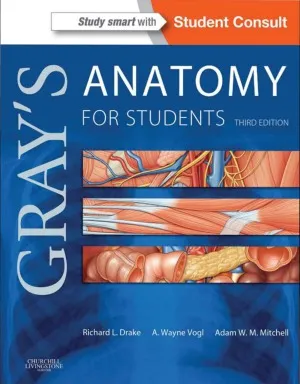
Gray's Anatomy for Students (3rd edition)
Richard Drake,A. Wayne Vogl,Adam W. M. Mitchell
2014
View book
Book guide and evaluation
Howard Gardner
0 reviews
Published
pages
views
Introduction to 'Development and Education of Mind: The Selected Works of Howard Gardner' Welcome to an enlightening exploration of Howard Gardner's 'Development and Education of Mind: The Selected Works of Howard Gardner'. This book brings together some of the most pivota
Before you read
Welcome to an enlightening exploration of Howard Gardner's 'Development and Education of Mind: The Selected Works of Howard Gardner'. This book brings together some of the most pivotal and inspirational works of Howard Gardner, a distinguished figure in the world of educational psychology. Known for his revolutionary Theory of Multiple Intelligences, Gardner has spent decades investigating the complexities of human cognition and learning. This volume encapsulates his groundbreaking contributions to understanding how we think, learn, and educate.
In 'Development and Education of Mind', Howard Gardner provides a comprehensive analysis of the development of human mind and its educational implications. Organized into several thematic sections, the book revisits key ideas and theories that have defined Gardner’s career. Central to this work is the Theory of Multiple Intelligences, which posits that traditional IQ tests narrowly define intelligence by failing to capture the diverse capabilities humans exhibit. Gardner argues that intelligence is multi-faceted, encompassing areas like linguistic, logical-mathematical, musical, spatial, bodily-kinesthetic, interpersonal, intrapersonal, and naturalistic intelligences.
This collection also includes essays that delve into how these intelligences play out in educational settings, offering insights into how teaching strategies can be diversified to align with different types of intelligence. The book further explores the implications of these theories for educational practice, including the potential for tailored pedagogical approaches that foster a more individualized learning experience. By integrating educational theory with practical insights, Gardner intends to bridge the gap between psychological research and classroom application.
"The world is as it is because of the interplay of human intelligences, and to hope to change the world one has to think intelligently." – Howard Gardner
"Our goal must be to educate children who are capable not only of learning but also of questioning and transforming what they have learned.”
"Understanding is a kind of organized abstraction from those many stories that human beings encounter in their lives."
The importance of 'Development and Education of Mind' extends beyond the academic community, reaching educators, policy makers, and parents. Its ideas challenge conventional educational paradigms and provoke thought on how we perceive intelligence and its measurement. By emphasizing the variety of intelligences, Gardner’s work advocates for a more personalized approach to education, fostering environments where each student can thrive in their unique way.
In a rapidly changing world where creativity and adaptability are increasingly valued, Gardner’s insights remind us that education should equip individuals not just to absorb facts, but to think critically and contextually. This book is a clarion call for educational reform that values diverse intellectual contributions and prepares students for future challenges.
Your question is answered in the context of this title and author. Each answer uses 2 points.
0 reviews, 4.5 average out of 5
Sign in to publish a review.
Ask a focused question and learn from the community.
Related references that continue this learning path.
Richard Drake,A. Wayne Vogl,Adam W. M. Mitchell
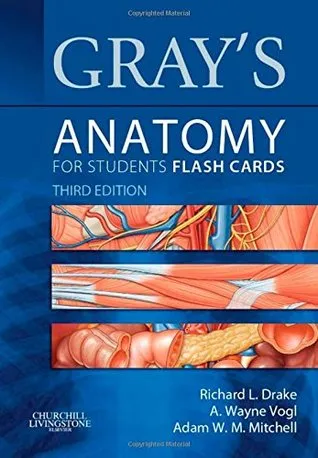
Richard L. Drake;A. Wayne Vogl;Adam W.M. Mitchell

Joseph A. Ball,Vladimir Bolotnikov,Leiba Rodman,J. William Helton,Ilya M. Spitkovsky (auth.)