

The Mathematical Experience, Study Edition
Philip J. Davis,Reuben Hersh,Elena Anne Marchisotto (auth.)
2012
View book
Book guide and evaluation
Tita Chico
0 reviews
Published
pages
views
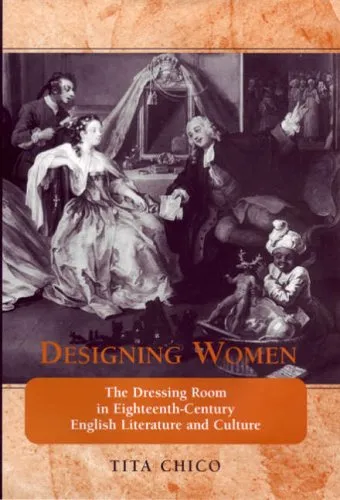
Introduction Welcome to an intricate exploration of femininity, culture, and the world of materiality in the eighteenth-century English literary context with Designing Women: The Dressing Room in Eighteenth-Century English Literature and Culture. This book examines the dressin
Before you read
Welcome to an intricate exploration of femininity, culture, and the world of materiality in the eighteenth-century English literary context with Designing Women: The Dressing Room in Eighteenth-Century English Literature and Culture. This book examines the dressing room as a locus of female identity, autonomy, and creativity, blending literature, cultural history, and material analysis to present a vivid portrait of women's lives in the period. Through the lens of the dressing room, the book reveals a rich interplay between personal expression and cultural constraints, tracing its depiction in works by authors like Alexander Pope, Frances Burney, and Samuel Richardson.
The dressing room represents more than just a physical space; it functions as a metaphorical stage for the performance of gender, a site of empowerment, and occasionally a source of satire and critique. By situating the dressing room at the intersection of literature, social history, and gender studies, Designing Women provides fresh insights into how eighteenth-century women negotiated their identities at the intersection of public and private spheres. This is a book for anyone interested in the subtle relationships between gender, culture, and materiality in historical contexts.
In Designing Women, the dressing room serves as a space of hybridity where personal and public narratives converge. The book examines this space through five detailed chapters, each focusing on a different aspect of the dressing room's cultural significance. From exploring the architectural and cultural origins of dressing rooms to understanding their symbolic role in novels, plays, and poems, Designing Women uncovers how these spaces operated as both physical locations and interpretative sites within eighteenth-century English society.
The first chapter delves into the historical development of dressing rooms as aristocratic innovations that became symbolic of refinement and individuality. Moving to the literary realm, the book illustrates how the dressing room became a theatrical site fraught with moralistic scrutiny and gendered performances. Authors like Alexander Pope turned the dressing room into a satirical object, as in "The Rape of the Lock," while others used it to underscore female agency or critique patriarchal structures.
Chapters three and four focus on female authors like Frances Burney and their contributions to the dressing room's cultural representation. Here, the room becomes a more complex space where women could both conform to and challenge societal expectations, often symbolizing a site for creativity and self-determination. Interrogating how material objects like cosmetics, mirrors, and clothing become extensions of identity, the book demonstrates how women navigated social mobility and individual perception.
The final chapter discusses the intersection of morality and aesthetics, analyzing how dressing rooms and their contents participated in broader societal debates about virtue, authenticity, and gender relations. Women's material possessions, like their artistic and intellectual pursuits, came to symbolize both their individuality and their subjugation within a broader cultural narrative.
"The dressing room may be adorned with silks and mirrors, but it remains a fraught space where identity, performance, and society's expectations collide."
"To enter the dressing room is to enter a theater of reflection, where women shape themselves for both their own gazes and the judgment of others."
In a world increasingly interested in the intersections of gender, history, and materiality, Designing Women offers a crucial lens through which to understand the role of space, objects, and literary representation in constructing identity. By reimagining the dressing room as a site of complexity and transformation, the book highlights the nuanced ways women interacted with societal norms and expectations in the eighteenth century.
Academics, literary enthusiasts, and cultural historians alike will find this book an invaluable resource for untangling the intricate relationships between gender, literature, and material culture. Its focus on the dressing room as a gendered space resonates with contemporary questions about representation, autonomy, and the politics of personal spaces—making it as relevant today as it is rich in historical insight.
Your question is answered in the context of this title and author. Each answer uses 2 points.
0 reviews, 4.0 average out of 5
Sign in to publish a review.
Ask a focused question and learn from the community.
Related references that continue this learning path.
Philip J. Davis,Reuben Hersh,Elena Anne Marchisotto (auth.)
Alina Wheeler,Rob Meyerson


Jon Bertilsson,Veronika Tarnovskaya