Vijayakumar Sunkara
2025/11/27
5 / 5
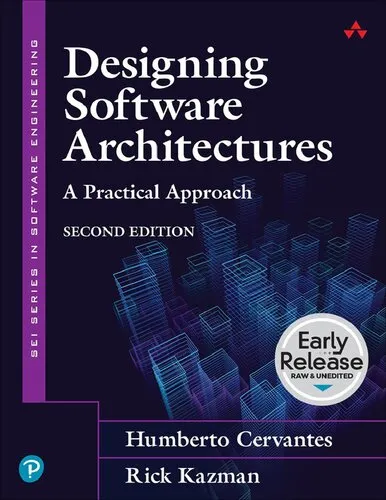
From an architect’s point of view, Designing Software Architectures: A Practical Approach (2nd Edition) stands out because it focuses on the real-world decision-making that goes into architecture, not just theoretical diagrams or high-level abstractions. The book does a solid job of walking through architectural drivers, quality attributes, tactics, and trade-off thinking in a way that feels grounded in practice. The scenario-based design and evaluation methods are particularly useful—especially for architects who need to justify choices to stakeholders or ensure alignment across teams. It also avoids the trap of being vendor or framework dependent, which makes the concepts more durable and adaptable across domains.
That said, the book is more valuable for architects who already have some hands-on experience. Beginners might find parts of it dense because the examples assume familiarity with architectural reasoning and project constraints. Some sections feel repetitive, especially for someone who has worked with ATAM or similar evaluation frameworks before. It’s not a pattern catalogue or prescriptive blueprint, so readers expecting concrete templates may want supplementary material. But overall, it’s a thoughtful, methodical, and practical resource that reinforces disciplined architectural thinking—something that’s increasingly rare in a world obsessed with speed over structure.