
Sketching User Experiences: The Workbook
Saul Greenberg, Sheelagh Carpendale, Nicolai MarquardtandBill Buxton (Auth.)
2011
View book
Book guide and evaluation
Nathan Shedroff
0 reviews
Published
pages
views
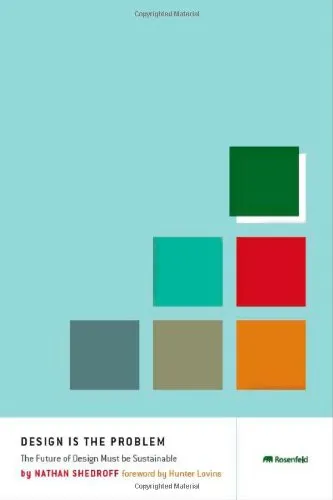
Welcome to the introduction of "Design Is the Problem: The Future of Design Must be Sustainable". This book delves into one of the most critical and pressing challenges of our time: sustainability. By exploring the intersection of design, business, and sustainability, it provid
Before you read
Welcome to the introduction of "Design Is the Problem: The Future of Design Must be Sustainable". This book delves into one of the most critical and pressing challenges of our time: sustainability. By exploring the intersection of design, business, and sustainability, it provides actionable insights for creating systems, products, and services that not only meet human needs but do so responsibly.
Design is more than aesthetics or functionality—it's a powerful tool for shaping the future. In "Design Is the Problem," I investigate how design decisions contribute to many of the sustainability challenges we face today and how they hold the potential to resolve them. The book challenges designers, engineers, entrepreneurs, and organizations to rethink their processes from the perspective of sustainability and to embrace systems thinking.
The book explores the myths and misunderstandings around sustainability and positions design as a core lever for transformative change. It highlights how conventional design approaches often lead to waste, inefficiency, and systemic problems that degrade our environment. Instead, I present a framework for sustainable design, focusing on lifecycle thinking, cradle-to-cradle methodologies, and restorative practices.
With practical examples and frameworks, the book details how designers can reduce harmful impacts, meet regulatory and market expectations, and improve design efficiency while maintaining the integrity of ecosystems. Alongside this, I discuss how designers must embed a sense of responsibility and ethics into their work, ensuring that sustainability is not just an afterthought but a central purpose of any project.
"We need less noise and waste in our world—in our communication, our materials, and our practices. Design, at its heart, is a way of solving problems in ways that should make lives better, not worse."
"Great design is responsible design. Sustainability isn't a constraint—it's a profound opportunity for creativity."
"The future belongs to those who can look beyond the immediate and design solutions that regenerate, rather than deplete, the systems we depend on."
The global challenges of climate change, resource depletion, and social inequality demand nothing less than a transformation in almost every domain of human activity. This book underscores the pivotal role that design plays in addressing these challenges, showing how it can drive positive change at the environmental, social, and economic levels.
"Design Is the Problem" is not just a guide for designers; it's a critical manifesto for anyone involved in bringing products, services, or systems to life. By reframing design as a fundamental mechanism for sustainability, the book inspires readers to expand their mindset, embrace complexity, and innovate responsibly.
Ultimately, the message of the book is one of hope. While it confronts the dire state of our planet, it also empowers readers with the tools, frameworks, and vision necessary to contribute meaningfully to a better future. Sustainability isn't just about survival—it's about thriving within the limits of our interconnected ecosystems.
Your question is answered in the context of this title and author. Each answer uses 2 points.
0 reviews, 4.5 average out of 5
Sign in to publish a review.
Ask a focused question and learn from the community.
Related references that continue this learning path.
Saul Greenberg, Sheelagh Carpendale, Nicolai MarquardtandBill Buxton (Auth.)

Edited by Cary L. Cooper