
Securing Japan: Tokyo's Grand Strategy and the Future of East Asia
Richard J. Samuels
2007
View book
Book guide and evaluation
Samy Cohen
0 reviews
Published
pages
views
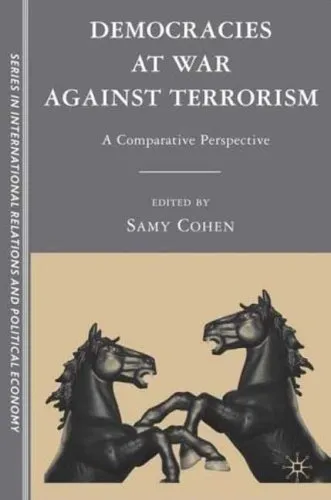
Introduction to "Democracies at War against Terrorism: A Comparative Perspective" Terrorism has emerged as one of the gravest threats to the global order in the 21st century. In "Democracies at War against Terrorism: A Comparative Perspective," I, Samy Cohen, delve deep in
Before you read
Terrorism has emerged as one of the gravest threats to the global order in the 21st century. In "Democracies at War against Terrorism: A Comparative Perspective," I, Samy Cohen, delve deep into how democracies, as political systems defined by their respect for freedom, human rights, and the rule of law, have adapted to the enormous challenge of combating terrorism. This book takes a comparative lens, analyzing the strategies of various democratic nations, exploring their successes and shortcomings, and examining the impact of these actions on the fundamental values they aim to protect.
While democracies are inherently committed to protecting civil liberties, the nature of terrorism often challenges those commitments. This inherent tension is at the core of the book, which not only presents case studies but also debates the ethical and strategic dilemmas faced by democratically elected governments in their efforts to secure the state without undermining democratic principles.
The book is structured around a set of critical questions: How do democracies respond to terrorism without eroding the very democratic principles they stand for? Are there effective counterterrorism strategies that do not compromise civil liberties? What lessons can democracies learn from each other’s successes and failures? To answer these, the book provides a comparative analysis of several democratic countries, including the United States, the United Kingdom, France, and Israel, among others.
The central argument posits that democracies face distinctive challenges compared to authoritarian regimes when responding to terrorism. Unlike authoritarian systems, democracies must operate within parameters defined by public opinion, legal norms, and an active media. These constraints hinder swift and unilateral actions but also demand a degree of transparency and accountability that can ultimately strengthen democratic institutions if handled wisely.
Organized into thematic chapters, the book examines:
Each of these chapters is enriched with real-world examples and comparative data to paint a nuanced picture of how different democracies have fared in the fight against terrorism.
Here are some key takeaways from this book:
"The fight against terrorism tests the resilience of democracy, not just in its ability to repel violence but in its commitment to ideals even under duress."
"In the war on terror, the line between security and authoritarianism is thin. The true measure of a democracy is whether it can uphold its values as it defends its borders."
"The louder the call for immediate security, the easier it is to overlook the gradual erosion of civil liberties."
In an age where terrorism continues to evolve, this book offers invaluable insights for policymakers, academics, and citizens alike. It serves as a cautionary tale about the consequences of overreach in the name of security while providing a roadmap for preserving democratic norms. The comparative perspective presents a rich tapestry of experiences that highlight both pitfalls to avoid and best practices to emulate.
At its heart, "Democracies at War against Terrorism" underscores the importance of vigilance—not just against external threats but also against internal erosion of what makes democracies worth protecting. By highlighting the challenges and opportunities in counterterrorism efforts, this book invites readers to rethink conventional approaches and deepen their understanding of the interconnectedness of security and liberty.
Your question is answered in the context of this title and author. Each answer uses 2 points.
0 reviews, 4.0 average out of 5
Sign in to publish a review.
Ask a focused question and learn from the community.
Related references that continue this learning path.
Richard J. Samuels

Daveed Gartenstein-Ross;Thomas Joscelyn