Book guide and evaluation
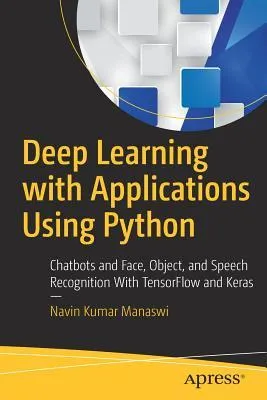
Deep Learning with Applications Using Python: Chatbots and Face, Object, and Speech Recognition with Tensorflow and Keras
Navin Kumar Manaswi
English
Beginner
Artificial Intelligence (AI)
4.0 / 5
0 reviews
2018
Published
227
pages
693
views
Introduction Welcome to a transformative journey in the field of deep learning—one of the most innovative domains of modern technology. "Deep Learning with Applications Using Python: Chatbots and Face, Object, and Speech Recognition with Tensorflow and Keras" is an
Before you read
What will you get from this book?
Introduction
Welcome to a transformative journey in the field of deep learning—one of the most innovative domains of modern technology. "Deep Learning with Applications Using Python: Chatbots and Face, Object, and Speech Recognition with Tensorflow and Keras" is an essential resource for practitioners and enthusiasts alike. This book bridges the gap between theoretical concepts and real-world applications, providing an enriching experience that combines a profound understanding of machine learning principles with practical coding skills.
Detailed Summary of the Book
This book serves as a comprehensive guide to understanding and deploying deep learning solutions using Python, one of the most versatile programming languages, alongside TensorFlow and Keras, which are powerful frameworks for building AI models. From the basics of neural networks to the advanced applications of deep learning technologies, each chapter is meticulously crafted to offer both clarity and depth.
The book begins with an introduction to the fundamental concepts of deep learning and the Python programming environment. The reader is then guided through various topics, including the structure and functioning of neural networks, data preprocessing, model training, validation, and optimization. Each chapter focuses on a specific application area—chatbots, face recognition, object detection, and speech recognition—providing practical insights and hands-on coding exercises.
With detailed explanations of algorithms and step-by-step implementation instructions, readers can build their own AI systems. The book emphasizes the importance of model evaluation and integration, ensuring that solutions are robust and scalable for real-world applications.
Key Takeaways
- Understanding the core concepts of deep learning and neural networks
- Hands-on experience with TensorFlow and Keras frameworks
- In-depth knowledge of building chatbots, and applications in face, object, and speech recognition
- Insights into model training, tuning, and deployment for real-world applications
- Exposure to challenges and best practices in the field of deep learning
Famous Quotes from the Book
"Deep learning is not just a tool but an art; the art of enabling machines to perceive the world as we do."
"Building intelligent systems is not merely about algorithms and data, but about delivering trust and value."
Why This Book Matters
In the rapidly evolving landscape of technology, staying ahead requires not just theoretical knowledge but practical application. This book is a crucial resource for students, developers, and industry professionals who are keen to harness the power of AI. By focussing on both foundational principles and cutting-edge research, the book empowers readers with the critical skills needed to develop innovative solutions that stand at the frontier of technological advancement.
Unlike other resources that often focus solely on theory or purely on implementation, this book uniquely integrates both, ensuring that readers can both understand deep learning concepts deeply and apply them effectively. It paves the way to encoding intelligence into everyday applications, from chatbot development to facial recognition systems, which are increasingly becoming integral to modern life.
By the end of this book, readers will not only have built robust deep learning models but also developed a strategic mindset for deploying AI applications that make a significant impact—both technically and ethically.
Ask this book
Your question is answered in the context of this title and author. Each answer uses 2 points.
Sign in to ask the book assistant.
Reader reviews
0 reviews, 4.0 average out of 5
No reviews yet
If you have read this book, help the next reader with your experience.
Write a review
Sign in to publish a review.
Reader questions and answers
Ask a focused question and learn from the community.
Sign in to ask or answer a question.
No questions yet
Be the first to ask a clear, useful question.
What to read next
Related references that continue this learning path.