Venkat Nallapu
2025/10/24
5 / 5
Very understanding, complexity of CNN are break down in a simple manner
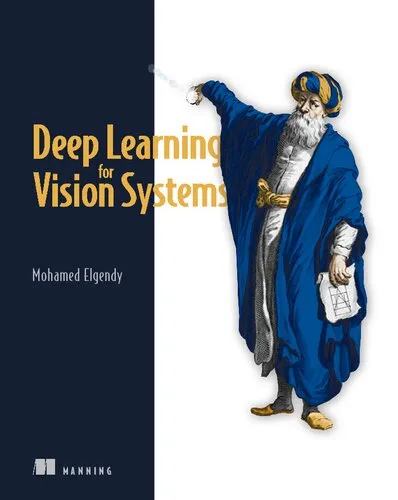
Book guide and evaluation
Mohamed Elgendy
2 reviews
Published
pages
views
Introduction to Deep Learning for Vision Systems In an era where visual data is abundant and accessible, the intersection of computer vision and deep learning provides the indispensable tools needed to interpret and utilize this data insightfully and effectively. "
Before you read
In an era where visual data is abundant and accessible, the intersection of computer vision and deep learning provides the indispensable tools needed to interpret and utilize this data insightfully and effectively. "Deep Learning for Vision Systems" serves as a quintessential guide for engineers, developers, and enthusiasts eager to dive into the nuances of deep learning applied to computer vision.
"Deep Learning for Vision Systems" is meticulously crafted to not only introduce the reader to the vast potential of deep learning as applied to computer vision but also to equip them with practical skills for developing their vision systems. The book blends theoretical concepts with real-world applications, ensuring that readers grasp the underlying principles of deep learning architectures before deploying them in practical scenarios.
Beginning with a foundational overview of neural networks, the book delves into convolutional neural networks (CNNs), which have revolutionized the way machines interpret visual data. With step-by-step explanations, readers are introduced to more advanced topics such as transfer learning, generative adversarial networks (GANs), and reinforcement learning, all tailored to improve vision systems. Each chapter is designed to build upon the last, ensuring a comprehensive understanding of how these innovative technologies are applied in today's AI-driven world.
Grasp the foundational elements of neural networks and understand how they are utilized in computer vision.
Learn the intricacies of CNNs, the backbone of modern vision systems, and their various architectures.
Develop a nuanced understanding of how to leverage deep learning models for image classification, object detection, and more complex tasks like segmentation.
Explore advanced topics, including GANs and reinforcement learning, to push the boundaries of what's possible in vision systems.
Gain practical knowledge through hands-on projects interspersed throughout the book, which encourage applying theory to practice.
"The essence of deep learning lies in its ability to transform abstract ideas into reality, allowing machines to perceive and interact with the world as adeptly as we do."
"Every pixel tells a story; the challenge is teaching systems to read and understand every element of this visual narrative."
"Deep Learning for Vision Systems" addresses a significant gap in available resources by providing an accessible yet thorough introduction to deep learning's applications in computer vision. As industries increasingly rely on automated solutions to analyze visual data, the knowledge shared within this book becomes not merely advantageous but essential.
From autonomous vehicles and facial recognition systems to medical imaging and robotics, the profound impact of vision systems in modern technology cannot be understated. By understanding the principles and practices outlined in this book, readers can position themselves at the forefront of technological advancements and innovations. The book encapsulates the potential for deep learning to revolutionize industries by enhancing machines' abilities to interpret the visual world.
Your question is answered in the context of this title and author. Each answer uses 2 points.
2 reviews, 5.0 average out of 5
2025/10/24
5 / 5
Very understanding, complexity of CNN are break down in a simple manner
2025/11/20
5 / 5
Very good, it simple and easy to understand
Sign in to publish a review.
Ask a focused question and learn from the community.
Related references that continue this learning path.



Swarna Gupta;Rehan Ali Ansari;Dipayan Sarkar