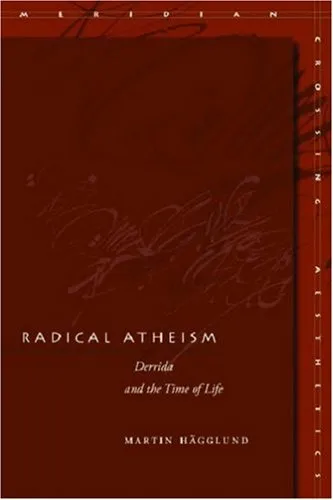
Radical Atheism: Derrida and the Time of Life (Meridian: Crossing Aesthetics)
Martin Hagglund
2008
View book
Book guide and evaluation
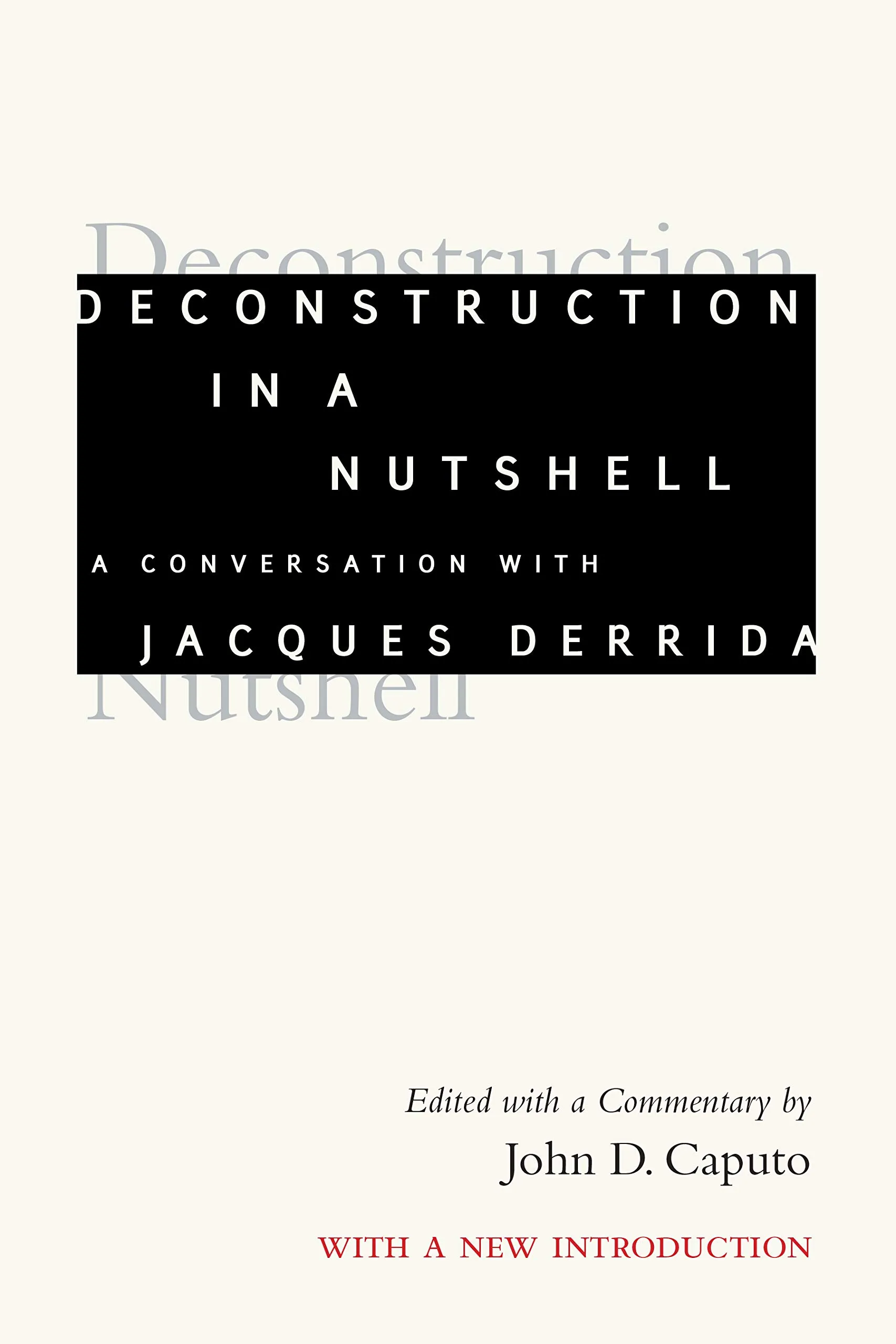
Jacques Derrida,John D. Caputo (editor)
0 reviews
Published
pages
views
Welcome to the introduction of "Deconstruction in a Nutshell: A Conversation with Jacques Derrida, With a New Introduction." In this enlightening work, renowned philosopher Jacques Derrida, through the guidance of editor John D. Caputo, demystifies the complex concept of decons
Before you read
Welcome to the introduction of "Deconstruction in a Nutshell: A Conversation with Jacques Derrida, With a New Introduction." In this enlightening work, renowned philosopher Jacques Derrida, through the guidance of editor John D. Caputo, demystifies the complex concept of deconstruction and provides readers with a profound understanding of its significance in contemporary thought. This introduction will guide you through a detailed summary of the book, highlight key takeaways, present famous quotes, and explore why this book remains crucial for scholars and enthusiasts alike.
"Deconstruction in a Nutshell" is structured around a series of insightful conversations and critical analysis centered on the philosophy of deconstruction, a term coined by Derrida. The book captures a dialogue-like approach, where Derrida unfolds his ideas in a more accessible manner. John D. Caputo provides a substantial introduction, situating Derrida’s philosophy in the broader spectrum of contemporary thought, culture, and academic study.
The text explores the intricate principles of deconstruction, an analytical technique that seeks to unravel and question the underlying assumptions, binaries, and contradictions within philosophical and literary texts. The conversations cover a range of topics, including identity, language, and meaning, presenting deconstruction not merely as an academic exercise but as a transformative way of thinking that challenges traditional epistemologies and hierarchies.
Caputo meticulously frames Derrida’s ideas in relation to other philosophical movements and thinkers, enriching the reader's understanding of the dramatic shifts deconstruction brings to disciplines within the humanities and beyond. Through engaging discourse and critical commentary, the book becomes an indispensable primer for those looking to grasp the essence of Derrida's decentering approach.
"Deconstruction is not a method, and it cannot be transformed into one. Especially if the technical and procedural sense of method is emphasized. It is true that in certain circles (...), this is precisely what has in fact happened... it has been believed that deconstruction is a method for interpreting texts, facts, and so on."
"Every sign, linguistic or nonlinguistic, spoken or written (in the usual sense of this opposition), in a small or large unit, can be cited. Consequently, it can break with every given context, and engender infinite new contexts in an absolutely non-saturable fashion. This does not mean that the mark is valid outside the context, but on the contrary that there are only contexts without any center or absolute anchoring."
"Deconstruction in a Nutshell" occupies a crucial place in the landscape of contemporary philosophy and cultural studies. It bridges the gap between Derrida’s often abstract writings and the practical application of deconstruction as a critical tool. For students and scholars, this book offers clarity and engagement with core philosophical questions concerning meaning, structure, and interpretation.
The book's relevance extends beyond academia, influencing fields such as literature, law, psychoanalysis, and media studies, where deconstructionist approaches have prompted novel insights and methodologies. By challenging readers to question the boundaries of language and the construction of knowledge, Derrida and Caputo invite us to embrace a more nuanced view of reality, questioning the norms that shape our world.
In sum, "Deconstruction in a Nutshell" serves not only as an introduction to Derrida’s philosophy but as an invitation to engage in the ongoing discourse of questioning and rethinking. Its insights continue to resonate, offering readers the tools to deconstruct and reconstruct the intellectual paradigms that govern their fields of study and broader cultural narratives.
Your question is answered in the context of this title and author. Each answer uses 2 points.
0 reviews, 4.5 average out of 5
Sign in to publish a review.
Ask a focused question and learn from the community.
Related references that continue this learning path.
Martin Hagglund
Frithjof Schuon