

Book guide and evaluation
Debt: Updated and Expanded: The First 5,000 Years
Graeber,David
English
Beginner
Financial Planning
4.5 / 5
0 reviews
2014
Published
690
pages
510
views
Introduction to 'Debt: Updated and Expanded: The First 5,000 Years' In "Debt: Updated and Expanded: The First 5,000 Years," anthropologist David Graeber challenges conventional narratives about money and debt, tracing the complex history and evolving concepts of debt wit
Before you read
What will you get from this book?
Introduction to 'Debt: Updated and Expanded: The First 5,000 Years'
In "Debt: Updated and Expanded: The First 5,000 Years," anthropologist David Graeber challenges conventional narratives about money and debt, tracing the complex history and evolving concepts of debt within human societies. This book not only re-examines the historical relationship between creditors and debtors but also provides insights into the cultural, social, and economic implications of debt that have shaped our world over millennia.
Detailed Summary of the Book
David Graeber takes readers on a captivating journey, expounding on how debt has been a pivotal part of human civilization from ancient times through the present. Graeber delves into the concept of "human economies" where social currencies were more prevalent than money. As societies evolved, so did the systems of lending and credit, developing intricate relationships between individuals, states, and markets. The author thoroughly investigates the role of debt in fostering inequality and how historical events, such as the creation and collapse of ancient markets, influenced modern financial systems.
Graeber's work debunks the myth that money was invented to replace a barter system, a concept often considered a basic tenet in economics. Instead, he argues, the inception of money was closely tied to violence and the demands of warring states. Moving through epochs, from ancient Mesopotamia to contemporary financial crises, Graeber illustrates how creditors have traditionally held power and leverage over debtors, affecting the global political economy.
Key Takeaways
- The origin of debt is deeply rooted in social and moral considerations, often preceding the advent of money.
- Debt often leads to inequality, reinforcing hierarchies within societies over time.
- The relationship between states and markets has been cyclical, with periods of debt forgiveness often punctuated by economic collapse.
- Economic systems have used debt as a tool for both advancement and oppression throughout history.
Famous Quotes from the Book
"The history of debt is an illustration of how humans have created social structures that define morality."
"The moment we abandon the notion that capitalism was the inevitable outcome of human history, we open the possibility that another world is possible."
Why This Book Matters
“Debt: Updated and Expanded: The First 5,000 Years” is crucial for understanding not just the nature of debt itself, but how it mirrors broader societal constructs. David Graeber's interdisciplinary approach synthesizes anthropology, economics, and history, offering a fresh perspective on financial systems and fostering a critical reevaluation of assumptions about capitalism and economic fairness. In an era of unprecedented global debt levels, Graeber’s insights prompt readers to question mainstream economic ideologies and reconsider potential futures that emphasize debt liberation and social equity.
Ask this book
Your question is answered in the context of this title and author. Each answer uses 2 points.
Sign in to ask the book assistant.
Reader reviews
0 reviews, 4.5 average out of 5
No reviews yet
If you have read this book, help the next reader with your experience.
Write a review
Sign in to publish a review.
Reader questions and answers
Ask a focused question and learn from the community.
Sign in to ask or answer a question.
No questions yet
Be the first to ask a clear, useful question.
What to read next
Related references that continue this learning path.
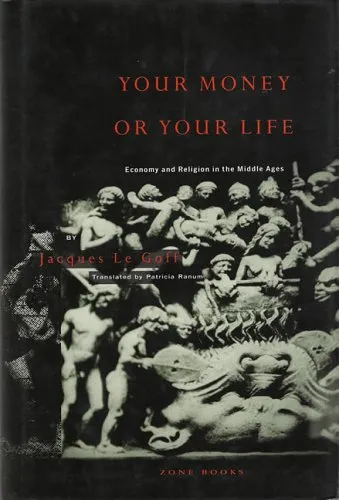
Your Money or Your Life: Economy and Religion in the Middle Ages
Jacques Le Goff,Patricia Ranum
1988
View book