
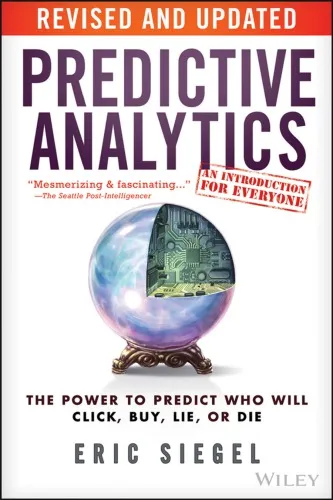
Predictive Analytics: The Power to Predict Who Will Click, Buy, Lie, or Die
Eric Siegel,Thomas H. Davenport (Foreword)
2013
View book
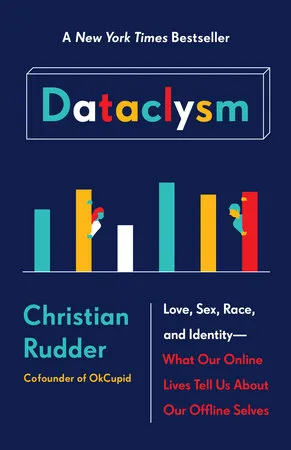
Book guide and evaluation
Christian Rudder
0 reviews
Published
pages
views
Welcome to the revealing world of 'Dataclysm: Who We Are (When We Think No One’s Looking),' a groundbreaking exploration into the digital footprints we leave behind and what they reveal about our deepest selves. Authored by Christian Rudder, co-founder of the dating website OkC
Before you read
Welcome to the revealing world of 'Dataclysm: Who We Are (When We Think No One’s Looking),' a groundbreaking exploration into the digital footprints we leave behind and what they reveal about our deepest selves. Authored by Christian Rudder, co-founder of the dating website OkCupid, this book delves into the analysis of immense pools of online data to unearth insights into modern-day human behavior and interaction.
'Dataclysm' peels back the layers of what it means to live in the age of data. Using data collected from social media platforms, dating sites, and other online sources, Rudder demonstrates how our online activities are compiled into a rich tapestry of human behavior. The book provides a thought-provoking analysis of how data can reveal patterns in love, hate, and the subtle nuances of our interactions that might otherwise be hidden from view.
Rudder takes readers on a journey that questions identity and privacy in the digital age, while offering a new perspective on the collective consciousness of the internet’s vast and varied community. It challenges us to consider not only how we present ourselves online but how those presentations shape our identities beyond the screen. The book is an enlightening exposé on how data analytics can transform our understanding of matters ranging from the trivial to the profound.
“Big data is what happened when the cost of recording information became lower than the cost of deciding whether to store it or not.”
“What you say on Facebook doesn't just stay on Facebook; it often reflects who you are in a broader sense.”
“We are, to a large extent, defined by what we write, search, click on, and like; these digital crumbs there is no sweeping away.”
In a world increasingly influenced by technology and data, 'Dataclysm' stands out as a crucial read for anyone interested in the intersections of tech, data, and human rights. The book prompts essential discussions about privacy, identity, and ethics in an age where information is both ubiquitous and endlessly traceable. Christian Rudder’s exploration opens up enlightening dialogues about how data can be harnessed responsibly and what it reveals about the societies we are crafting.
Moreover, 'Dataclysm' equips its readers with a new lens to view personal and societal habits, encouraging a deeper understanding of how our digital footprints impact our offline realities. Through this journey, Rudder calls for a collective consideration of how our data can be used to both enrich and complicate our lives, offering profound insights into establishing a balance between innovation and privacy.
Your question is answered in the context of this title and author. Each answer uses 2 points.
0 reviews, 4.2 average out of 5
Sign in to publish a review.
Ask a focused question and learn from the community.
Related references that continue this learning path.
Eric Siegel,Thomas H. Davenport (Foreword)
Viktor Mayer-Schonberger,Kenneth Cukier
Galit Shmueli,Peter C. Bruce,Nitin R. Patel
EMC Education Services