

Social Media Analytics Strategy: Using Data to Optimize Business Performance
Alex Gonçalves (auth.)
2017
View book
Book guide and evaluation
Dennis Shasha,Philippe Bonnet
0 reviews
Published
pages
views
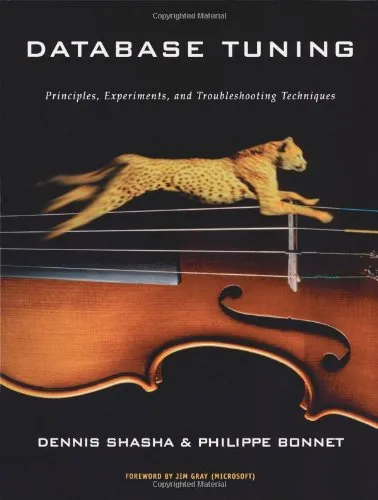
Introduction to "Database Tuning: Principles, Experiments, and Troubleshooting Techniques" Welcome to "Database Tuning: Principles, Experiments, and Troubleshooting Techniques," a comprehensive guide dedicated to mastering database performance optimization. Written by Dennis S
Before you read
Welcome to "Database Tuning: Principles, Experiments, and Troubleshooting Techniques," a comprehensive guide dedicated to mastering database performance optimization. Written by Dennis Shasha and Philippe Bonnet, this book provides a systematic approach to understanding, diagnosing, and improving the efficiency of modern database systems. Whether you are a database administrator, software developer, or IT professional, this book serves as a go-to reference for optimizing database queries, storage systems, and overall performance.
In this era of data-driven decision-making, the power of a well-functioning database cannot be overstated. However, the path to peak database performance is riddled with challenges—from inefficient queries to poorly designed schemas to complex hardware considerations. With its strategic focus on practical solutions and real-world experiments, "Database Tuning" bridges the gap between theoretical principles and hands-on troubleshooting techniques.
At the heart of this book lies a focus on database performance, blending academic rigor with pragmatic advice drawn from years of industry experience. The content is organized to balance theoretical insights with actionable takeaways, enabling readers to achieve optimal tuning depending on the database environment—be it transactional, analytical, or hybrid.
The authors begin by introducing the foundations of database systems, touching on key architectural components such as query optimizers, storage subsystems, and indexing strategies. They detail the core principles of database tuning, emphasizing the need to measure performance and identify bottlenecks systematically.
Subsequent chapters delve into critical topics such as indexing, query optimization strategies, memory hierarchy management, and workload distribution. Throughout these discussions, the authors employ practical experiments, allowing readers to observe and learn the impact of various tuning techniques under different scenarios.
What sets this book apart is its hands-on troubleshooting framework. Shasha and Bonnet equip readers with strategies to handle common performance problems such as slow joins, inconsistent transaction response times, and excessive I/O operations. They also highlight advance preparation steps to mitigate issues in evolving workloads and modern cloud-based environments.
"Performance optimization is an iterative process; tuning the database is not just about fixing what is broken but enabling what is possible."
"Every index you add can be a blessing or a curse. The trick lies in understanding its trade-offs."
"A slow database isn't just inefficient; it's a barrier to innovation."
"Database Tuning: Principles, Experiments, and Troubleshooting Techniques" matters because effective database performance is fundamental to modern computing. In a world where businesses and applications depend on responsive and scalable data systems, knowing how to optimize performance can mean the difference between success and failure.
Beyond theoretical concepts, this book provides actionable insights and real-world examples that are immediately applicable to readers’ own environments. By fostering a deeper understanding of database internals and offering techniques that are both proactive and reactive, it empowers professionals to create systems that are not only efficient but also resilient to future challenges.
Whether you are a beginner looking to build a strong foundation or an experienced professional seeking advanced tuning strategies, this book ensures you can maintain peak database performance in any environment.
Your question is answered in the context of this title and author. Each answer uses 2 points.
0 reviews, 4.5 average out of 5
Sign in to publish a review.
Ask a focused question and learn from the community.
Related references that continue this learning path.
Alex Gonçalves (auth.)

CA,Jim Geier,Eric Geier