Loading
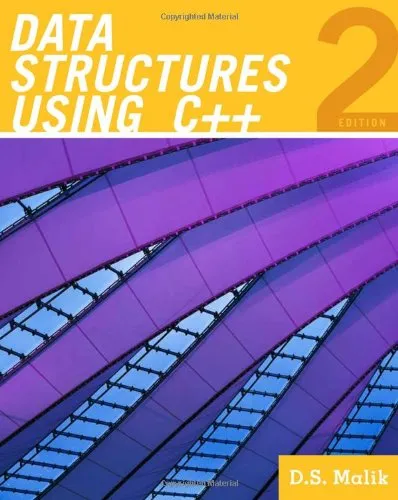
Cover of Data Structures Using C++, 2nd Edition

Book guide and evaluation

Data Structures Using C++, 2nd Edition

D. S. Malik

English Beginner Programming Languages
5.0 / 5

1 reviews

2009

Published

945

pages

856

views

Introduction to "Data Structures Using C++, 2nd Edition" "Data Structures Using C++, 2nd Edition" is a comprehensive guide for students, IT professionals, and anyone looking to understand the intricacies of data structures while leveraging the power of C++. Authored by D.S

Before you read

What will you get from this book?

Introduction to "Data Structures Using C++, 2nd Edition"

"Data Structures Using C++, 2nd Edition" is a comprehensive guide for students, IT professionals, and anyone looking to understand the intricacies of data structures while leveraging the power of C++. Authored by D.S. Malik, this book delivers a structured and hands-on approach to mastering essential concepts, emphasizing clarity, readability, and the practical application of data structures in solving complex programming challenges. Whether you are a novice or an experienced developer, this book serves as an invaluable resource for sharpening your programming acumen through problem-solving, algorithm design, and implementation.

Detailed Summary of the Book

This book provides a deep dive into the core principles of data structures while maintaining a consistent focus on how these structures integrate with C++ programming. It begins with a concise introduction to C++ syntax, object-oriented programming, and foundational concepts, ensuring an accessible starting point for every reader. As you progress, the book methodically explores topics such as arrays, linked lists, stacks, queues, recursion, trees, graphs, hash tables, and algorithms, alongside practical implementation examples.

Each chapter is thoughtfully organized into concise sections that combine theoretical concepts with real-world applications. Fully syntactically correct C++ programs, designed for clarity and tested rigorously, are provided for every major topic. Exercises and programming challenges allow readers to apply their understanding while fostering critical thinking skills. Overall, this book blends theoretical knowledge, practical coding techniques, and an emphasis on problem-solving strategies to produce a grounded educational experience.

Key Takeaways

  • A detailed, step-by-step exploration of fundamental and advanced data structures.
  • Practical C++ examples that demonstrate how to implement various data structures in real-world scenarios.
  • Clear explanations of algorithms, such as sorting, searching, and graph traversal, and their applications.
  • Hands-on exercises and projects to build problem-solving skills and reinforce conceptual understanding.
  • Coverage of object-oriented programming concepts relevant to data structures, including encapsulation, classes, and inheritance.
  • A strong emphasis on the computational efficiency of algorithms and their role in solution optimization.

Famous Quotes from the Book

"Writing clean, efficient code is an art, but understanding the underlying structure of data is the science that fuels it."

"A well-designed algorithm transforms a good program into a great solution."

"The real power of data structures lies not in their complexity, but in how they simplify your approach to solving problems."

Why This Book Matters

In the ever-evolving field of computer science, where data is at the core of innovation and progress, understanding how to store, manipulate, and process information efficiently is vital. "Data Structures Using C++, 2nd Edition" remains one of the most widely respected texts in its domain because of its ability to demystify complex concepts and empower readers to approach challenges with confidence.

The book's emphasis on programming practice means readers come away with more than just theoretical knowledge—they gain real skills they can apply in academic settings, professional software development, and competitive programming. By teaching readers to write clean, modular, and efficient code, the book equips its audience to excel in interviews, manage large-scale applications, and contribute meaningfully to the field of software engineering.

Bringing together the fields of algorithms, programming, and data structure design, "Data Structures Using C++, 2nd Edition" continues to bridge the gap between academic knowledge and practical implementation. Its timeless concepts and rigorous yet approachable presentation make it a must-read for anyone aspiring to deepen their expertise in programming and problem-solving.

In summary, this book is much more than a manual—it is a journey into the heart of programming, emphasizing the need for efficient solutions and equipping readers with the tools to thrive in the modern digital landscape.

Ask this book

Your question is answered in the context of this title and author. Each answer uses 2 points.

Sign in to ask the book assistant.

Reader reviews

1 reviews, 5.0 average out of 5

Dr. Puneeth Thotad

2026/09/02

5 / 5

Data Structures Using C++, 2nd Edition

Data Structures Using C++, 2nd Edition by D. S. Malik is a comprehensive and practical textbook that provides a systematic introduction to data structures and their implementation using C++. The book is particularly suitable for undergraduate and postgraduate students in Computer Science and Information Technology, as well as programmers who want to strengthen their understanding of fundamental data structures and algorithms.

One of the major strengths of the book is its structured and progressive presentation. It introduces the necessary C++ programming and object-oriented concepts before moving toward more advanced data structures. Topics such as arrays, linked lists, stacks, queues, recursion, trees, graphs, hash tables, sorting, searching, and graph algorithms are presented in a manner that helps readers gradually build their conceptual understanding.

The book effectively combines theoretical explanations with practical C++ implementations. The inclusion of complete programs is particularly valuable for students because it allows them to understand not only how a data structure works conceptually but also how it can be implemented and used in real programming situations. This practical orientation makes the book useful for laboratory courses and programming assignments in addition to conventional classroom learning.

Another notable feature is its emphasis on algorithmic efficiency and problem-solving. Understanding time and space requirements is an essential component of data structures, and the book helps students appreciate why one implementation or algorithm may be preferable to another. The exercises and programming problems further encourage students to apply their knowledge rather than simply memorize definitions and algorithms.

The coverage of object-oriented programming concepts is also beneficial. Concepts such as classes, encapsulation, and inheritance provide an appropriate foundation for implementing abstract data types and reusable data structures in C++. This makes the book relevant not only for learning data structures but also for developing good programming practices.

Strengths
Clear and systematic treatment of fundamental data structures.
Strong integration of C++ programming with data-structure concepts.
Practical implementation examples help bridge theory and programming practice.
Covers important searching, sorting, tree, graph, and hashing algorithms.
Emphasizes algorithm efficiency and problem-solving.
Exercises provide opportunities for practice and self-assessment.
Suitable for academic courses as well as independent learning.
Provides a useful foundation for programming interviews and competitive programming.
Write a review

Sign in to publish a review.

Reader questions and answers

Ask a focused question and learn from the community.

Sign in to ask or answer a question.

No questions yet

Be the first to ask a clear, useful question.