English
Beginner
Artificial Intelligence (AI)
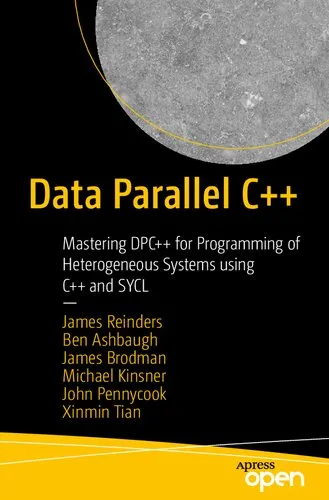
Data Parallel C++ Mastering DPC++ for Programming of Heterogeneous Systems using C++ and SYCL
James Reinders,Ben Ashbaugh et al
4.5 / 5
0 reviews
2021
Published
565
pages
396
views
Learn how to accelerate C++ programs using data parallelism. This open access book enables C++ programmers to be at the forefront of this exciting and important new development that is helping to push computing to new levels. It is full of practical advice, detailed explanations,
About this book
Learn how to accelerate C++ programs using data parallelism. This open access book enables C++ programmers to be at the forefront of this exciting and important new development that is helping to push computing to new levels. It is full of practical advice, detailed explanations, and code examples to illustrate key topics.
Data parallelism in C++ enables access to parallel resources in a modern heterogeneous system, freeing you from being locked into any particular computing device. Now a single C++ application can use any combination of devices—including GPUs, CPUs, FPGAs and AI ASICs—that are suitable to the problems at hand.
This book begins by introducing data parallelism and foundational topics for effective use of the SYCL standard from the Khronos Group and Data Parallel C++ (DPC++), the open source compiler used in this book. Later chapters cover advanced topics including error handling, hardware-specific programming, communication and synchronization, and memory model considerations.
Data Parallel C++ provides you with everything needed to use SYCL for programming heterogeneous systems.
What You'll Learn
Accelerate C++ programs using data-parallel programming
Target multiple device types (e.g. CPU, GPU, FPGA)
Use SYCL and SYCL compilers
Connect with computing’s heterogeneous future via Intel’s oneAPI initiative
Who This Book Is For
Those new data-parallel programming and computer programmers interested in data-parallel programming using C++.
Ask this book
Your question is answered in the context of this title and author. Each answer uses 2 points.
Sign in to ask the book assistant.
Reader reviews
0 reviews · 4.5 average out of 5
No reviews yet
If you have read this book, help the next reader with your experience.
Write a review
Sign in to publish a review.
Reader questions and answers
Ask a focused question and learn from the community.
Sign in to ask or answer a question.
No questions yet
Be the first to ask a clear, useful question.
What to read next
Related references that continue this learning path.
Feature Engineering for Machine Learning: Principles and Techniques for Data Scientists
Alice Zheng,Amanda Casari
2018
View book