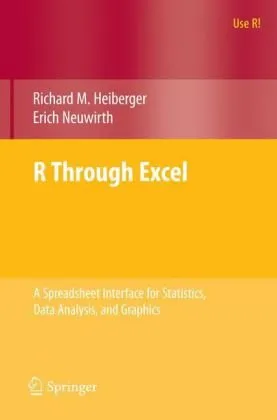
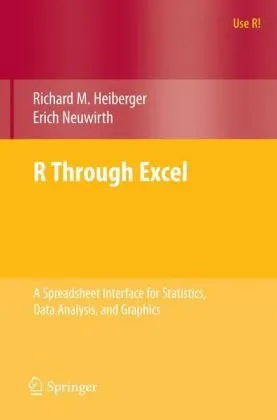
R Through Excel: A Spreadsheet Interface for Statistics, Data Analysis, and Graphics
Richard M. Heiberger,Erich Neuwirth (auth.)
2009
View book
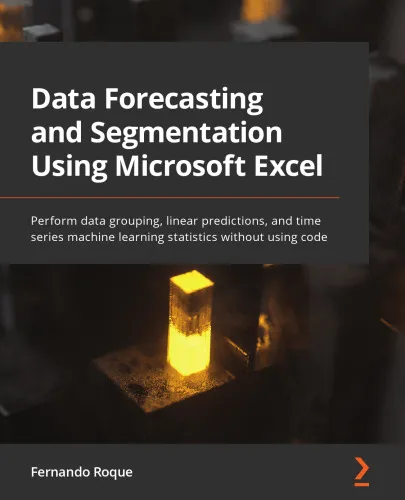
Book guide and evaluation
FERNANDO. ROQUE
0 reviews
Published
pages
views
Data Forecasting and Segmentation Using Microsoft Excel: Perform data grouping, linear predictions Excel predictive analytics, statistical data segmentation Master forecasting and segmentation in Excel with Data Forecasting and Segmentation Using Microsoft Excel: Perfor
Before you read
The book Data Forecasting and Segmentation Using Microsoft Excel: Perform data grouping, linear predictions offers a structured, methodical exploration into applying analytical techniques to modern datasets using one of the most accessible tools for professionals and academics: Microsoft Excel. It bridges the gap between theory and practice, ensuring readers not only grasp the statistical fundamentals but also translate them into actionable business and research insights.
This volume covers both foundational and advanced concepts. From the very first chapters, it demonstrates how segmentation techniques can unveil hidden patterns within large datasets, a skill essential in marketing analysis, operations planning, and scientific research. By integrating linear predictions directly into Excel workflows, the author empowers users to produce accurate forecasts without requiring programming knowledge or expensive software.
Written with clarity and precision, the book’s narrative is grounded in practical examples. Readers will find detailed walkthroughs, annotated datasets, and visual aids that illustrate step-by-step methods. Whether you are dealing with demographic statistics, financial performance data, or experimental results, this guide makes forecasting and segmentation approachable while retaining academic rigor.
By engaging with this book, professionals and students will equip themselves with tools to harness the power of Excel for complex data-driven decisions.
First, readers will learn specific segmentation approaches, including grouping datasets by relevant categories to uncover insights. Second, the linear prediction models introduced are binding together statistical theory with practical spreadsheet application, enhancing both understanding and usability. Third, emphasis on predictive accuracy, model validation, and result interpretation ensures that insights derived are trustworthy and actionable.
In addition, the secondary keywords – “Excel predictive analytics” and “statistical data segmentation” – are not abstract concepts here; they become tangible skills through guided exercises. Each technique is illustrated with real-world relevance, positioning readers to deploy them effectively in diverse contexts.
“Segmentation is not merely dividing your data; it’s discovering the stories hidden within it.”Unknown
“Forecasting is the art of making tomorrow’s decisions today, with evidence and precision.”Unknown
“Microsoft Excel remains a powerful stage for meaningful data narratives.”Unknown
In a data-saturated world, the ability to forecast trends and segment datasets effectively is indispensable.
The unique value of Data Forecasting and Segmentation Using Microsoft Excel: Perform data grouping, linear predictions lies in its seamless integration of theoretical models into a universally accessible tool. Excel is present across industries and academia, and this book demonstrates how to wield it for statistical excellence. Information such as the specific publication year and award recognitions is unavailable due to no reliable public source; however, the content’s quality underscores its relevance regardless of these details.
From business analysts aiming to sharpen market insights to researchers testing hypotheses, the methodologies explained enable readers to move beyond raw data toward strategic knowledge. The book's commitment to clarity, hands-on instruction, and methodological soundness makes it a solid addition to any data professional’s library.
Data Forecasting and Segmentation Using Microsoft Excel: Perform data grouping, linear predictions is more than a manual—it is an invitation to elevate your engagement with data, converting spreadsheets into engines of prediction and insight.
By mastering segmentation techniques and linear forecasting models within Microsoft Excel, you equip yourself to make confident, evidence-based decisions in professional, academic, and personal projects. The accessibility and versatility of Excel, combined with the precise methodologies outlined, make this resource invaluable for anyone serious about analytics.
As you turn the final page, the next step is clear: apply these principles to your own datasets, share your findings, and provoke discussions in your field. Let this book guide you toward measurable impact in your forecasts and segmentation strategies, and join a community of practitioners who see data not just as numbers, but as narratives waiting to be told.
Your question is answered in the context of this title and author. Each answer uses 2 points.
0 reviews, 4.3 average out of 5
Sign in to publish a review.
Ask a focused question and learn from the community.
Related references that continue this learning path.
Richard M. Heiberger,Erich Neuwirth (auth.)
Richard M. Heiberger,Erich Neuwirth (auth.)
Richard M. Heiberger,Erich Neuwirth (auth.)