

Book guide and evaluation
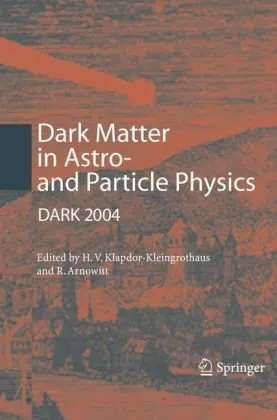
Dark matter in astro- and particle physics: proceedings of the International Conference DARK 2004, College Station, USA, 3-9 Oct. 2004
Hans-Volker Klapdor-Kleingrothaus,Richard Arnowitt
English
Unordered
Physics
4.7 / 5
0 reviews
2005
Published
669
pages
412
views
Introduction The quest for understanding dark matter remains one of the most compelling mysteries in both astrophysics and particle physics. "Dark Matter in Astro- and Particle Physics" stands as a pivotal compendium of contemporary research and discourse from lead
Before you read
What will you get from this book?
Introduction
The quest for understanding dark matter remains one of the most compelling mysteries in both astrophysics and particle physics. "Dark Matter in Astro- and Particle Physics" stands as a pivotal compendium of contemporary research and discourse from leading experts. It chronicles proceedings from DARK 2004, held in College Station, USA, gathering eminent scientists and practitioners in the field. This book serves not just as a record of the conference but as a vital resource, providing insights and theoretical advancements that continue to influence ongoing research and exploration.
Detailed Summary of the Book
The book opens with a comprehensive overview of dark matter, delving into its historical background and the reasons it occupies a central role in modern cosmology. It captures diverse perspectives and research from various experts who attended DARK 2004, encapsulating key topics such as candidates for dark matter, detection methodologies, and the role of dark matter in galaxy formation and evolution.
A significant portion of the volume is devoted to exploring the evidence for dark matter in astronomical observations. It includes discussions about gravitational lensing, cosmic microwave background radiation, and large-scale structure surveys, highlighting the indirect ways scientists infer the presence of dark matter. These insights are critical for understanding stellar behavior and galaxy formation beyond visible spectra.
Particle physics approaches are also rigorously addressed, examining theoretical frameworks and detection experiments aimed at identifying potential dark matter particles. The book includes findings from cryogenic experiments, accelerators, and underground laboratories, where physicists strive to capture and analyze elusive dark matter particles, such as neutralinos or axions.
Key Takeaways
-
The interdisciplinary nature of dark matter research requires collaboration across astrophysics, particle physics, and cosmology. Each domain offers unique methods and perspectives that contribute to a fuller understanding of dark matter.
-
Technological advancements are crucial for deepening our understanding of dark matter. Innovations in detection instruments and observational techniques create new opportunities for breakthroughs.
-
Theoretical models, while diverse, often align towards a common goal: identifying what dark matter is and how it behaves. Continued discourse between theories and experiments ensures robust challenges and refinements.
Famous Quotes from the Book
"Dark matter is not just a challenge—it is a portal into new realms of physics, offering a unique opportunity to explore the universe's unseen scaffolding."
"As we delve deeper into the cosmos, each finding about dark matter both illuminates and mystifies, guiding the trajectory of countless scientific inquiries."
Why This Book Matters
This book is an essential read for anyone engaged in the study or application of cosmic phenomena. It does not just catalog findings from a critical conference but serves as a beacon of the collaborative spirit and relentless curiosity that drives scientific progress. "Dark Matter in Astro- and Particle Physics" is indispensable for its holistic view of a profoundly complex issue—how we come to grips with the unseen, yet gravitationally dominant, component of our universe.
By disseminating knowledge from leading figures in the field, the book inspires upcoming generations of physicists and astronomers. It underscores the importance of hypothesis, experimentation, and theoretical synthesis in unraveling cosmic mysteries, continually inviting readers to participate in one of science’s most exciting frontiers.
Ask this book
Your question is answered in the context of this title and author. Each answer uses 2 points.
Sign in to ask the book assistant.
Reader reviews
0 reviews, 4.7 average out of 5
No reviews yet
If you have read this book, help the next reader with your experience.
Write a review
Sign in to publish a review.
Reader questions and answers
Ask a focused question and learn from the community.
Sign in to ask or answer a question.
No questions yet
Be the first to ask a clear, useful question.
What to read next
Related references that continue this learning path.

Solutions Architect's Handbook: Kick-start your career as a solutions architect by learning architecture design principles and strategies, 2nd Edition
Saurabh Shrivastava,Neelanjali Srivastav
2022
View book
Solutions Architect's Handbook - Third Edition: Kick-start your career with architecture design principles, strategies, and generative AI techniques
Saurabh Shrivastava,Neelanjali Srivastav
2024
View book