

Book guide and evaluation
Current Trends in Theoretical Computer Science: The Challenge of the New Century (Vol 1: Algorithms and Complexity) (Vol 2: Formal Models and Semantics)
Gheorghe Paun,Grzegorz Rozenberg,Arto Salomaa
English
Beginner
Software Engineering
4.3 / 5
0 reviews
2004
Published
1317
pages
250
views
Introduction to 'Current Trends in Theoretical Computer Science' The field of theoretical computer science stands as the backbone of innovation in computer science, guiding the way for the development of algorithms, computational models, and languag
Before you read
What will you get from this book?
Introduction to 'Current Trends in Theoretical Computer Science'
The field of theoretical computer science stands as the backbone of innovation in computer science, guiding the way for the development of algorithms, computational models, and languages that shape modern society. Our book, 'Current Trends in Theoretical Computer Science: The Challenge of the New Century', provides a comprehensive exploration of two critical volumes that focus on solving foundational challenges for the 21st century.
Volume 1, Algorithms and Complexity, delves into the intrinsic difficulty of problems, computational efficiency, and algorithmic approaches, constantly pushing the boundaries of what computational systems can achieve. Volume 2, Formal Models and Semantics, shifts focus to the theoretical constructs and mathematical models underpinning computation, programming languages, and their semantics.
This two-volume set is a joint effort to present thought-provoking, cutting-edge research, balancing rigorous academic discussions with the intuitive understanding necessary to address the future challenges in theoretical computer science.
Detailed Summary of the Book
Volume 1: Algorithms and Complexity
The first volume explores the essential questions surrounding algorithms: how efficiently can problems be solved? What constitutes the boundaries between solvable and unsolvable problems? By systematically analyzing the pillars of computational complexity, including P vs NP, approximation algorithms, and probabilistic methods, the volume showcases the role of algorithms in tackling real-world applications.
A range of practical and theoretical insights is presented, from exploring efficient data algorithms to examining the probabilistic models that pave the way for quantum computing research.
Volume 2: Formal Models and Semantics
The second volume centers around the formal and abstract models that define computational processes. From finite automata to Petri nets, from lambda calculus to Turing machines, this volume brings together formal frameworks essential for understanding computation.
It further discusses the semantics of programming languages, investigating how abstract syntax and formal semantics influence the reliability and robustness of software systems. Topics include denotational and operational semantics, model checking, and domain theory, all of which contribute to advancing human understanding of how computation is expressed and implemented.
Key Takeaways
- Comprehensive insights into the study of algorithms, computational complexity, and efficiency.
- An in-depth understanding of formal models that underpin computation and its semantics.
- Contributions from renowned researchers in theoretical computer science, presenting both classic and cutting-edge concepts.
- Exploration of interdisciplinary ideas connecting computation to other fields like physics, biology, and linguistics.
- A forward-looking perspective on the future challenges for theoretical computer science in the 21st century.
Famous Quotes from the Book
"Theoretical computer science is not merely the study of what computers do but rather the essence of computation itself, pushing the limits of what is possible."
"Formal models provide us not just with a means of describing computation but with tools to understand and predict its behavior in ways that transcend physical implementation."
Why This Book Matters
This book is not just a textbook or a collection of research papers—it is a guide. It provides an accessible yet rigorous foundation for students, researchers, and professionals eager to dive deeper into the realm of theoretical computer science.
The growing reliance on advanced computation, coupled with emerging technologies like artificial intelligence, quantum computing, and cryptography, highlights the importance of theoretical foundations. By thoroughly addressing a wide range of pertinent topics, this book equips readers with the intellectual tools to tackle evolving challenges and innovate for the next century.
Additionally, the collaboration of respected authors ensures the reliability, depth, and clarity of the material. Whether you are a novice learning the basics or an expert seeking inspiration, this book emphasizes the enduring significance and transformative power of theoretical computer science.
Ask this book
Your question is answered in the context of this title and author. Each answer uses 2 points.
Sign in to ask the book assistant.
Reader reviews
0 reviews, 4.3 average out of 5
No reviews yet
If you have read this book, help the next reader with your experience.
Write a review
Sign in to publish a review.
Reader questions and answers
Ask a focused question and learn from the community.
Sign in to ask or answer a question.
No questions yet
Be the first to ask a clear, useful question.
What to read next
Related references that continue this learning path.
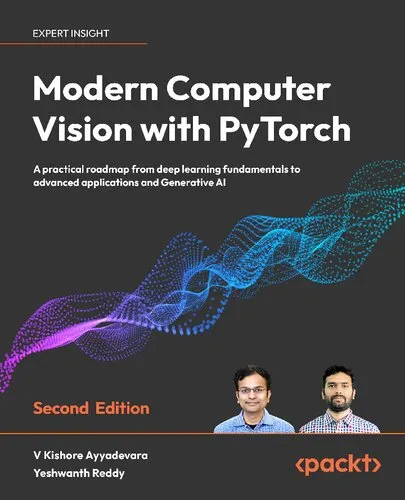
Modern Computer Vision with PyTorch: A Practical Roadmap From Deep Learning Fundamentals to Advanced Applications and Generative AI, 2nd Edition
V Kishore Ayyadevara,Yeshwanth Reddy
2023
View book