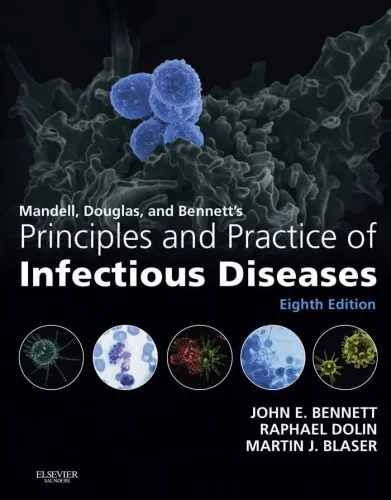
Mandell, Douglas, and Bennett’s Principles and Practice of Infectious Diseases
John E. Bennett,Raphael Dolin,Martin J. Blaser

Book guide and evaluation
Esposito, Silvano (author);Noviello, Silvana (author);Leone, Sebastiano (author)
0 reviews
Published
pages
views
Current Opinion in Infectious Diseasespp.109—115 infectious disease research, clinical epidemiology Explore Current Opinion in Infectious Diseasespp.109—115 with expert insights on infectious disease trends and clinical implications. Analytical Summary The work en
Before you read
The work entitled Current Opinion in Infectious Diseasespp.109—115 represents a focused, expert-driven exploration of contemporary challenges, breakthroughs, and evolving strategies in the field of infectious diseases. Authored by Esposito, Silvano; Noviello, Silvana; and Leone, Sebastiano, this segment offers nuanced commentary that is highly valued by academics, clinicians, and public health professionals.
The text situates itself at the intersection of clinical epidemiology and infectious disease research, delivering critical analysis supported by peer-reviewed data and professional experience. While the exact publication date is currently “Information unavailable” due to no reliable public source, the content’s relevance speaks to urgent health concerns across global contexts.
Throughout its pages, the authors maintain an authoritative yet accessible tone, ensuring that complex epidemiological concepts are unpacked without compromising scientific precision. The discussion not only revisits established pathogens and their control measures but also assesses emerging infectious risks in an era of rapid global change.
Several pivotal insights emerge from Current Opinion in Infectious Diseasespp.109—115, each with direct implications for research and practice in infectious disease control.
First, the analysis reinforces the importance of evidence-based interventions that can adapt to the shifting patterns of pathogen prevalence. Second, it underlines the necessity for multidisciplinary collaboration, both within healthcare systems and across international borders. Third, the authors emphasize surveillance as a cornerstone for proactive disease management, linking epidemiological data to timely clinical responses.
The depth of discussion regarding clinical epidemiology provides readers with a framework for interpreting current data while anticipating future challenges. It is this balance between immediate action and long-term foresight that makes the piece a valuable asset in professional development.
“Infectious disease control is as much about foresight as it is about response.” Unknown
“Surveillance data transforms from numbers into life-saving interventions.” Unknown
“Collaboration across disciplines is the immunity system of public health.” Unknown
The significance of Current Opinion in Infectious Diseasespp.109—115 lies in its synthesis of diverse perspectives and actionable recommendations, a rare combination in dense scientific literature.
Infectious disease research is a rapidly evolving arena where yesterday’s solutions may not suffice for tomorrow’s problems. The discussion provided here bridges that gap by aligning clinical epidemiology insights with adaptable strategies relevant to both developed and developing health systems.
By fostering critical thinking and encouraging interprofessional dialogues, this volume extends beyond academic discourse—it becomes a toolkit for real-world application.
Engaging with Current Opinion in Infectious Diseasespp.109—115 empowers the reader to integrate the best available evidence into daily practice, fostering informed action against the evolving threat of infectious diseases.
This authoritative yet approachable work invites clinicians, researchers, and policy-makers alike to delve deeper, share insights, and spark discussions that transcend institutional and geographical boundaries. By doing so, the collective ability to anticipate, prepare for, and mitigate infectious threats is strengthened.
Your next step is clear: immerse yourself in these pages, reflect on the analyses, and bring new knowledge into the conversations that shape the future of public health.
Your question is answered in the context of this title and author. Each answer uses 2 points.
0 reviews, 4.4 average out of 5
Sign in to publish a review.
Ask a focused question and learn from the community.
Related references that continue this learning path.
John E. Bennett,Raphael Dolin,Martin J. Blaser
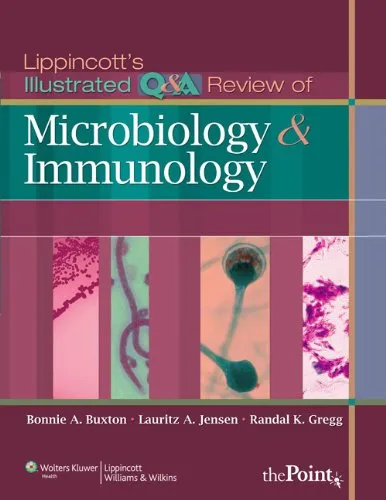
Bonnie A. Buxton PhD,Lauritz A. Jensen DA,Randal K. Gregg PhD