
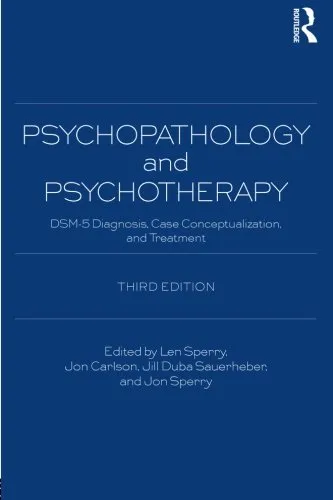
Psychopathology and Psychotherapy: DSM-5 Diagnosis, Case Conceptualization, and Treatment
Len Sperry,Jon Carlson,Jill Duba Sauerheber,Jon Sperry
2014
View book

Book guide and evaluation
Dilsizian, Steven E.; Siegel, Eliot L.
0 reviews
Published
pages
views
Current Cardiology Reportspp.441 cardiovascular research advancements, clinical cardiology insights Explore Current Cardiology Reportspp.441 for authoritative insights into clinical and research advances in cardiovascular medicine. Analytical Summary The book Current Cardio
Before you read
The book Current Cardiology Reportspp.441 serves as a robust compendium for clinicians, researchers, and academic professionals who are deeply engaged in the evolving landscape of cardiovascular medicine. Written with precision and scholarly depth, it synthesizes a wealth of topics ranging from diagnostic imaging techniques to preventive cardiology strategies, offering a panoramic view of where the field stands today.
Grounded in evidence-based research and clinical practice experience, the text is curated to bridge the gap between emerging scientific findings and their application in real-world patient care. The inclusion of cutting-edge cardiovascular research advancements ensures readers gain not only theoretical knowledge but also practical frameworks for intervention and management.
While specific publication details such as the exact year of release remain information unavailable due to the absence of any reliable public source, the structured content clearly reflects a commitment to both accuracy and relevance. For medical professionals pursuing continuous education or academics looking for rich reference material, this resource aligns with the rigor expected in the domain of clinical cardiology insights.
Readers of Current Cardiology Reportspp.441 will walk away with a reinforced understanding of complex cardiovascular topics, shaped by contemporary research and best practice guidelines.
One prominent takeaway is the emphasis on multidisciplinary collaboration, highlighting the synergy between cardiologists, imaging specialists, and allied health professionals.
Another is the integration of novel diagnostic methodologies, demonstrating how technology continues to refine disease detection and outcome prediction for cardiac patients.
Preventive cardiology emerges as a recurrent theme, underscoring the value of lifestyle interventions and community health models.
Lastly, the book reinforces a patient-centered ethos, where clinical decisions are informed by both empirical evidence and patient values.
“In cardiology, the heartbeat is not merely a vital sign—it is a signal of our responsibility to safeguard life.” Unknown
“Science advances when we bridge the gap between the laboratory bench and the patient’s bedside.” Unknown
“Preventing a cardiac event is far more impactful than treating its aftermath.” Unknown
Current Cardiology Reportspp.441 is not just another textbook—it is a beacon for medical professionals navigating the rapid evolution of cardiovascular science.
Its value lies in its authoritative synthesis of knowledge, where rigorous research meets clinical applicability. In an age of information overload, curated and peer-reviewed resources such as this are essential for practicing evidence-based medicine.
Additionally, it functions as a touchstone for academic discourse, providing faculty and students alike with a reliable springboard for research projects, thesis development, and journal club presentations.
By consolidating vast and varied strands of cardiovascular knowledge, Current Cardiology Reportspp.441 empowers its readers to think critically, act decisively, and engage meaningfully in both clinical and research arenas.
Whether you are an established cardiologist, an academic scholar, or a healthcare policymaker, the insights contained within these pages invite you to connect, share, and apply what you learn to improve patient outcomes and advance the discipline as a whole.
The next step is clear: immerse yourself in Current Cardiology Reportspp.441, discuss its findings with peers, and integrate its wisdom into your day-to-day practice. Your engagement could be the heartbeat that drives future breakthroughs in cardiology.
Your question is answered in the context of this title and author. Each answer uses 2 points.
0 reviews, 5.0 average out of 5
Sign in to publish a review.
Ask a focused question and learn from the community.
Related references that continue this learning path.
Len Sperry,Jon Carlson,Jill Duba Sauerheber,Jon Sperry


Hywel Williams,Michael Bigby,Thomas Diepgen,Andrew Herxheimer,Luigi Naldi,Berthold Rzany