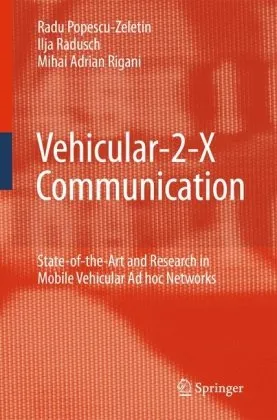
Vehicular-2-X Communication: State-of-the-Art and Research in Mobile Vehicular Ad hoc Networks
Radu Popescu-Zeletin,Ilja Radusch,Mihai Adrian Rigani (auth.)
2010
View book
Book guide and evaluation
Zaretta L. Hammond
0 reviews
Published
pages
views
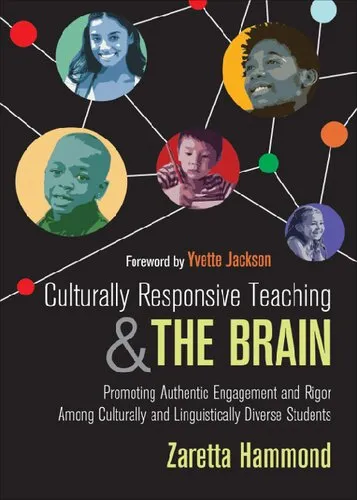
Introduction to "Culturally Responsive Teaching and The Brain" Written by Zaretta L. Hammond, “Culturally Responsive Teaching and The Brain: Promoting Authentic Engagement and Rigor Among Culturally and Linguistically Diverse Students” is a transformative guide for educato
Before you read
Written by Zaretta L. Hammond, “Culturally Responsive Teaching and The Brain: Promoting Authentic Engagement and Rigor Among Culturally and Linguistically Diverse Students” is a transformative guide for educators. The book explores the intersection of neuroscience and culturally responsive pedagogy, equipping teachers with strategies to create equitable learning opportunities for diverse students. By blending research-based theory and practical advice, this work empowers educators to unlock the full potential of their students in a classroom setting shaped by cultural awareness and cognitive engagement.
At its core, this book connects the growing understandings of neuroscience with culturally responsive teaching practices to help educators create learning environments where all students can thrive. Hammond begins by addressing the inequities in education, specifically for culturally and linguistically diverse learners. She explains how traditional teaching methods often fail to recognize the cultural frameworks that shape how students learn, making a strong case for shifting toward culturally inclusive instruction.
The book introduces educators to the concept of the brain as a cultural organ, where cultural factors influence how we process information and retain knowledge. Hammond breaks down complex neuroscience concepts, such as the role of the amygdala, working memory, and the importance of neuroplasticity, making these accessible for teachers who might not have a science background. She then guides educators in integrating this knowledge into practical applications, showing how to design lessons that challenge students intellectually while keeping them emotionally supported.
With frameworks such as the "Ready for Rigor Framework," the author offers educators a roadmap for nurturing dependent learners into independent thinkers. Tools and actionable steps include building relationships, fostering a culture of trust, and developing students' cognitive capacity through culturally relevant strategies. By empowering educators to value students’ cultural identities while helping them build cognitive stamina, Hammond lays the foundation for truly equitable education.
“Culturally responsive teaching is not about hosting a multicultural fair or classroom potluck. It’s about being a ‘warm demander’—challenging students to push beyond their comfort zones while offering the scaffolding needed to meet those challenges.”
“Neuroscientists have found that emotion drives attention and attention drives learning. For students to learn, they need to feel empathy, affirmation, and trust in their environment.”
“Our role as educators is to create cognitive apprenticeships that help students move from conscious incompetence to conscious competence.”
“Culturally Responsive Teaching and The Brain” is a timely and vital resource for educators working in today’s diverse classrooms. As cultural and linguistic diversity increases, there is a greater need for teaching practices that recognize and value students' cultural backgrounds. This book matters because it shifts the conversation from surface-level multiculturalism to deep, equity-driven education that hinges on building students’ academic success without ignoring their cultural identities.
Moreover, the integration of neuroscience into pedagogy marks a groundbreaking contribution to educational literature. Hammond’s ability to demystify how the brain works in learning and to contextualize it within culturally responsive pedagogy makes this book essential for educators seeking to refine their craft. Teachers are encouraged not only to be culturally aware but also to be intentional in designing instruction that bridges learning gaps exacerbated by systemic inequity.
This book provides a powerful wake-up call for educators to break free from deficit thinking and embrace a strengths-based approach. By doing so, it empowers teachers to become change agents in fostering a more inclusive and high-achieving educational system for all students.
Your question is answered in the context of this title and author. Each answer uses 2 points.
0 reviews, 4.8 average out of 5
Sign in to publish a review.
Ask a focused question and learn from the community.
Related references that continue this learning path.
Radu Popescu-Zeletin,Ilja Radusch,Mihai Adrian Rigani (auth.)