Book guide and evaluation
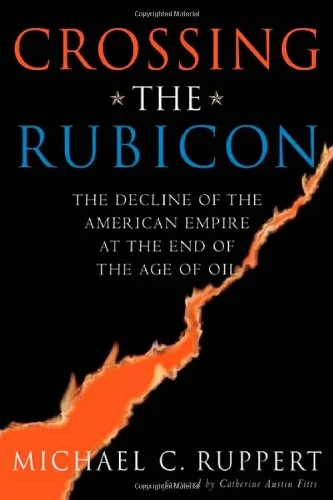
Crossing the Rubicon: The Decline of the American Empire at the End of the Age of Oil
Michael C. Ruppert
English
Intermediate
novel
4.1 / 5
0 reviews
2004
Published
696
pages
609
views
Welcome to an exploration of geopolitical realities at the turn of the millennium, as we delve into "Crossing the Rubicon: The Decline of the American Empire at the End of the Age of Oil" by Michael C. Ruppert. This work dissects critical issues facing society, highlighting imp
Before you read
What will you get from this book?
Welcome to an exploration of geopolitical realities at the turn of the millennium, as we delve into "Crossing the Rubicon: The Decline of the American Empire at the End of the Age of Oil" by Michael C. Ruppert. This work dissects critical issues facing society, highlighting imperatives driving the American empire's eventual downfall through a meticulous examination of the worlds of oil, global politics, and financial systems.
Summary of the Book
In "Crossing the Rubicon," Michael C. Ruppert provides a comprehensive analysis of the interconnected elements of politics, energy, and economics, all of which fuel the engine of the American empire. Ruppert argues that the United States has reached its "Rubicon," a metaphorical point of no return, as it grapples with the realities of Peak Oil—a concept describing the peak point of oil extraction followed by irreversible decline. The book meticulously chronicles events leading up to and following the September 11, 2001 attacks, which Ruppert posits were used to justify war and augment national control in the guise of combating terrorism. Central to his argument is the assertion that American energy policies and economic practices are unsustainable, leading inevitably to geopolitical and societal crises. By connecting the dots between corporate interests, government policies, and the media, Ruppert paints a picture of an empire in its twilight, struggling to maintain its dominance amidst dwindling resources.
Key Takeaways
The Decline of Oil
Ruppert emphasizes the unsustainable nature of oil dependency, forecasting dire global consequences as supplies dwindle. He argues that as oil becomes scarcer, nations will increasingly resort to conflict to secure energy resources.
Economic Unveiling
The book sheds light on the machinations of financial powerhouses, illustrating how economic manipulations, often hidden from public view, continue to favor a small elite while exploiting natural and human resources.
Questioning 9/11
Ruppert scrutinizes the official narratives surrounding 9/11, proposing that deeper, less altruistic motivations are at play behind the scenes. He calls into question the link between these events and subsequent foreign policy decisions.
Famous Quotes from the Book
"Until you change the way money works, you change nothing."
"I never told anyone what to think. I just laid out what I've discovered."
Why This Book Matters
"Crossing the Rubicon" is an essential read for those interested in geopolitical strategies, environmental sustainability, and economic justice. Ruppert's meticulous research and compelling arguments provide a unique perspective on the challenges of contemporary global politics. This book serves as both a warning and a call to action, urging readers to reconsider and question the systems that uphold current geopolitical power structures. Its relevance endures as the world continues grappling with energy resource issues and as questions about the legitimacy of governmental narratives persist.
Audio introductions
Persian Summary
Ask this book
Your question is answered in the context of this title and author. Each answer uses 2 points.
Sign in to ask the book assistant.
Reader reviews
0 reviews, 4.1 average out of 5
No reviews yet
If you have read this book, help the next reader with your experience.
Write a review
Sign in to publish a review.
Reader questions and answers
Ask a focused question and learn from the community.
Sign in to ask or answer a question.
No questions yet
Be the first to ask a clear, useful question.
What to read next
Related references that continue this learning path.

The Long Emergency: Surviving the End of Oil, Climate Change, and Other Converging Catastrophes of the Twenty-First Century
James Howard Kunstler,James Howard Kunstler
2006
View book