Book guide and evaluation
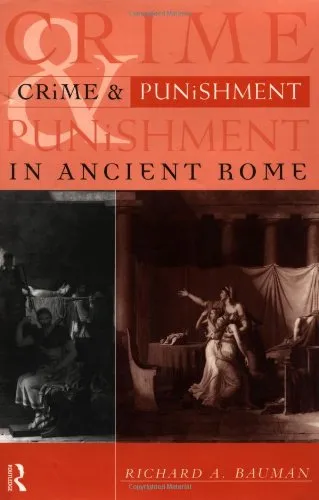
Crime and Punishment in Ancient Rome
Richard A. Bauman
English
Intermediate
novel
3.6 / 5
0 reviews
1996
Published
241
pages
914
views
Introduction to 'Crime and Punishment in Ancient Rome' 'Crime and Punishment in Ancient Rome' delves into the intricate legal systems and societal norms of ancient Rome, shedding light on how justice was perceived and administered in one of history's most significa
Before you read
What will you get from this book?
Introduction to 'Crime and Punishment in Ancient Rome'
'Crime and Punishment in Ancient Rome' delves into the intricate legal systems and societal norms of ancient Rome, shedding light on how justice was perceived and administered in one of history's most significant civilizations. This comprehensive examination reveals the evolution of Roman law and its enduring impact on modern legal practices. Through meticulous research, Richard A. Bauman provides insight into the complex relationship between crime, law, and society in ancient Rome, exploring how legal frameworks shaped the lives of its citizens.
Detailed Summary of the Book
The book embarks on a journey through the annals of Roman law, tracing its roots from the early Republic to the unraveling complexities of the late Empire. Bauman outlines the structural mechanisms of justice, from the Twelve Tables, which laid the foundational legal framework, to the more developed imperial constitutions and edicts. The narrative examines various categories of crime, ranging from theft, murder, and treason, to more peculiar offenses such as sorcery and electoral fraud.
Integral to this examination is the depiction of Roman attitudes toward punishment. The author explores the rationale behind punitive measures, including executions, exiles, and fines, detailing how these penalties were both a reflection of the society’s values and a tool for ensuring social harmony. Moreover, Bauman doesn't merely recount historical facts but also engages with contemporary legal theory, comparing ancient practices with modern justice systems, highlighting continuities and divergences.
Key Takeaways
- Continuity of Legal Principles: Many foundational elements of Roman law persist in contemporary legal systems, particularly civil law traditions.
- Societal Reflection: Roman laws and punishments reflect the societal hierarchies and cultural values, offering a mirror into the civilization's ethos.
- Evolution of Justice: The transition from retributive to more rehabilitative forms of justice suggests an evolving understanding of crime and punishment.
Famous Quotes from the Book
"The question of what constituted a crime in ancient Rome is as revealing of the Roman ethos as the punishments themselves."
"Justice in Rome was not merely a legal procedure but a critical element of the social fabric."
Why This Book Matters
'Crime and Punishment in Ancient Rome' is more than a historical analysis; it is a profound exploration of the roots and evolution of legal traditions that continue to shape contemporary justice systems worldwide. Understanding these origins provides not only an academic insight but also a practical perspective on current legal practices. The book serves as a crucial reference for historians, legal scholars, and anyone interested in the perennial questions of crime, justice, and human behavior. Its relevance is underscored by the ongoing importance of balancing societal order and individual rights—a challenge as potent today as it was in ancient Rome.
Audio introductions
Persian Summary
Ask this book
Your question is answered in the context of this title and author. Each answer uses 2 points.
Sign in to ask the book assistant.
Reader reviews
0 reviews, 3.6 average out of 5
No reviews yet
If you have read this book, help the next reader with your experience.
Write a review
Sign in to publish a review.
Reader questions and answers
Ask a focused question and learn from the community.
Sign in to ask or answer a question.
No questions yet
Be the first to ask a clear, useful question.
What to read next
Related references that continue this learning path.